Online Scams Increase in Nepal: Police Report 767 Victims in One Year

Kathmandu. 'iPhone-15 Pro Max available for 65 thousand rupees, book quickly!' Ads for phones priced over one and a half lakh rupees at a very low price kept appearing on Facebook and TikTok IDs named Shakir Mobile.
Seeing such an advertisement, a high-ranking official from Nepal Telecom contacted through Messenger. The mobile seller said, 'Please send the amount via QR, you will receive the goods by tomorrow evening.'
After that, the victim sent 65 thousand cash via 'QR'. When the mobile did not arrive by the next day and the victim tried to contact, the mobile seller had already blocked the victim on social media. The Kathmandu District Police Range has arrested Dilip Tamang, 21, from Birtamod Municipality-4, Jhapa, who lives in Kathmandu, and Ashutosh Oli, 23, from Birtamod-3, who lives in Kathmandu, on charges of fraud under the name Shakir Mobile, and a case has been filed against them. They were arrested in the last week of Jestha.
The accused involved in the fraud used to 'cap cut' the mobile advertisement videos posted on their Facebook by mobile sellers in Tamrakar House, Kathmandu, and upload them to Facebook with voice-over. Those who were tempted by the low price and home delivery advertisements were defrauded.
In this way, incidents of fraud in the name of selling goods online have increased recently. In the guise of online shopping and marketplaces, 767 people have been defrauded from the month of Shrawan 2082 to the end of Jestha 2083, according to police records. Police suspect that many other people who did not report to the police may have been defrauded in such incidents.
This fiscal year, the most complaints of fraud have been filed using wallet hacking and OTP phishing links, according to Dilip Kumar Giri, Information Officer (SP) at the Cyber Bureau. He said, 'This fiscal year, the Bureau has registered the highest number of complaints related to wallet hacking and online shopping fraud.'
Analyzing the data of the last 3 years, incidents of online fraud are seen to be gradually increasing. In the fiscal year 2080/081, 4,154 fraud complaints were registered. In the fiscal year 2081/082, the number increased to 7,740. In the first 11 months of the current fiscal year, 7,799 people have complained to the Bureau about being defrauded online. The police are investigating these complaints.
The gang defrauds the public in 16 types of ways using electronic means. The gang operates its fraud business by hacking Facebook or using fake IDs. According to the police, fraud occurs in the name of updating accounts, claiming to be from banks and wallets.
According to the police, by hacking wallets and sending OTP phishing links, hackers gain access to a person's wallet account. Incidents of fraud in the name of sending parcels from abroad and winning lotteries are registered with the police. Fraudulent incidents also occur by showing the temptation of inheriting unclaimed property in the name of foreign employment and the death of wealthy people abroad.
A trend of women talking on video calls via WhatsApp and asking men to undress, and then blackmailing them by sharing the video, is also increasing. Police say that fraud is also happening in the name of online jobs, crypto, Binance app, and online investments.
Fraud also occurs through foreign currency exchange, gaming, and in the guise of online shopping and marketplaces. SP Giri, Information Officer at the Bureau, said, 'They also defraud by adopting styles such as online ticketing, online tuition, and finding rooms.'
Fraud Details by Crime Style:
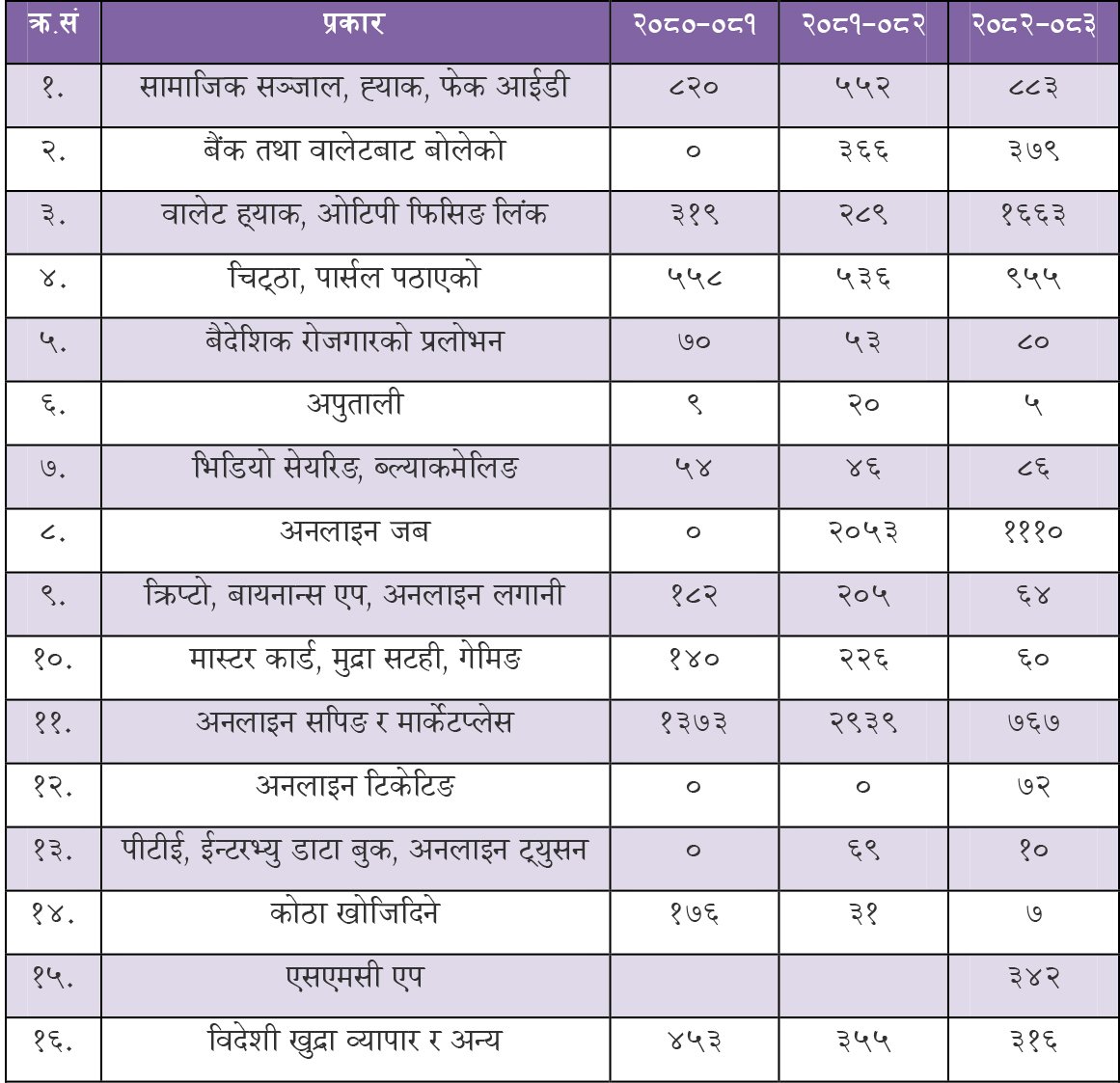
Source of Statistics: Cyber Bureau
- Fraud through football viewing links
Recently, a gang has been running a fraud business by luring people with the temptation of watching the FIFA World Cup 2026 for free. The World Cup football tournament, which started on June 11, is being held in America, Mexico, and Canada.
In the name of watching the live broadcast of that football festival, a recent trend has emerged where people are directed to various links on social media, and unauthorized access is gained to wallets and bank accounts to steal money. SP Giri of the Bureau said that 115 people have been defrauded while trying to watch free football.
According to him, advertisements appear online offering free football viewing. Ordinary people are defrauded by following those advertisements. According to the police, app developers ask users to enter their bank passwords to remove risks, claiming that their bank accounts are locked due to money laundering issues. As soon as the victim enters the password, the money in the account is emptied.
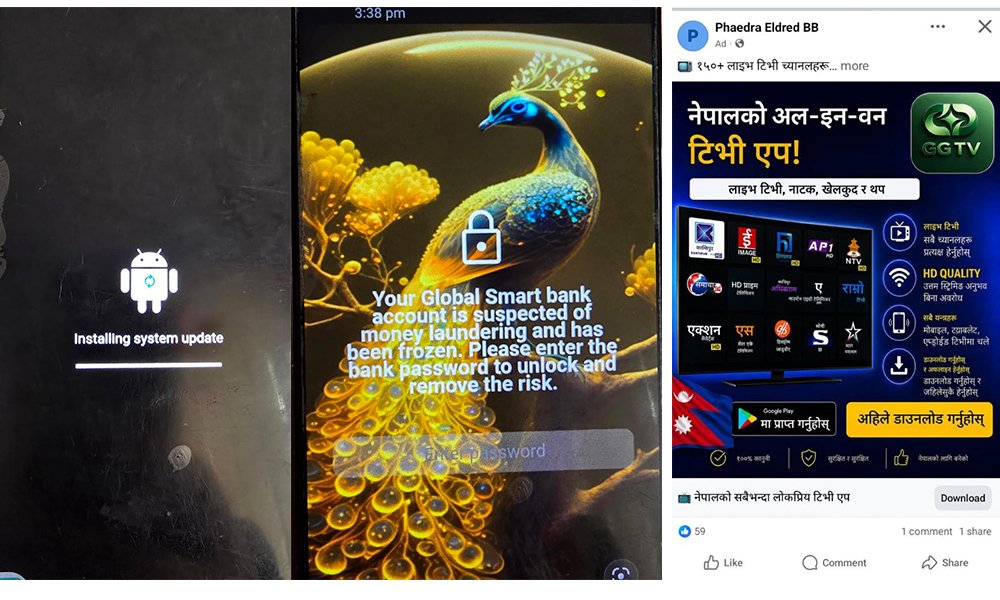
The Cyber Bureau's investigation has revealed that more than 2 crore 29 lakh rupees have been defrauded so far by opening online links since the start of the football season. Police say that files with extensions like .exe and .bat are being used in such fraud.
This fiscal year, the police have recovered 17 crore rupees in fraud cases by bringing the accused into contact. SP Giri informed that 9 crore 26 lakh rupees were returned in the fiscal year 2081/082 and 1 crore 94 lakh rupees in 2080/081.
Incidents of hate speech and harassment through cyber means are also frequent. In such cases, the police first try to mediate through discussion, and if mediation is not possible, a case is filed under the Electronic Transactions Act.
_Eqo5W0NMVM.jpg)
- How to stay safe?
To avoid online fraud, one should opt for 'cash on delivery' when purchasing goods, says SP Pawan Bhattarai of the Kathmandu District Police Range. He stated that people get defrauded when they try to buy goods without verifying the authenticity of the website selling the product.
Bhattarai said, 'One should cross-verify the website. One should only purchase after checking how much less than the market price the goods are being offered for. If goods are offered at an unusually low price compared to the market price, there is reason to be suspicious.'
Similarly, SP Bhattarai urged people not to fall for pressure from anyone to buy. He said, 'If anyone pressures you, you should be suspicious.'
SP Bhattarai said that people should not believe those who call pretending to be bank and wallet employees. He said, 'Banks never ask for KYC updates and personal details over the phone. Everyone should know that.'
Clarifying that complaints regarding online fraud are registered at all district police offices and investigated by the respective offices, he urged people to report to the police as soon as they feel they have been defrauded.
_drOmyPMDMX.jpg)
- What does the law say?
The police file three types of cases against those involved in electronic fraud. The police investigate and file charges through the public prosecutor under the Electronic Transactions Act, offenses related to fraud, and the Banking Offenses and Punishment Act.
According to Section 249 of the Muluki Criminal Code 2074, the punishment for fraud is up to 7 years in prison and a fine of up to 70 thousand rupees. According to Section 253 of the Criminal Code, it is not permissible to extort criminal gains.
Many complaints registered with the police show that fraud has been committed by taking criminal gains. A person cannot unlawfully benefit themselves or others. In such a situation, there is a provision for imprisonment up to 1 year and a fine of 10 thousand rupees.
According to the Electronic Transactions Act 2063, there are provisions for imprisonment and fines for stealing confidential information by unauthorized access to computer systems, and for fraud using phishing or fake websites or social media. The police investigate those who demand OTPs via electronic means claiming to be bank employees and transfer money from bank accounts under the Banking Offenses and Punishment Act 2064.
This specific news has been automatically translated by AI. As a result, there may be some inaccuracies or language errors.