Government Ministers Criticized for Stunts Over Substance

Kathmandu. After the formation of the government, many had hoped that good governance would come to the country, the wronged would get justice, and institutional reforms would take place.
However, four months after the government was formed, more stunts than work by the government ministers have started to be seen. Although some policy-level and visible work has been done, most ministers are criticized. Questions are being raised about Prime Minister Balendra Shah himself.
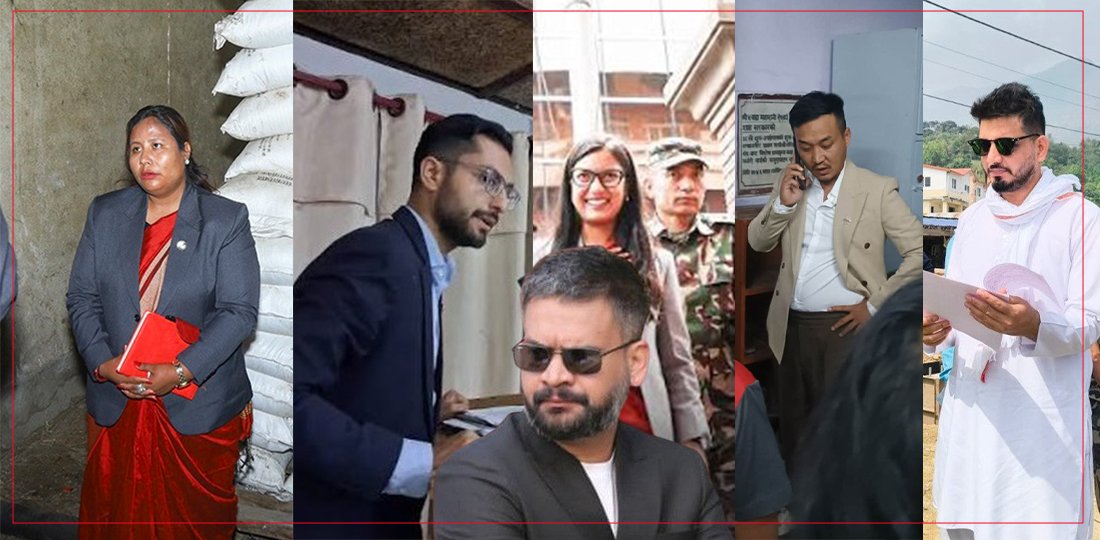
Ministers are making social media-targeted statements. They are speaking on matters outside their jurisdiction. They are becoming publicity-oriented with aggressive speech rather than work. Home Minister Sudhan Gurung comes first in this regard, followed by Infrastructure Development Minister Sunil Lamsal. Prime Minister Balen himself has become a 'stuntman'.
Issue Diversion and Media Manipulation
Balen's skill in 'dodging issues' and diverting topics, developed during his tenure as Mayor of Kathmandu Metropolitan City, has continued in his tenure as Prime Minister. Recently, the government faced widespread criticism following the Ganesh Nepali suicide case and the plight of the homeless at the holding center. Serious questions were being raised by citizens and the media about the government's sensitivity, humanitarian approach, and efficiency.
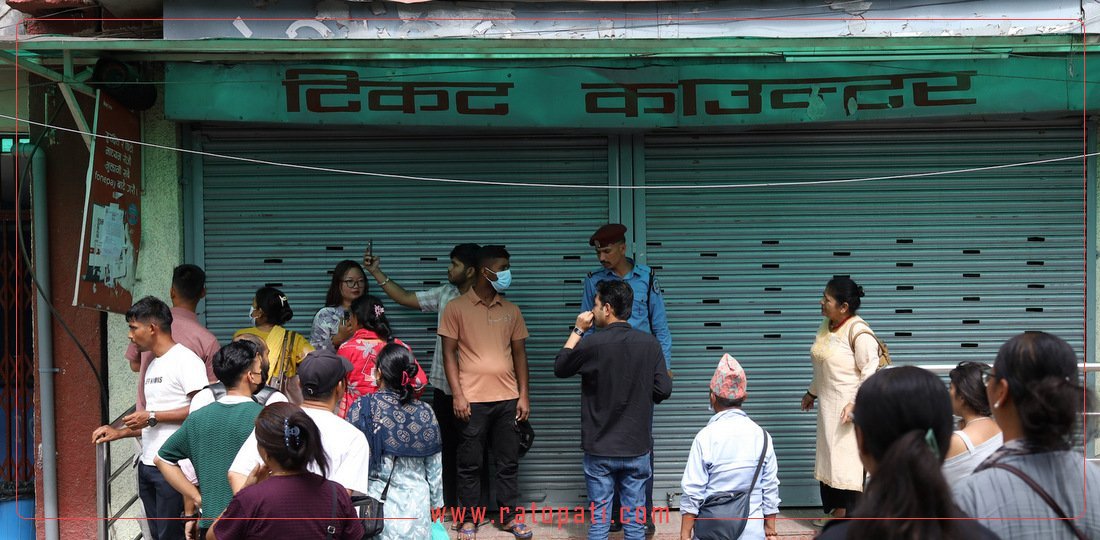
When such widespread pressure and criticism arose, a new ploy was concocted by those close to the ruling party to defend the government and divert media attention. Attempts were made to obstruct the work of media houses by parking suspicious vehicles in front of the main entrances of mainstream media such as Kantipur Publications, OnlineKhabar, and Himalaya Television.
Later, the traffic police had to remove those vehicles with the help of a crane. Deep investigation into this incident revealed that leaders and cadres of the ruling Rastriya Swatantra Party (RSP) were directly involved in this act.
Similarly, as Prime Minister, the government's humanitarian approach was severely questioned when bulldozers were used in the slum settlement without alternatives and preparation. Amidst widespread criticism, Balen posted a photo of himself eating DDC cheese on social media, which many consider an issue diversion.
Whenever the government becomes narrow on policy failures and livelihood issues, he diverts the debate by sharing attractive videos and pictures of tourist places on social media or posting his personal photos.
Home Minister: Heavy Responsibility, Many Controversies
Home Minister Sudhan Gurung, who heads the sensitive Home Ministry responsible for the country's peace and security and overall home administration, has recently been embroiled in controversy and discussion due to his immature and exhibitionist activities. Instead of focusing on internal reforms and long-term security strategies for the ministry, he appears busy with camera-targeted activities.
Since becoming Home Minister, he has been seen driving himself and stopping vehicles on the road to manage traffic, similar to traffic police. Administrative experts have criticized his actions of performing police duties in front of cameras, instead of policy reforms and security strategies, as cheap 'stunts'. His uncontrolled crying and laughing at formal police events and parliamentary meetings have raised questions about the dignity and maturity of the Home Minister's position.
His style of reaching the border area without prior information to local administration and relevant security agencies and inspecting roads outside his jurisdiction has created confusion in the security apparatus. The incident where he cleared the road to facilitate Ganesh Nepali's travel to Tribhuvan International Airport is also being criticized as a continuation of the minister's publicity-oriented 'stunt'. He is also seen monitoring road infrastructure, which does not fall within his purview. He has been seen getting emotional and agitated in front of the parliamentary rostrum, disregarding the dignity of the Home Minister's position.
Sunil Lamsal's Threat
Serious dissatisfaction has grown among construction entrepreneurs, employees, and the public regarding the working style of Minister Sunil Lamsal, who heads the Ministry of Physical Infrastructure and Transport. Instead of pursuing legal processes and systems for action, he has a tendency to gain popularity on social media by making aggressive public statements.
Speaking at a meeting with leaders and cadres of the Rastriya Swatantra Party (RSP) in Shuklagandaki Municipality-5, Dulegauda, Tanahun, on June 22, he warned of imprisoning provincial ministers who do not work and taking action against mayors.
Interacting with locals, Minister Lamsal said, 'If the mayor does not work for the people, disrespects the people, inform us. We will take necessary action. If the provincial minister does the same, we will imprison them. Work must and will be done somehow.'
He urged people to provide information if they knew of any local level chief or responsible official not working for the people, disrespecting citizens, or causing them trouble, adding, 'If any local level chief or responsible official is found not working for the people, disrespecting citizens, or causing them trouble, inform us. Necessary legal action will be initiated against such irresponsible officials.'
Previously, he had made public statements about 'breaking the legs' of contractors who did not work. His statements were heavily criticized. After he threatened to imprison provincial ministers, his style was commented upon as a mockery of the rule of law.
Besides, he goes for monitoring without preparation. During monitoring, he sometimes says villages need to be relocated and sometimes comments on stadiums, saying 'they have no brains.' Instead of resolving delays and irregularities in infrastructure construction through legal and systemic processes, the strategy of threatening and intimidating is being reviewed as incapable of delivering any results in infrastructure development. Overall, he engages in immature stunts.
Law Minister: Interpreting Law from the Streets
Law, Justice, and Parliamentary Affairs Minister Sobita Gautam has not been able to do much on policy matters related to lawmaking, amendment, and judicial reform. Instead of focusing on legal drafts, legislative provisions, and judicial reform work that should be done in the ministry and parliament, she spends more time on street debates and monitoring. It is commented from the judicial sector that the main agendas of legal reform have been overshadowed by her style of discussing law from the streets and engaging in rhetoric in the name of monitoring.
Education Minister: Hasty Decisions, Weak Implementation
The working style of Education and Sports Minister Samit Pokharel appears to be one of making publicity-oriented decisions but being unable to implement them. Although major decisions are announced hastily in the education and sports sectors without concrete groundwork and sufficient discussion with stakeholders, their implementation is almost nil. He is accused of making decisions without policy preparation solely to create 'headlines' in the media and on social media.
Agriculture Minister: Focused on Small Shops
In a sector like the Ministry of Agriculture and Environment, which requires significant policy reform in production, subsidies, and environmental issues, Minister Gita Chaudhary's attention is stuck on minor retail inspections. The minister herself, along with an inspection team and cameras, visits places ranging from Kalimati vegetable market to small grocery stores in alleys.
The public had hoped for different, institutional, and results-oriented work from Balen Shah, who emerged as a new force and youth leader, and the RSP ministers, compared to traditional parties. However, looking at the government's tenure so far, it appears to be stuck in policy ambiguity, violation of legal procedures, aggressive public speeches, tactics to intimidate/divert the media, and 'stunts' based on social media likes/comments.
Balen, who is most followed on social media in Nepal and has a huge craze, has a strong influence among internet users. Anything or any opinion he posts on social media goes viral instantly. It is with the strength of this social media and the crowd of supporters that he easily gives an emotional turn to complex political and administrative issues and engages in 'issue diversion.' Youth activist Saroj Rajbhandari, who is also a political science student, says.
'If you think for 5 minutes why all this is done, you will get the answer. Whenever questions arise about him, some controversy or gossip occurs. Balen's working style has been like this before. It is the same now, nothing new. Balen's team thinks at this level too,' says Rajbhandari.
He interprets this as the method of modern state operators. 'In the past, it was very difficult to manipulate the masses. It's not that it wasn't done. But now, being a big influencer himself, it is easy for Balen to divert issues. He is doing just that. The practice of this varies across the world. Just as in India, when elections approach, the BJP uses religious issues and connects them with Pakistan in its campaign, which diverts the issues of the general public. But in Nepal, Balen is seen doing this when questions arise, rather than during elections,' he says.
Activist Prasuj Mainali, who is closely observing the government, says, 'The government is performing stunts by violating policies and procedures. This will make it difficult for the government in the long run. The government should be accountable and responsible to the people, and provide what the people want. It's not that the people should watch what the government shows.'
This specific news has been automatically translated by AI. As a result, there may be some inaccuracies or language errors.