Lumbini Tourism Faces Challenge of Short Tourist Stays

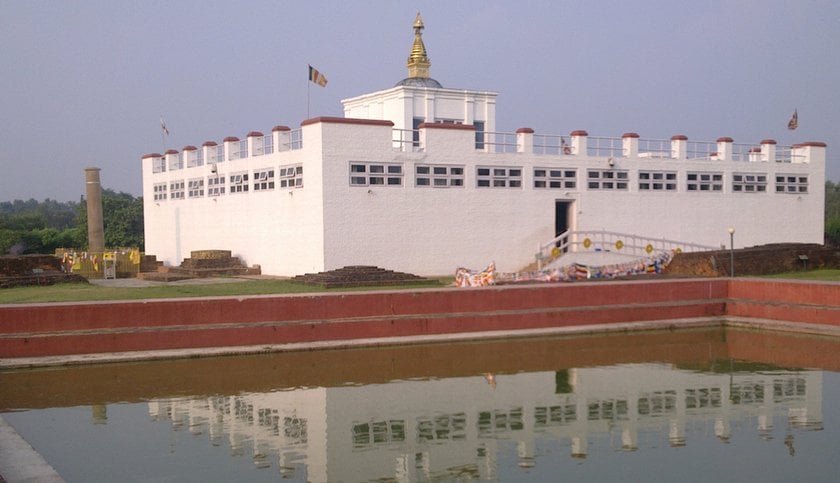
Bhairahawa. The birthplace of Gautam Buddha, the apostle of world peace, Lumbini is Nepal's most familiar international tourist destination. The holy land, listed as a World Heritage Site, is visited by more than 1.5 million domestic and foreign tourists annually.
Despite a large number of tourists arriving, most do not spend even a single night in Lumbini. The tendency to visit for a few hours and then return means that the economy has not benefited as expected from tourism here.
Especially religious tourists coming from India visit the birthplace of Buddha and return to their country within a few hours. The situation is the same for tourists coming from other parts of Nepal. After visiting the Mayadevi Temple and some surrounding areas, they head to another destination. This limits Lumbini to merely a 'visiting site'. Developing it as a 'destination for stay and experience' still appears challenging.
According to tourism experts, if the duration of tourist stays in Lumbini can be increased, it can have a significant economic impact on hotels, restaurants, transportation, handicrafts, agriculture, cultural programs, and local employment in the area. For this, it has been pointed out that the religious, cultural, natural, and rural tourist destinations around the birthplace of Buddha need to be connected into a single tourist circuit.
According to Lilamani Sharma, President of the Lumbini Hotel Association, Lumbini is Nepal's biggest international tourism brand. "We need to promote tourism by keeping the 'Lumbini' brand at the center, not by considering Butwal, Bhairahawa, or other cities separately," he said. According to him, if we can move forward with a single identity in the international market, it will be easier to increase tourist arrivals, starting with the operation of Gautam Buddha International Airport.
Dayanidhi Sharma, Head of the Central Campus of Lumbini Buddhist University, said that Lumbini should be developed not just as a religious pilgrimage site but as a center for the study and research of Buddhist philosophy, peace, non-violence, and human civilization worldwide.
According to him, if education, research, meditation, culture, and tourism are connected under a single concept, the international importance of Lumbini will reach even greater heights.
Gyanin Rai, Member-Secretary of the Lumbini Development Trust, said that coordinated efforts between the government, private sector, local community, and international partners are essential to develop Lumbini as a world-class tourist destination. He expressed the view that along with infrastructure expansion, emphasis should be placed on quality tourism services, international promotion, and the development of new tourism products.
In recent years, there has been significant investment in four and five-star hotels, resorts, and other tourist infrastructure in the Lumbini area. However, due to the short duration of tourist stays, these investments have not yielded the expected returns. Tourism entrepreneurs say that the biggest need now is not the construction of new hotels, but the development of the tourism sector that encourages tourists to stay in Lumbini for one or two nights.
With this objective, the private sector has started direct collaboration with travel and tour operators in Varanasi, Bodh Gaya, Delhi, and Lucknow in India. Efforts are being made to expand the common market for religious and cultural tourism through Lumbini-Varanasi B2B travel mart and fam trips. According to entrepreneurs, such programs will help expand Lumbini's reach in the international market.
Experts in the tourism sector suggest that the development of Lumbini should not be limited to the conservation of the Buddha's birthplace alone, but should connect Tilaurakot, Devdaha, Ramgram, Gautam Buddha International Airport, cultural villages, meditation centers, rural tourism, and local products into a single tourism network according to the 'Greater Lumbini' concept.
They say that bringing tourists to Lumbini is not enough; creating an environment that compels them to stay for a few days is now the biggest challenge.
It is believed that if Lumbini can be established as a destination for experience, given that the world recognizes it as the birthplace of Buddha, tourism will create a foundation for long-term economic prosperity.
This specific news has been automatically translated by AI. As a result, there may be some inaccuracies or language errors.


_KGLQG1Q14l.jpg)