Rastriya Swatantra Party's Revised Statute Faces Scrutiny Over Party President's Authority

Kathmandu. Serious questions have been raised regarding the revised statute of the ruling Rastriya Swatantra Party (RSP).
Specifically, serious questions have been raised about the provision that the parliamentary party leader can be removed if the party president's directive is not followed. The fourth revised statute passed by the RSP's first general convention held in Chitwan from Asar 7-12 includes a provision under Article 11(a) regarding the duties and responsibilities of the party president, which includes coordination with the parliamentary party.
Clause (a) sub-clause 3 of that article explains, 'To maintain ideological, policy, and political coordination between the party and the parliamentary party. In a situation where the party president is not the parliamentary party leader, to provide necessary policy guidance to the parliamentary party for the effective representation and implementation of the party's official policies, principles, decisions, and perspectives in parliament. It shall be the mandatory duty of the parliamentary party, the parliamentary party leader, and its members to follow such guidance.'
Article 68 of the statute contains provisions for the removal and recall of the parliamentary party leader. Sub-clause 1(e) of the same article includes a provision for removal if the policy guidance given by the party president under Article 11(a)(a)(3) of this statute is not followed.
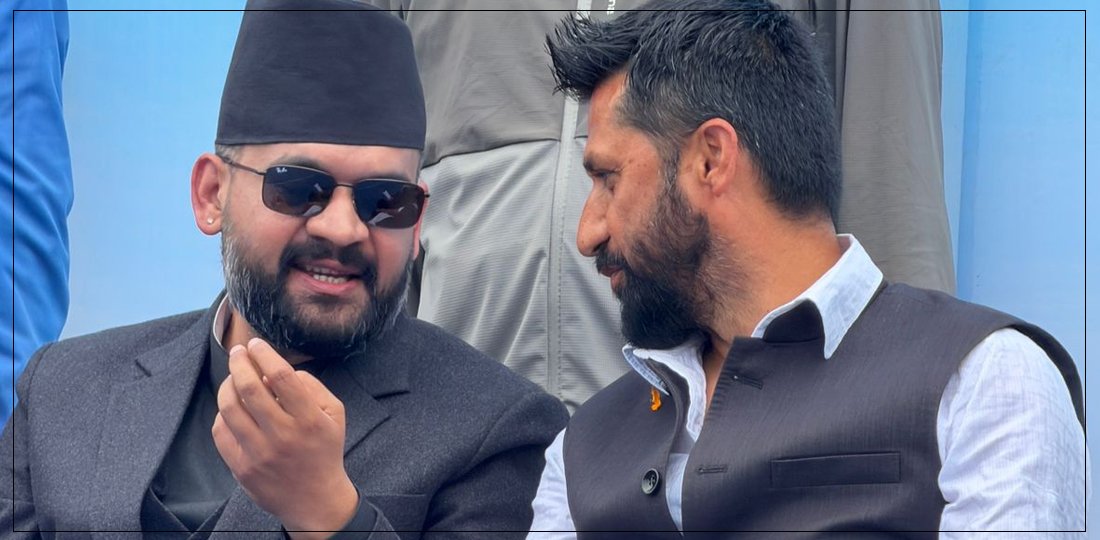
The 2079 statute (Third Amendment, 2081) had a provision that the party president would also be the parliamentary party leader. Last year, during the general election following the Janji movement in Bhadra, the RSP made a 7-point agreement with former Kathmandu Metropolitan City Mayor Balendra (Balen) Shah. Based on that agreement, Balen became the candidate for future prime minister and a senior leader of the party. According to the previous agreement, Balen is now the Prime Minister from RSP. While there are discussions about disagreements between President Rabi and Balen regarding government operations, this provision in the statute could escalate internal conflict.
Although Rabi and Balen prohibited group competition during the general convention, it did not seem to be implemented in practice. Both sides were accused of rushing to ensure the victory of their 'selected' office bearers and central members with their own preparations. There is discussion in RSP circles that the convention itself was affected by alleged manipulation in the selection of the president and senior leader. A leader of RSP claimed that the Election Commission itself would not accept the statute approved by the general convention.
'There is a provision in the statute that the senior leader will be removed if the president's directive is not followed. If the party president is also the parliamentary party leader, who will recall them? The statute seems to make the president all-powerful. This does not happen in a democratic party,' said the leader.
Regarding the question of why this issue was not raised in the general convention, the supreme body, the leader claimed it was due to the fear of losing in the elections.
'The task force coordinator and all members were immature. When people working in corporations are given the responsibility of drafting the statute, it turns out like this. Issues would be raised in the closed session hall. But everyone was afraid of being defeated in the central committee, so they couldn't raise questions,' the leader said.
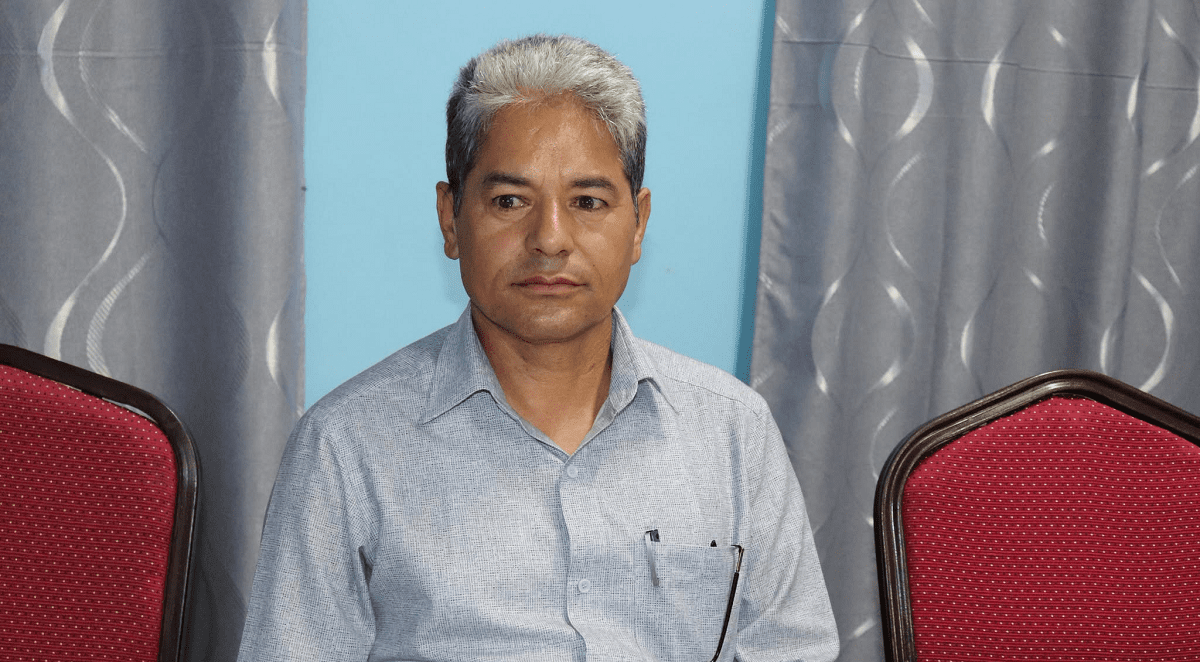
The responsibility of drafting the revised statute was given to Bipin Kumar Acharya, a leader close to Rabi. The task force led by Acharya included Ganesh Parajuli, Dr. Chanda Karki, Prakashchandra Pariyar, and Sushant Vaidya as members. Acharya, Parajuli, and Karki are close to Rabi.
Pariyar is from the Bibeksheel Sajha group, while Vaidya is close to Balen. Dr. Chanda Karki, a member of the task force, claimed that there was no dispute regarding the draft in the task force, party secretariat, central committee, and general convention hall. She asserted that since the previous statute had a provision for the party president to be the parliamentary party leader, this provision was made with long-term thinking.
'The previous statute did not even envision the concept of a senior leader. The revised statute now includes the provision for a senior leader. This is not a permanent position either,' Karki said. 'According to the practices so far, there is a provision for the party president to be the parliamentary party leader. A party without a president cannot be imagined. Although this provision applies to the senior leader, it does not apply to the president. It has been included in the statute with long-term thinking.'
The draft prepared by the task force was approved by the central committee meeting held in Chitwan on Asar 6. The same draft was passed verbatim by the general convention hall. When asked about this matter, Sushant Vaidya, a member of the task force, avoided answering. He stated that he could not answer as he was in a parliamentary party meeting. The coordinator of the task force and General Secretary Bipin Kumar Acharya also stated that he could not answer as he was in a meeting.
This specific news has been automatically translated by AI. As a result, there may be some inaccuracies or language errors.
_9jNDVDOtaj.jpg)