Nine Dead in Bangladesh Landslides, Including Eight Rohingya Refugees

KATHMANDU. At least nine people have died in landslides caused by continuous monsoon rains in southeastern Bangladesh. Eight of the deceased were Rohingya refugees.
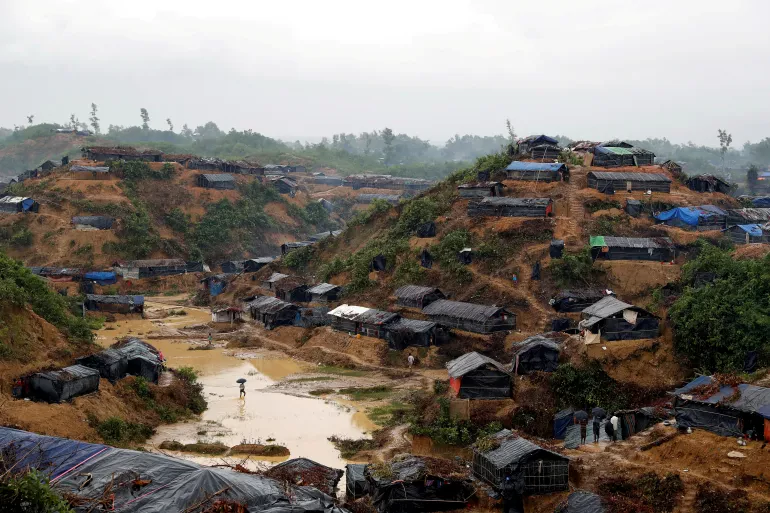
Landslides occurred in four places in the Rohingya refugee camps in Cox's Bazar from Sunday night to Monday morning. The landslides buried temporary shelters along with heaps of soil and mud, trapping people who were sleeping there.
According to Dollar Tripura, civil security officer of Cox's Bazar district, rescuers found seven bodies, while another body was found by the refugees themselves. According to the police, one Bangladeshi citizen also died when the house was buried in the landslide.
Rohingya refugee Ali Ahmed said his parents and youngest brother died in the landslide. He said, 'We fled Myanmar in 2017 to escape persecution. Now I have lost my family here too. I don't know what my future holds now.'
More than 10 lakh Rohingya refugees who fled the military crackdown in Myanmar in 2017 are currently living in the crowded camps of Cox's Bazar, considered the world's largest refugee settlement. Most of the houses and shelters there are built on deforested steep hillsides with bamboo and plastic tarpaulins. Therefore, there is a high risk of landslides and floods in those areas every monsoon.
According to the United Nations Refugee Agency (UNHCR), 36 refugees have died in similar landslides from 2021 to 2026.
Officials have already moved about one thousand refugees living in high-risk landslide areas to safer locations. Plans are also being made to relocate thousands more refugees. The weather department has forecast heavy rainfall for the next few days.
There are growing concerns that more people may try to flee to Bangladesh due to the renewed conflict between the army and the Arakan Army in Myanmar's Rakhine State. Following information about the gathering of people in the border areas, Bangladeshi officials have also tightened surveillance in the border areas.
This specific news has been automatically translated by AI. As a result, there may be some inaccuracies or language errors.



_Ig4thag3eY.jpg)