Koshi Province Capital Expenditure Declines by Nearly 4 Billion Rupees in Three Years

Biratnagar. The impact of the declining capital expenditure of the Koshi Province government is visible in development construction. In the last three financial years alone, development expenditure has decreased by approximately four billion rupees. While the development budget is continuously declining, the current expenditure is seen to be on the rise.
Data from the Regional Economic Activity Study Report of Nepal Rastra Bank, the Eighth Annual Report of the Office of the Auditor General, and the Economic Survey of the Koshi Province government show that the financial capacity of the provincial government has not strengthened as expected. Although there have been fluctuations in the budget size, capital expenditure allocated for development is decreasing, while the share of administration, salaries, allowances, and other current expenditures is increasing.
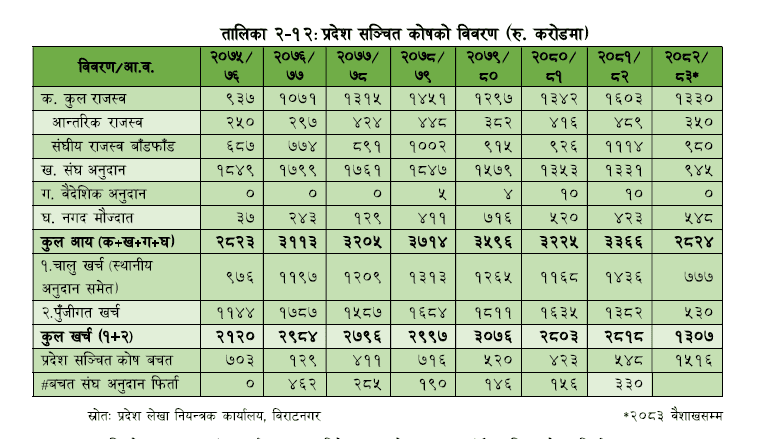
In the financial year 2079/080, the provincial government spent 18.11 billion 25.28 million rupees in capital expenditure. This amount decreased to 16.34 billion 28.98 million rupees in the financial year 2080/081. In the financial year 2081/082, development expenditure further decreased to 13.82 billion 61 million rupees.
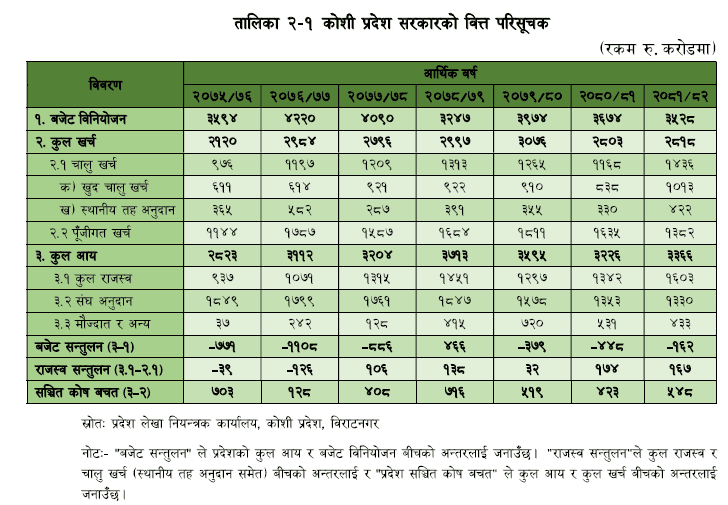
As of the end of Jestha in the current financial year (2082/083), only 6.83 billion 23.82 million rupees, or 39.8 percent, of the capital budget has been spent. At this rate, it seems difficult for development expenditure to reach the level of the previous year even by the end of the financial year.
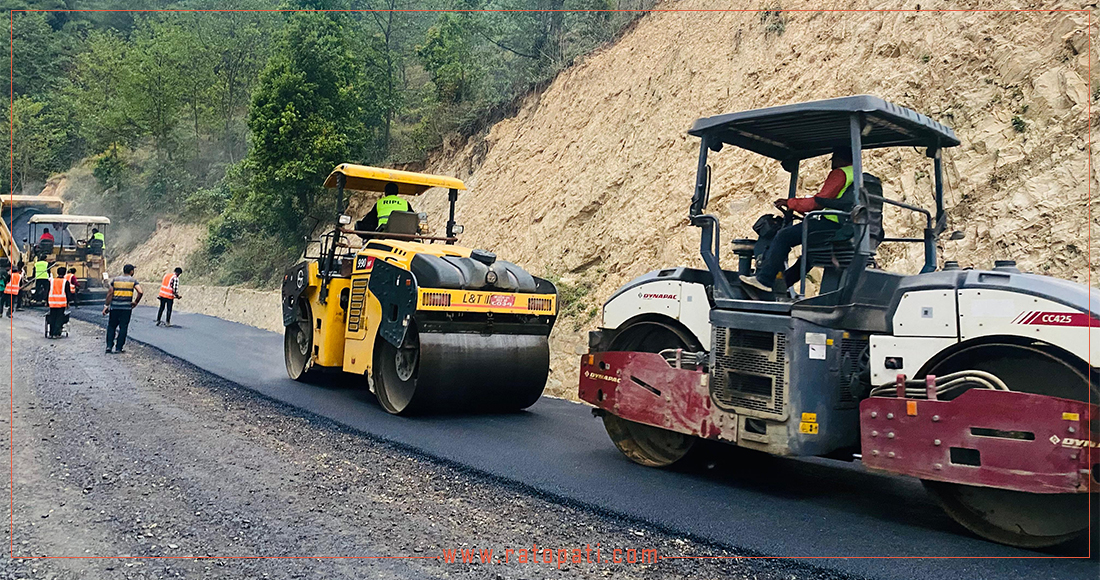
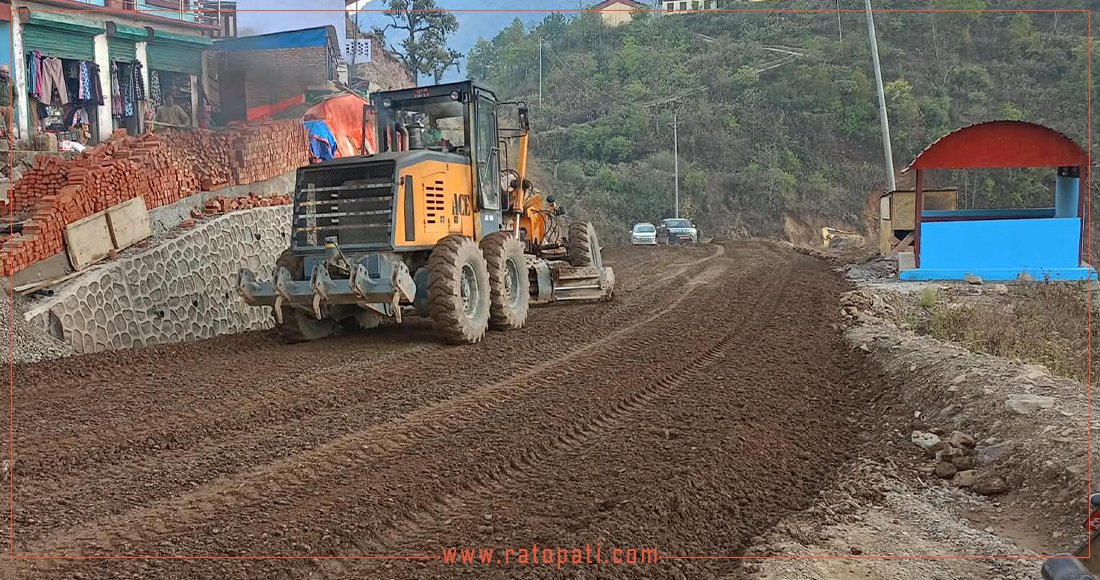
With the decrease in development expenditure by approximately 4 billion rupees in three years, infrastructure projects such as roads, bridges, drinking water, irrigation, school, and hospital buildings in the province have been affected. Some projects have been stalled due to lack of budget and slow implementation.
According to economist Dr. Dilnath Dangal, weak revenue collection, political and administrative apathy in budget implementation, and weaknesses in project selection are responsible for the decline in capital expenditure.
"The government has not been able to collect revenue as targeted. Even if revenue is low, current expenditure cannot be reduced, which directly affects the development budget," Dangal said. "During budget formulation, everyone competes to get projects in their areas, but after allocation, both political leadership and the administrative machinery become apathetic in implementation."
According to Dr. Dangal, not only the lack of resources but also the inability to spend available resources is a major reason for the shrinking development budget. He stated that employees also have a psychological fear of being investigated by the Commission for Investigation of Abuse of Authority for decisions made, which slows down the decision-making process and affects budget expenditure.
He considers the tendency to select projects based on political pressure without detailed project reports (DPR), environmental impact assessments, and land management as a problem. He believes that such projects cannot move forward later due to legal, technical, or forest-related disputes.
Former Minister of Economic Affairs and Planning Indra Bahadur Angbo questions the government's performance capacity, citing the lack of improvement in development expenditure even with a strong government. "Previously, the reason for non-expenditure was said to be government instability; now, even with a strong two-thirds government, expenditure on physical infrastructure is weak. The fact that more than five billion rupees remain idle in the consolidated fund and development construction work is stalled shows the government's weak spending capacity," he said.
According to planning expert Dr. Purna Loksam, although the budget size has not increased significantly in the last eight years, the province's actual financial capacity has been shrinking due to rapid increases in inflation, population, and development needs. "The biggest problem is the trend of increasing current expenditure and decreasing development expenditure; structural reforms in the project selection process and budget implementation system are necessary for its solution," he said. He added that merely increasing expenditure is not enough; investment must be made in a way that ensures economic returns.
- Overall Spending Capacity Also Weak
Not only capital expenditure, but the provincial government's overall budget spending capacity also appears unsatisfactory. The provincial government presented its first budget of 1.02 billion 5 million rupees on March 29, 2074. Since then, although the budget size has increased in most years, expenditure has not met the target.
In the financial year 2075/076, out of 35.94 billion rupees allocated, only 21.30 billion rupees were spent. In the financial year 2076/077, out of a budget of 42.20 billion rupees, 29.84 billion rupees were spent, while in 2077/078, out of a budget of 40.90 billion rupees, only 27.96 billion rupees could be spent.
In the financial year 2078/079, although the budget was reduced to 32.74 billion rupees, expenditure was limited to 29.97 billion rupees. In the financial year 2079/080, out of a budget of 39.74 billion rupees, 30.76 billion rupees, or 77.03 percent, were spent. In the financial year 2080/081, out of a budget of 36.81 billion 90.74 million rupees, only 28.03 billion rupees, or 76.12 percent, could be spent. Furthermore, in the financial year 2081/082, although 35.27 billion 93 million rupees were allocated, expenditure was limited to 28.18 billion rupees, or 80.23 percent.
In the current financial year (2082/083), a budget of 35.87 billion 99 million rupees has been allocated. As of the end of Jestha, the provincial government has been able to spend only 16.39 billion 32 million rupees, or 45.5 percent.
However, for the upcoming financial year (2083/084), the Minister of Economic Affairs and Planning, Bidur Kumar Lingthep, has already presented a budget of 40.44 billion 98 million rupees. Although this is 12.74 percent larger than the current year, the capacity to spend still appears to be a challenge.
- Dependence on Federal Grants
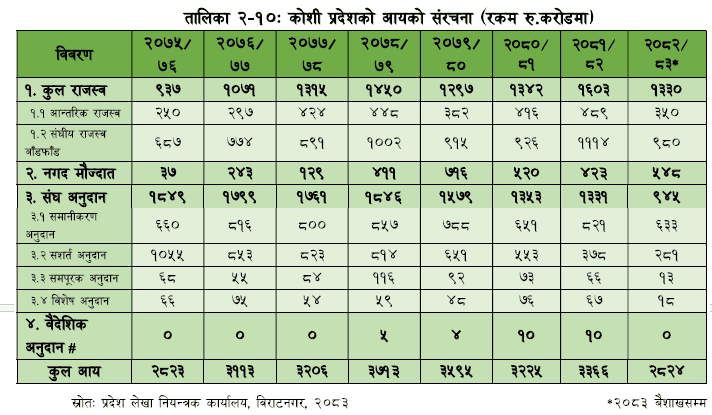
Koshi Province has not yet been able to collect even 5 billion rupees in internal revenue. The provincial government is heavily dependent on resources received from the federal government through equalization, conditional, special, and complementary grants. However, due to the inability to spend the received grants on time, a large amount has to be returned to the federal government.
In the financial year 2081/082 alone, the provincial government returned 3.30 billion rupees in grants. According to Sushil Bastola, Undersecretary at the Ministry of Economic Affairs, it is estimated that more than 1.5 billion rupees in budget may be returned in the current financial year as well.
This specific news has been automatically translated by AI. As a result, there may be some inaccuracies or language errors.



_ImiemsL76Y.jpg)