IMO Halts Convoy Operation After Attack on Ship in Strait of Hormuz
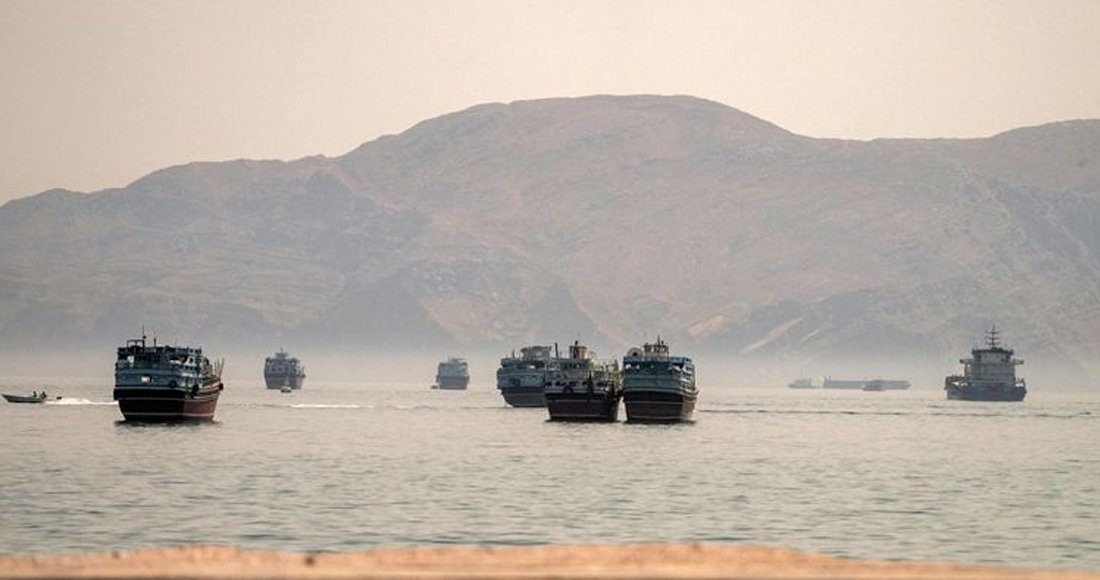
Tehran. The International Maritime Organization (IMO) of the United Nations has halted its campaign to safely escort ships on Thursday after an attack on a cargo ship in the Strait of Hormuz.
This incident has once again raised doubts about the durability of the initial agreement to end the Iran war.
The UK Maritime Trade Operations (UKMTO), a British naval authority, reported that a missile struck a cargo ship near Oman. This attack occurred just hours after Tehran warned against using its designated routes.
Two US officials claimed that Iran attacked the ship. Iran's Persian Gulf Strait Authority stated that ships deviating from their designated routes would not be guaranteed safety. The Iranian authority stated that ship owners, operators, and commanders themselves must be responsible for the consequences of using unauthorized routes.
According to sources, the attacked ship is the Singapore-flagged 'Ever Lovely'. Security sources suggested it might have been a drone attack. The US government has not yet commented on this matter.
US President Donald Trump had warned earlier this month that if Iran did not comply with the agreement to end the war and open the Strait, the US could resume bombing. Hundreds of ships and thousands of sailors have been stranded in the Strait of Hormuz for months since the war began at the end of February.
The IMO has decided to temporarily halt its campaign to ensure the safety of ships on the escort list and everyone in the region. IMO Secretary-General Arsenio Dominguez clarified that the attacked ship was not part of its escort program.
This campaign, which began on Tuesday, was an optional arrangement allowing ships to exit using Iranian or Omani waters under US supervision. Following the news of the attack, crude oil prices rose by 2 percent.
This incident has drawn attention to Iran's future control over the Strait of Hormuz, through which a fifth of the world's oil and liquefied natural gas is supplied daily. Earlier, US Secretary of State Marco Rubio had stated that Iran stopping ships would cause problems.
Iran, however, has signaled its intention to maintain control over the Strait. Iran's Revolutionary Guards warned of action against ships not following their designated routes and ordered two Panamanian ships to change course on Thursday.
Earlier, US Energy Secretary Chris Wright had stated on February 28 that oil supply was returning to normal compared to the period after the US and Israel attacked Iran, with 20 million barrels of oil exported in 24 hours. According to data, oil transport through the Strait of Hormuz this week has reached its highest point since the war began.
Eight ships from South Korea have also departed from there. Due to the war, Iran's control over this important waterway has affected the global energy market and economy. This war is proving costly for Trump just before the midterm elections in November. According to an Ipsos poll for Reuters, only 25 percent of Americans believe this war was necessary.
Trump is facing criticism at home and abroad as conflicting reports emerge about the ceasefire agreement. Disagreements still persist on financial incentives for Iran, nuclear inspections, control of Hormuz, and Israel's parallel war in Lebanon.
This specific news has been automatically translated by AI. As a result, there may be some inaccuracies or language errors.




_QGpzandlte.jpg)