Donations to Ram Mandir Face Scrutiny Amid Allegations of Misappropriation

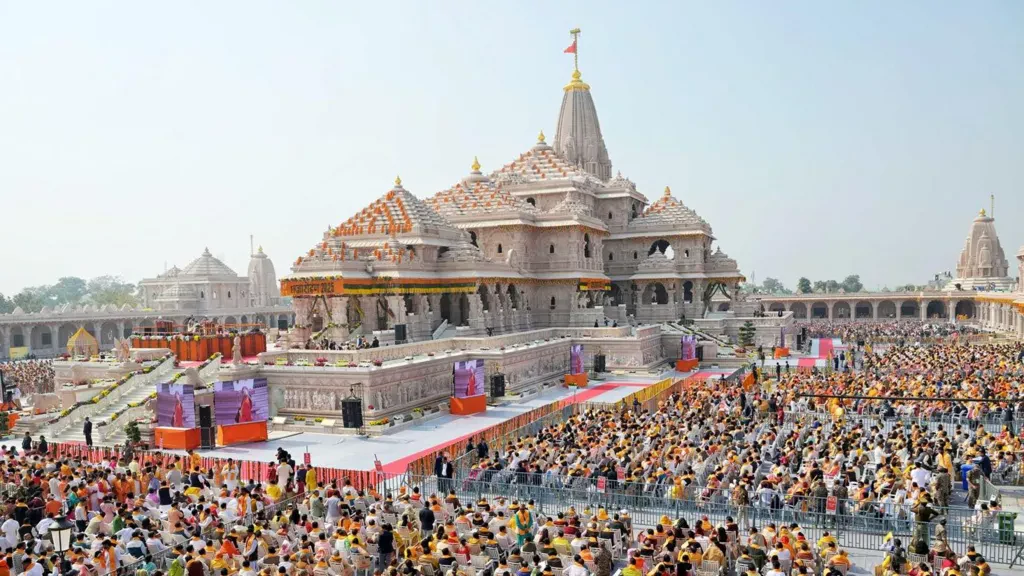
New Delhi. Controversy over allegations of misappropriation of crores of rupees in cash and valuable donations offered by devotees at Ram Mandir has reached its peak about two years after Indian Prime Minister Narendra Modi inaugurated it. The three-story temple, inaugurated in January 2024, has now become one of India's major pilgrimage sites.
An estimated 50 million devotees are expected to visit annually. While 70,000 to 80,000 devotees visit the temple premises daily, this number increases further on weekends and festivals.
However, political controversy has erupted recently after allegations of irregularities in the management of cash, gold, silver, and valuable jewelry donated by devotees became public. A petition has also been filed in the Supreme Court of India seeking an independent investigation into the matter.
Meanwhile, the Uttar Pradesh government has formed a three-member Special Investigation Team (SIT) to investigate the incident. The Shri Ram Janmabhoomi Teerth Kshetra Trust, which manages the temple, has denied all allegations. Champat Rai, the Trust's General Secretary, stated in a video message released on social media that the process of donation collection, counting, and auditing is regularly conducted in the presence of trustees, staff, and representatives of the State Bank of India, hence no irregularities have been found.
According to Indian media, the temple earned approximately 3.27 billion rupees in the financial year 2024-25. With this, Ram Mandir has become one of the highest-earning religious institutions in India.
The issue has become a national debate after a former MLA from Ayodhya alleged that more than 70 million rupees were missing. The Ram Janmabhoomi-Babri Masjid dispute has been at the center of India's politics, religion, and legal debate for decades. In 2019, the Supreme Court allowed the construction of Ram Mandir on the disputed land and ordered the provision of alternative land for the construction of a mosque.
This temple in Ayodhya, North India, was built on the site of the 16th-century Babri Masjid. That mosque was demolished by a Hindu mob in 1992. Communal violence that ensued claimed the lives of about 2,000 people.
This specific news has been automatically translated by AI. As a result, there may be some inaccuracies or language errors.