Europe Faces Record Heatwave, Drowning Deaths Rise

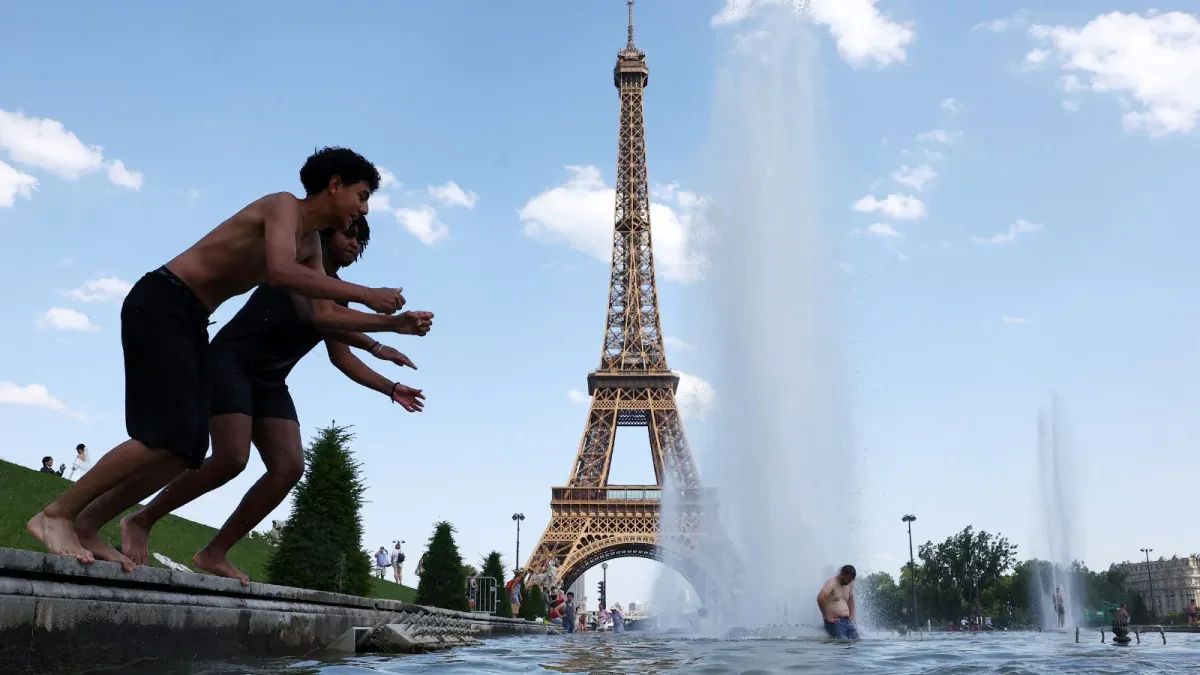
France's Prime Minister Sebastien Lecornu said that 40 people have drowned since Thursday while trying to escape the rising heat by swimming. Meanwhile, temperatures have set records in various European countries, and the heatwave has reached its peak. France, Spain, and Italy have been the most affected so far. In France, Tuesday recorded the hottest day in June's history, with an average temperature of 29.8 degrees Celsius. According to Meteo France, Monday night also recorded the hottest night in history, with a minimum average temperature of 21.6 degrees Celsius. More than half of the country has been placed on the highest alert, or 'Red Alert'. Meanwhile, in Spain, temperatures are expected to exceed 40 degrees Celsius in some areas on the third day of the national heatwave. 'Red Alert' has been issued for Andalusia in the south and Cantabria and Basque Country in the north. Spain is among the European countries most affected by climate change. According to the national weather service AEMET, heatwaves in June are becoming more common. Between 2000 and 2025, there have been 10 heatwaves in June in mainland Spain, compared to only two in the previous 25 years. In Italy, a red alert has been declared in 15 cities, including Rome, Milan, Florence, Turin, and Venice. This warning indicates a health risk not only for the elderly or chronically ill but also for healthy adults. France's Sports Minister said that people are increasingly going into rivers and canals to cool off without assessing the risks. One of the victims was a 13-year-old girl who went to swim in the Seine River in Fontainebleau-la-Port with her family on Sunday evening. She did not know how to swim. Meanwhile, a young professional football player rescued from the Rhone River near Lyon is in serious condition. Emergency services were deployed after four young people got into trouble in an area where swimming is prohibited. Two more children died in France on Monday, reportedly due to the extreme heat. Two children, aged two and four, were found dead inside their family's car in a parking lot in the southern city of Carpentras. Many people have also drowned in Germany. Temperatures are expected to reach up to 40 degrees Celsius in the western and southwestern regions by the end of this week. According to the German Life Saving Association (DLRG), six people have died while swimming from Friday to Sunday. The association stated that accidents are particularly common among men who underestimate the water's surface and their own abilities. The bodies of three men, aged 23, 27, and 50, who had gone missing a few days earlier, were found in the Rhine River near Biblis in the southwest. According to Spain's AEMET weather service, temperatures could exceed 44 degrees Celsius in rural areas near the southern city of Cordoba on Tuesday, and exceed 42 degrees Celsius in the Ebro Valley in the northeast. Climate change is increasing temperatures worldwide, but its effects are particularly evident in Europe. According to Copernicus Climate Service, Europe is the fastest-warming continent, with temperatures rising at twice the global average. On Monday, 101 out of AEMET's 828 weather stations recorded temperatures of 40 degrees Celsius or higher. 45 degrees Celsius was recorded in Andujar. 'Heatwaves are now appearing earlier in the summer compared to previous decades,' Ruben del Campo of AEMET told the Spanish media. In Italy, the government has reinstated emergency labor protection measures to prevent workers in fields and construction sites from working in extreme sun. Companies that stop or reduce work due to dangerous heat can now receive government support. Meteo France announced that the red warning would be extended from 54 to 58 departments on Wednesday afternoon, including more areas in the northwest. Valerie Pecresse, president of the Ile-de-France region, which includes the entire Paris area, urged people not to travel and to work from home. 'Railway tracks cannot withstand temperatures above 50 degrees Celsius. Therefore, there will be many disruptions to public transport,' she said. The Eiffel Tower announced it would close early on Tuesday due to the forecast of extreme temperatures in the capital. Although scheduled to be open until 12:45 AM, it closed at 4:00 PM, with the last admission at 12:15 PM. Last year, 6.75 million people visited the monument. The Louvre, the world's most visited museum, also announced it would shorten its closing time from 6 PM to 4 PM from Wednesday to Saturday. The Louvre stated that its historic building is 'still fragile and not sufficiently adapted to climate change,' and that temperatures rise the most at the end of the day, which is exacerbated by visitor crowds. The nuclear power plant in southwestern France also had to be shut down on Monday night due to the heatwave, as the temperature of the water in the Garonne River was expected to reach 28 degrees Celsius on Tuesday. According to French law, the temperature of the water used to cool the reactors at the Golfech center must not exceed this. According to Spanish meteorologists, temperatures will begin to drop from Wednesday in the Iberian Peninsula. However, temperatures are expected to peak by Friday in the Netherlands, Belgium, and Germany. The Dutch weather service KNMI has issued a Code Orange warning, indicating a 'high probability of dangerous weather' from Wednesday to Friday in the southern and central regions. After a meeting on Tuesday, Belgium's risk management group decided to activate the 'National Ozone and Heat Plan' alert phase. This is the second time such a decision has been made; the first was in August 2020. No specific national measures have been announced so far, but special care has been urged for the elderly and children. Climate change is increasing temperatures worldwide, but its effects are particularly evident in Europe. According to Copernicus Climate Service, Europe is the fastest-warming continent, with temperatures rising at twice the global average. This has led to more frequent heatwaves in summer, increasing pressure on water supplies, and more intense wildfires. Last year, over 1 million hectares of forest burned across Europe, a record. Spain was particularly affected. From BBC.
This specific news has been automatically translated by AI. As a result, there may be some inaccuracies or language errors.