Europe Battles Worst Wildfire Crisis in Decades

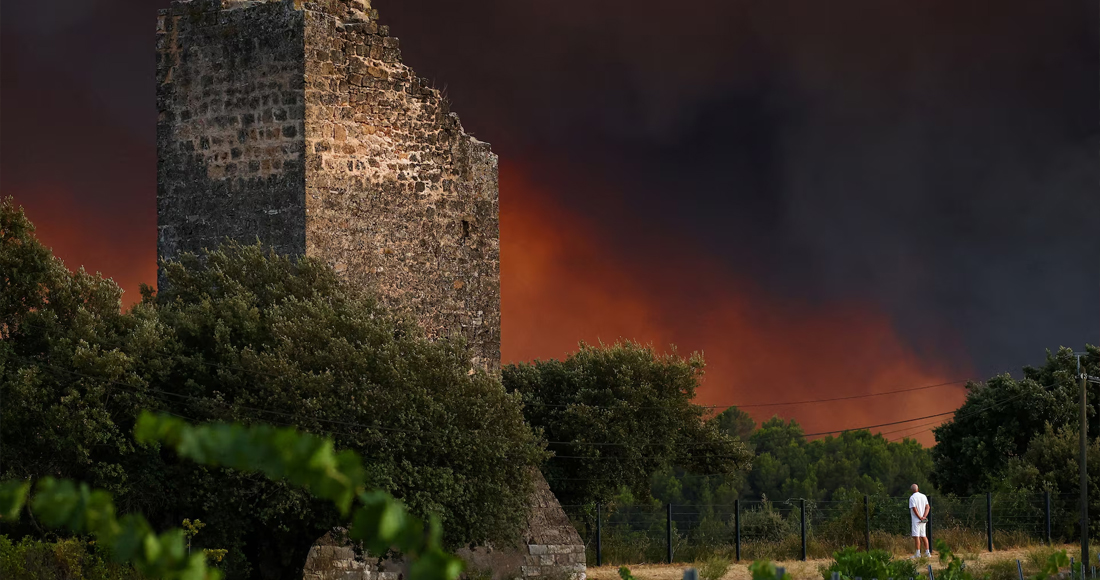
Europe is currently battling its worst wildfire crisis in decades. Wildfires spreading one after another in France and Spain have turned thousands of square kilometers of forest area into ashes, while millions of people have been displaced.
Extreme heat, prolonged drought, dry vegetation, and changing wind direction have pushed the fire beyond control. As meteorologists warn that temperatures will rise further in the coming days with no possibility of rain, rescuers are working day and night.
_zSZqZxVBcn.webp)
This crisis is not just a wildfire problem, but also a direct example of the new reality that climate change is creating in Europe. The devastation currently happening in France and Spain signals that extreme weather events are no longer exceptions but regular risks.
The most serious situation has emerged in the Gironde region of southwestern France. The fire spreading around the city of Bordeaux has necessitated the largest mass evacuation operation France has conducted in peacetime since World War II.
Due to the fires, more than 330,000 people in France and Spain have been forced to leave their homes, with more than 220,000 people evacuated to safe places in France alone. Many families are currently staying in temporary shelters, while some are waiting for information on whether their homes are safe.
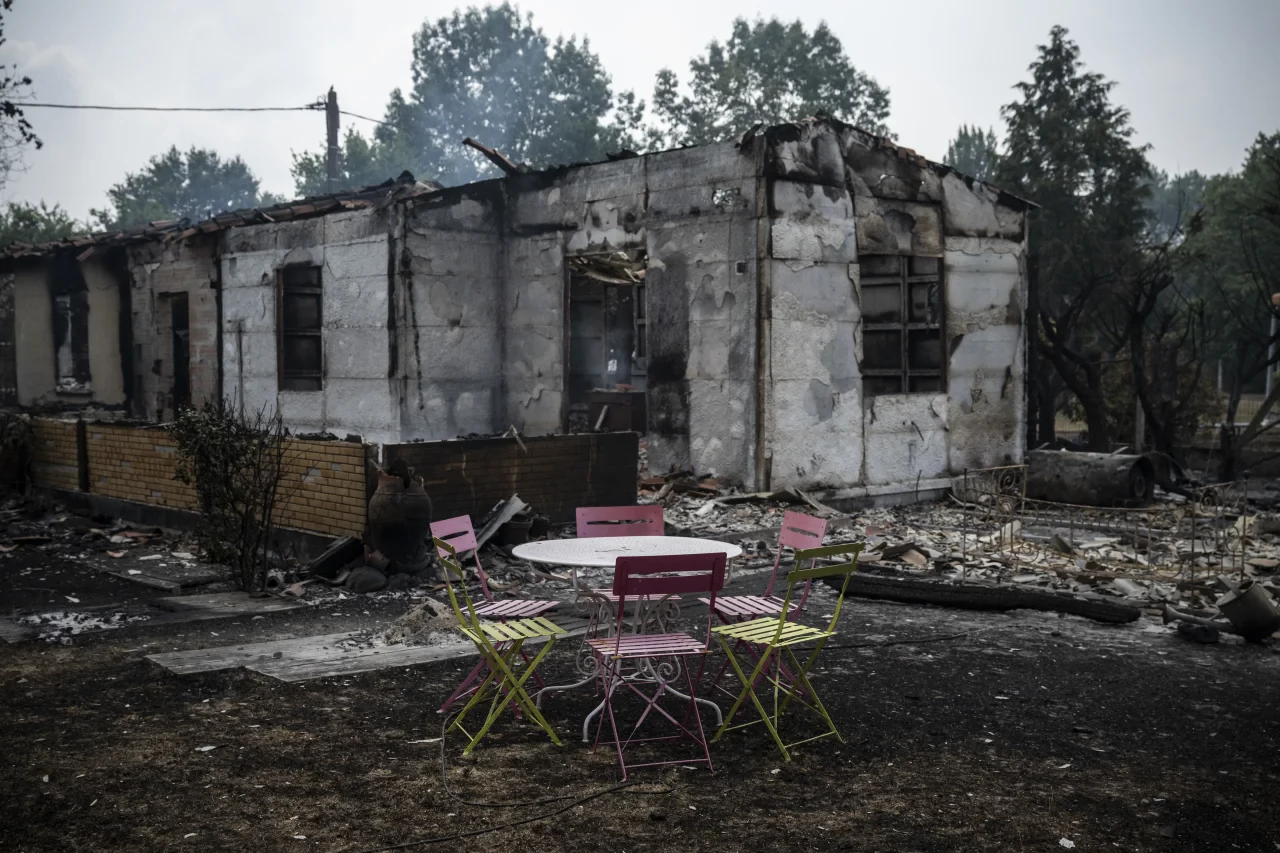
The Bordeaux metropolitan area is France's sixth-largest metropolitan area, with a population of about 1 million people. Although the fire has not entered the city, surrounding settlements have been completely evacuated. La Teste-de-Buch, west of Bordeaux, home to about 3,500 people, has become the most affected area by the wildfire.
This year, more than 98,000 hectares of forest area have burned across France. Of this, 42,000 hectares have been destroyed in the southwestern part alone, considered one of the largest wildfires since World War II. In La Teste-de-Buch alone, more than 150 houses have been completely destroyed. Some villages are now deserted, and roads are covered with ash, smoke, and burnt trees.
France has deployed a massive rescue mechanism to control the wildfire. 2,500 firefighters, 1,500 soldiers, and about 1,200 police and paramilitary forces (Gendarmes) are deployed in the affected areas. Due to the rapid spread of the fire, a 60-kilometer stretch of the A-63 highway connecting to Spain has been closed. Most flights at Bordeaux Airport have been delayed, and many flights have been canceled. The final stage of the world-famous Tour de France cycling race has also been shortened to allow security forces to be deployed to control the fire.
_6RML5ZQ2Ub.webp)
French Interior Minister Laurent Nuñez stated that the fire situation is still 'extremely adverse' and the fire is moving erratically towards Bordeaux. President Emmanuel Macron has pledged that the government will provide necessary support for reconstruction to the affected communities.
The situation in Spain is equally dire. More than 90,000 people have been displaced from the Madrid and Ávila regions. In the Madrid autonomous community alone, about 30,000 people have been ordered to leave their homes. According to Spain's Minister for Ecological Transition, Teresa Ribera, more than 77,000 hectares of forest area have been affected by wildfires this year. She stated that the fire spreading in Ávila is one of the largest wildfires in recent years.
The town of Navas del Rey near Madrid is now deserted. Thousands of hectares of forest have turned into black land. When the fire surrounded the town, all its residents were immediately evacuated to safe places. Security forces are deployed at the entrance of the town, and only locals coming to get essential medicines or supplies are granted limited entry.
_AJclLQqgXv.webp)
The experiences of local residents further highlight the human aspect of this disaster. Óscar Domínguez from Navas del Rey became emotional when he returned to his village to get medicine for his mother. He said, 'This place used to be like a garden, like an oasis. Now everything is destroyed. This is a huge disaster.'
Another local, María Ángeles Serrano, is more concerned about nature than property. She says, 'My biggest fear is seeing the damage to nature. Physical damage can be repaired, but the emotional damage to nature can never be compensated.'
Olga Congacha from Robledo de Chavela shared the pain of having to leave her village immediately, saying, 'I didn't know whether to cry or not. That moment was unbearable.' Later, when she returned home to get medicine, she found the roads deserted and her house covered in ash.
_SJAYZM18ha.webp)
Firefighters battling the wildfires are also facing extraordinary challenges. According to Captain Nicolas Braz, commander of the French firefighting team, the fire is creating its own wind and vortex. In his words, 'The fire is erratic and difficult to control.' He explained that this is why the direction of the fire changes moment by moment, requiring constant changes in control strategy.
Local communities in the affected areas are also supporting the rescuers. Residents of La Teste-de-Buch have formed a volunteer network to provide food, rest areas, and necessary assistance to firefighters. Local volunteer Nathalie Ougonne says, 'Many firefighters are seeing such a large fire for the first time in their lives. Right now, we are focused on rescue; the difficult time of reconstruction will come later.'
_XULryKQ9ZM.webp)
Spanish Prime Minister Pedro Sánchez stated that although some positive progress has been seen in controlling the fire, 'difficult times still lie ahead.' He urged people to be wary of misinformation spread on social media and emphasized the need for national cooperation to combat the climate emergency.
According to meteorologists, after a slight decrease in temperature over the weekend, it is expected to rise abnormally again. Although the wind has weakened somewhat, the risk of fire intensifying again in the dry vegetation remains as there is no possibility of rain. Therefore, the next few days are considered crucial for controlling the fire.
_h9m2AbStPP.png)
The wildfires spreading in France and Spain have not only destroyed forests, homes, and infrastructure but have also deeply impacted people's lives, memories, livelihoods, and natural heritage. The displacement of over 300,000 people, the incineration of millions of hectares of forest, and the evacuation of entire villages are serious indicators of the climate crisis Europe is facing. The fight against the fire is ongoing, but this fight is not just against wildfires, but also against the growing impact of climate change.
With the help of agencies
This specific news has been automatically translated by AI. As a result, there may be some inaccuracies or language errors.