Women Face Violence and Lack of Justice in Nepal


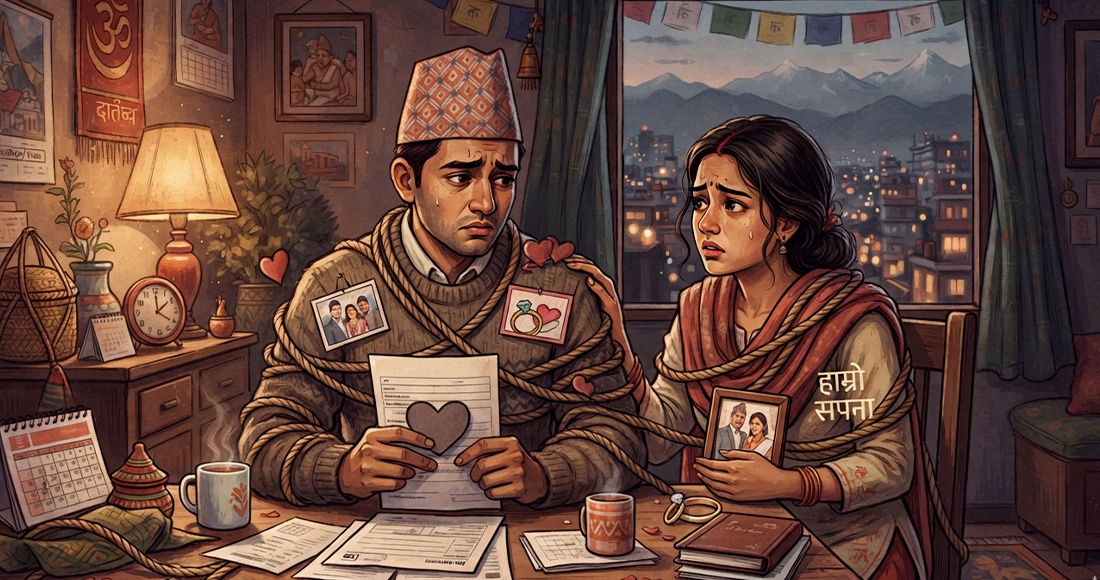
I wanted to bloom - like a colorful flower. Loving myself immensely, embracing my own existence, being completely free!
But my desire was brutally torn, shredded, and attempted to be uprooted. But those were not unknown hands. They were the same hands that I once trusted as father, brothers, friends, or my own.
Trust, which should be the most beautiful foundation of any relationship. That very trust became the biggest wound of life.
Yes, these words are definitely mine. But this is the shared cry and experience of thousands of women whose lives were torn before they could bloom. This is not just an experience, it was an attack in the name of trust, which tore not only their bodies but also their souls, existence, and identity.
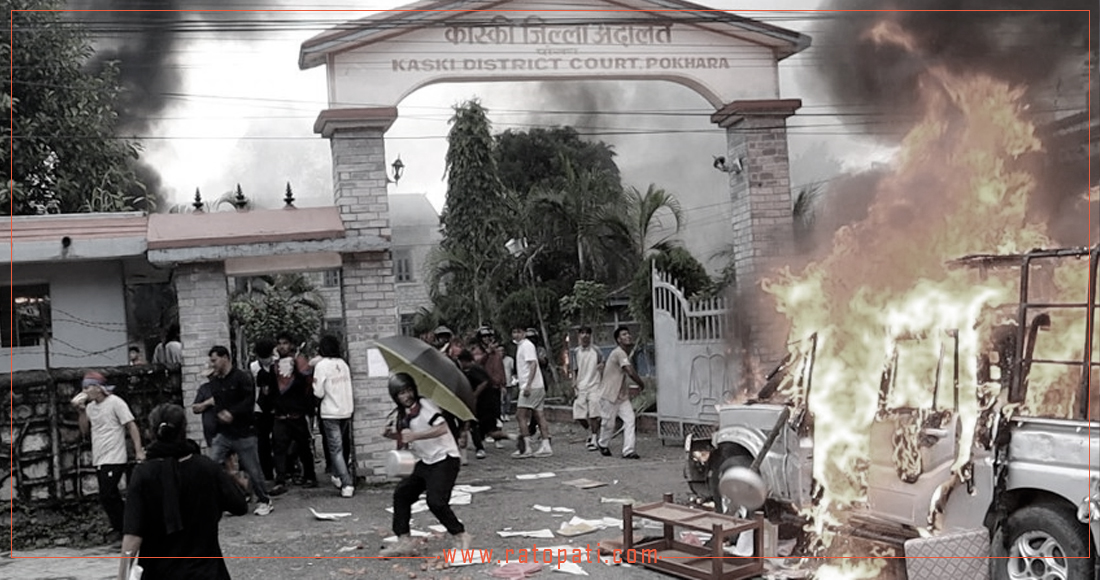
In a society like Nepal, such stories are not new. We have heard and seen such stories many times, become angry for a moment, but then forgotten. But can the victims forget that pain? The pain does not end when the incident ends. Rather, sometimes the real struggle begins only after that. The case of Nirmala Panta is a living example of this. About eight years have passed since the incident, but justice is still incomplete. There was a nationwide protest. Hundreds of people took to the streets for justice. Many investigations were conducted, debates were held on the incident, but justice is still missing.
Nirmala Panta is not just a name. She is a symbol of our society's failure - a symbol of a society where victims still have to scream for justice.
These questions are not just emotional, they are connected to the reality of our society. Because many women are still unsafe within their homes today.
This is certainly not my personal experience. But while watching the sixth episode of 'Red Bull Inside the Bunker' broadcast on YouTube a few months ago, waves of questions within me simultaneously crashed on the shore and screamed loudly - after all, what kind of society are we living in? Are we women really safe? Is there any safety left within the family?
These questions are not just emotional, they are connected to the reality of our society. Because many women are still unsafe within their homes today. Many victims are still living in fear of their own relatives.
We are always taught - home is the safest place, relatives are trustworthy. But when hurt comes from those very people called 'our own', then no corner of the world feels safe. Then relationships start to feel scary. Trust becomes a burden, and it becomes difficult to trust oneself.
As I write this after watching that series, this writing was not easy for me. My hands are shaking as I write this, the words are getting stuck. This trembling is not just of fear. This trembling is the burden of the experience of those victims. It is the pain of those words, which make the soul tremble even when heard. Sometimes, even while listening to others' stories, we come face to face with the ugly face of our own society.
The pain of sexual violence is not limited to that one moment. Even after that incident, the victim has to fight countless battles within herself. Many women are victims of sexual abuse at such an age that they have not even developed the consciousness to understand what is actually happening to them.
Many victims are more afraid of society's reaction than the perpetrator. Because our society still questions the victim, not the perpetrator. We still analyze the victim's clothes, behavior, timing, and silence, but forget to question the perpetrator's mentality and violence.
In the age of childhood, when a child looks at the world with eyes of trust, their trust is subjected to the cruelest attack. Many do not even know for years that what they have experienced was a 'crime'. They consider the incident normal, living with suppressed fear and confusion.
But as time passes, as they gradually become aware, as they begin to give words to their experiences, the suppressed pain within them begins to rise again. And then, carrying wounds from years ago, fighting countless fears and social anxieties, victims somehow gather the courage to break their silence.
But ironically, as soon as they raise their voice, society starts questioning them and creating narratives instead of standing with them. What is even more unfortunate is that many families try to hide such incidents. Sentences like 'What will people say', 'The family's honor will be lost', 'What will society say about us' deepen the victim's wounds. Because there, 'society's perception' is made bigger than the victim's pain.
This is why many women choose silence over justice. Because if they speak, they will have to face another violence - violence against their character. Their truth will be questioned. Their intentions will be questioned. Their silence will be questioned. Society easily asks - why didn't you speak then? Why were you silent for so many years? Why are you speaking after so long since the incident? What is your motive? etc. - it is very easy for society to ask such questions.
But society never tries to understand how much struggle a victim has to go through to reach the moment of speaking. When fear is choking the throat, the voice does not come easily. When shame is holding back the words; when one's own soul considers oneself guilty; and most importantly, when the fear of society's judgment completely silences a person.
Before asking the victim 'Why didn't you speak?', we need to ask ourselves - 'Why couldn't we provide them with a safe environment to speak?'
Many victims are more afraid of society's reaction than the perpetrator. Because our society still questions the victim, not the perpetrator. We still analyze the victim's clothes, behavior, timing, and silence, but forget to question the perpetrator's mentality and violence.
We need to change this structure of society. Before asking the victim 'Why didn't you speak?', we need to ask ourselves - 'Why couldn't we provide them with a safe environment to speak?'
As long as victims have to be afraid when telling their stories, as long as they are made to feel guilty when seeking justice, our society cannot truly be called safe.
Even today, many women are silent. They want to speak, but cannot. Because the family has hung the tag of 'honor'. Thousands of screams are hidden within this silence. But now it is necessary to raise questions - what kind of society are we building? Where women have to be afraid in their own homes? Where victims themselves have to consider themselves guilty? Where justice remains missing for years?
If we cannot face these questions, we are merely weaving a social fabric that looks modern but is insecure from within.
Nepal's Muluki Criminal Code, 2074, defines rape as a serious criminal offense and provides for strict punishment according to the victim's age, condition, and the nature of the crime. According to the law, rape of a girl under 10 years of age is punishable by 16 to 20 years in prison, and compensation is to be provided to the victim. Similarly, for rape of girls aged 10 to under 14, the punishment is 14 to 16 years in prison. For rape of girls aged 14 or above but under 16, the punishment is 12 to 14 years in prison, while for girls aged 16 to under 18, the punishment can be 10 to 12 years in prison. For proven rape of women aged 18 or above, the punishment is 7 to 10 years in prison.
Rape within a marital relationship is also considered a crime by law, with a provision for imprisonment of up to 5 years.
In the context of Nepal, policies and laws appear strict in legal documents. But the question is not about the existence of the law but its effective implementation. Because past incidents have shown - the tendency to protect perpetrators through various power centers is still not completely eradicated, rather than bringing them to justice.
When the perpetrator's political influence, economic status, or social power becomes superior to the law, the victim's faith in justice weakens. Justice is not just a court verdict, it is also the basis of citizens' trust in the state. If even in sensitive cases like rape, differential treatment is given based on influence and access, then the rule of law itself comes into question.
Rape is not a personal mistake or a private dispute. It is a serious violence against human rights. It attacks not only a person's body but also their self-respect, freedom, and the right to live a safe life. Therefore, giving any kind of concession in such incidents based on political, social, or economic status is contrary to the fundamental principles of justice.
The fight against rape is not just a legal battle. It is a collective struggle for social consciousness, state accountability, and the protection of human dignity.
Unfortunately, in our society, attempts to question the victim, suppress the incident, arrange a settlement, or influence the case are still seen. Such tendencies protect the perpetrator and victimize the victim repeatedly.
There can be no compromise in cases of sexual violence. No political interference is acceptable. No protection is justifiable. The state's first duty is to stand with the victim, conduct a fair investigation of the facts, and bring the perpetrator within the purview of the law.
As long as the certainty of the guilty being punished in rape cases is not established, the sections of the law will remain limited to paper. The true meaning of justice will be fulfilled only when the victim feels safe and the perpetrator cannot escape the law based on their influence or power.
The fight against rape is not just a legal battle. It is a collective struggle for social consciousness, state accountability, and the protection of human dignity. The development of a culture that listens to the victim's voice, respects their pain, and does not protect the perpetrator under any circumstances can become the foundation for building a safe and just society.
We need to change not only the law but also our thinking. We must abandon the tendency to find fault with the victim. We must understand the meaning of consent, teach children about respect and equality, and accept the independent existence of women.
'When I Was Torn' is not just a title. It is the reality of thousands of women - a reality that society often tries to suppress. But suppressed voices will surely surface one day. And when those voices begin to speak, they will question not just a story, but the entire conscience of society.
This specific news has been automatically translated by AI. As a result, there may be some inaccuracies or language errors.