Nepal and India Enhance Tech Partnership with AI Seminar

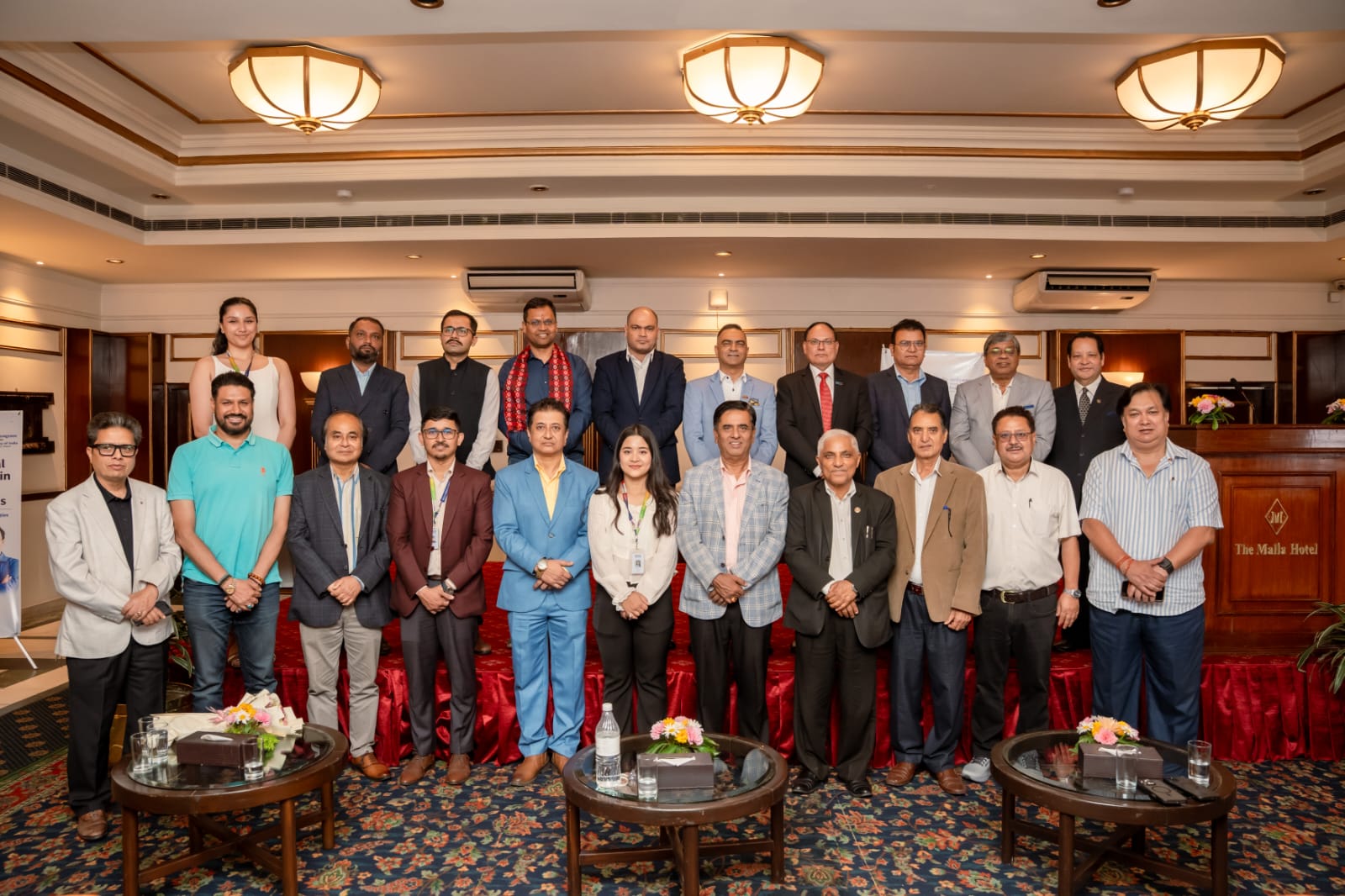
Kathmandu. A special seminar has been organized in Kathmandu with the objective of increasing partnership in emerging technologies between Nepal and India and exploring bilateral opportunities in the field of Artificial Intelligence (AI).
The seminar on the topic 'India-Nepal Partnership in Emerging Technologies: Exploring Bilateral Opportunities for AI Collaboration' was organized under the joint auspices of the Indian Embassy in Nepal and the Nepal-India Chamber of Commerce and Industry (NICCI). The program was attended by a large number of businessmen, government representatives, academics, and startup representatives from both countries.
In the seminar, Dr. Pratyush Kumar, Co-founder and CEO of 'Sarvam AI', which has successfully received financial and computing support of INR 246.72 crore under the India AI Mission, presented the keynote paper.
While delivering the welcome address, NICCI President Sunil KC emphasized the need to strengthen technology-based economic cooperation between Nepal and India. He urged the Indian AI sector to expand its presence in Nepal and extend hands of partnership with the public and private sectors of Nepal.
Suman Shekhar, Deputy Commercial Secretary of the Indian Embassy, discussed the strong economic and commercial relations between the two countries and stated that both countries have a common interest in enhancing digital capabilities, startup cooperation, and knowledge exchange in new technologies. He informed that the second edition of the India-Nepal Startup Partnership Network program has already started from June 1 (2026).
Under this, 25 startups from Nepal are participating in an 8-week fully-funded training and innovation program at the IIT Madras Incubation Technology Foundation in Chennai. In the previous first edition, 9 startups from Nepal have already received incubation offers from IIT Madras.
In his presentation, Dr. Kumar discussed the development of AI, including Large Language Models (LLMs), and its impact on countries in the early stages of AI. He highlighted the learnings from the AI Impact Summit held in New Delhi and the 7 pillars of the India AI Mission (Compute, Datasets, Innovation, Application Development, Future Skills, Startup Financing, and Safe & Trusted AI).
He emphasized practical aspects such as the importance of 'Speech to Text' models to reach communities outside the reach of internet and technology, data sovereignty, and the development of indigenous talent. He pointed out that the startup community and academic institutions of Nepal can take steps in this direction and that Nepal-India cooperation can be solidified through joint research and training programs.
Meanwhile, cooperation between Nepal and India in the field of technology is deepening further. A Memorandum of Understanding (MOU) has been signed between the Digital India Bhashini Division (DIBD) under the Ministry of Electronics and Information Technology of the Government of India and the Center for Digital Public Infrastructure and Artificial Intelligence (DPI-AI) of Kathmandu University.
This agreement will create a framework for cooperation for Language AI, multilingual digital public infrastructure, and the development of inclusive digital ecosystems in both countries. During a bilateral meeting held in New Delhi last week, Amitabh Nag, CEO of DIBD, and Associate Dean Professor Balkrishna Bal of Kathmandu University exchanged the MOU in the presence of Indian External Affairs Minister Dr. S. Jaishankar and Nepal's Foreign Minister Shishir Khanal.
Earlier, the 'India AI Impact Summit 2026' held from February 16 to 21, 2026, at Bharat Mandapam in New Delhi was attended by delegations from over 100 countries. The summit achieved historic global consensus, including the Summit Declaration approved by 92 countries and international organizations, voluntary frameworks for responsible AI governance, and investment commitments exceeding USD 200 billion. During the same conference, India also announced the expansion of its sovereign compute capacity by an additional 20,000 GPUs, along with the existing 38,000 GPUs.
This specific news has been automatically translated by AI. As a result, there may be some inaccuracies or language errors.