How Often Should You Brush Your Hair?

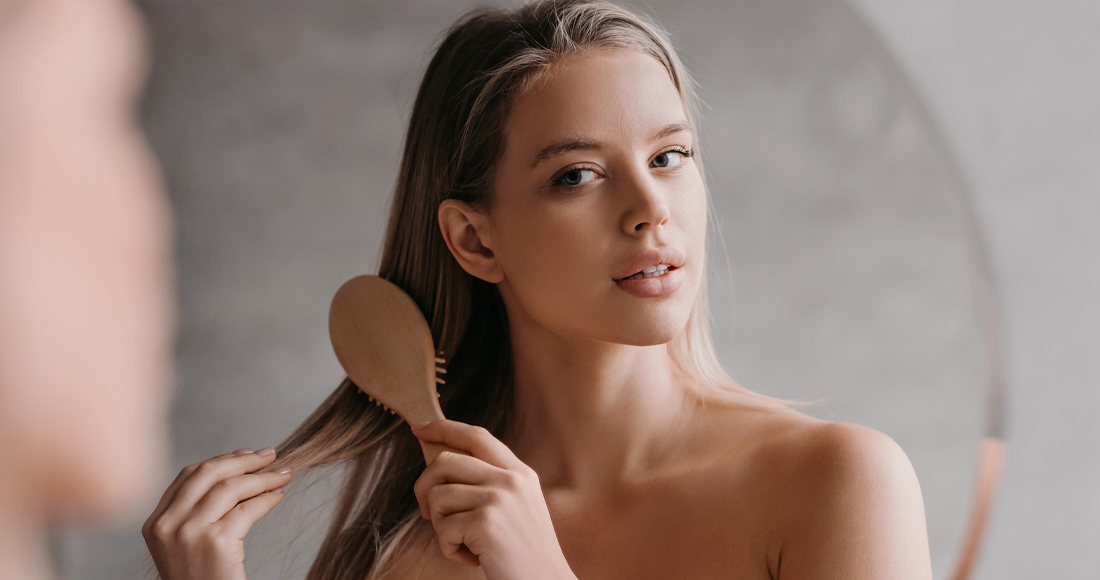
The secret to beautiful and attractive hair depends on your hair type to the texture of the comb.
Ever since I was old enough to decide how to wear my hair, my hair has been waist-length and straight. As I grew up, I would comb my hair whenever I got the chance: as soon as I woke up, when I went to the bathroom, and even when I took a break from homework.
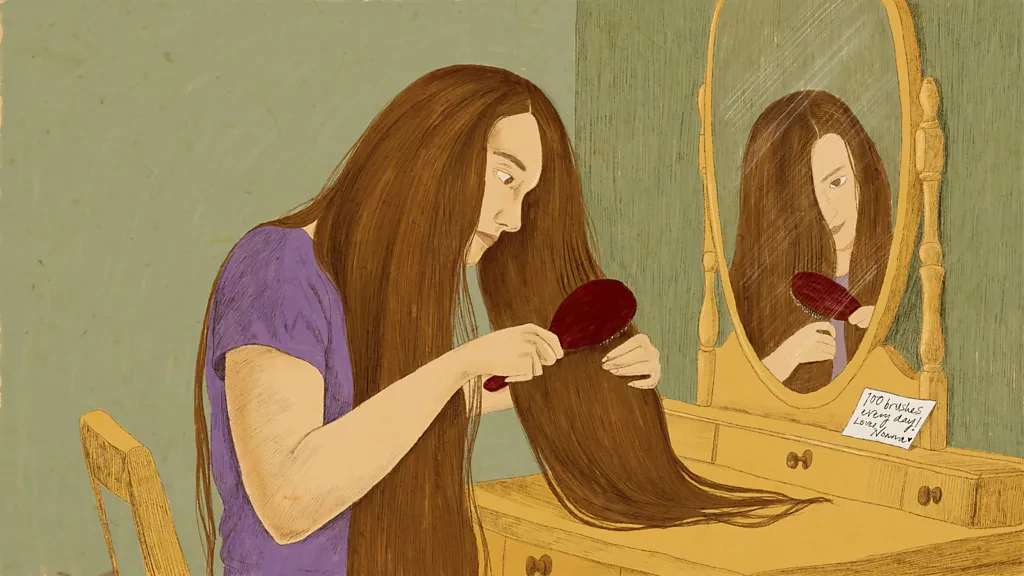
I used to keep combing my hair, remembering Empress Sisi of Austria from the 18th century. Her hair was brown and straight like mine, but it was long enough to touch her heels. I used to hear that she kept her hair healthy by brushing it 100 times every night.
(I believed this completely until I learned that this story, told by grandmothers all over the world while preparing this article, is just a myth. I was very disappointed to learn this.)
Now that I'm grown up, I only comb my hair thoroughly when I bathe, and that's it. But as far as I know, my hair still looks and feels the same.
The reason for this is that while there is some truth to the stories of the Victorian era, the science of how often to brush hair is still complex. From physicists to hairdressers, everyone is trying to solve it. The answer depends on your hair type, brush type, your routine, and other things. So read on to know the right way to comb your hair.
- Brushes in History
Combs, hairbrushes, and hair care have been around since prehistoric times. Rachel Gibson, founder of 'The Hair Historian', says, 'People have always used the materials they have to make tools for cleaning and decoration. Therefore, combing hair must have been important globally throughout history.'
The idea of brushing hair 100 times may have originated in the Victorian era. According to Gibson, due to the social expectations of that time, women's hair was very long. It was considered their 'crown of the head' and was an integral part of their femininity and importance.
The hair care routine typically included using a comb to detangle hair, and removing dirt, dust, and lice. Then, to soften the hair and spread natural oils, it was combed with a hairbrush made of natural bristles (often wild boar bristles).
Gibson says, 'Noble Victorian women had attractive shawls to protect their clothes from shedding hair. They would collect the shed hair in a container and later make 'dead hair donuts' to increase the volume and style of their hair.'
In 1898, Lydia Newman, an African-American hairdresser from Ohio, USA, invented the first hairbrush with synthetic bristles. This revolutionized the industry by making hairbrushes cheaper and easier to produce. This generally normalized hair combing. But along with it, misinformation also started spreading.
- The Complex Physics of Hair
Let's consider the notion that brushing hair frequently makes it grow faster. In a 2025 survey, more than 46% of respondents believed this claim. But according to Nikki Corzine, owner of a hair salon in California, USA, this is just a myth. Corzine says, 'You cannot make hair grow faster by brushing it too much.'
According to the suggestions of scientists who have developed formulas to accurately test hair damage, brushing too much can actually harm the hair and cause it to fall out.
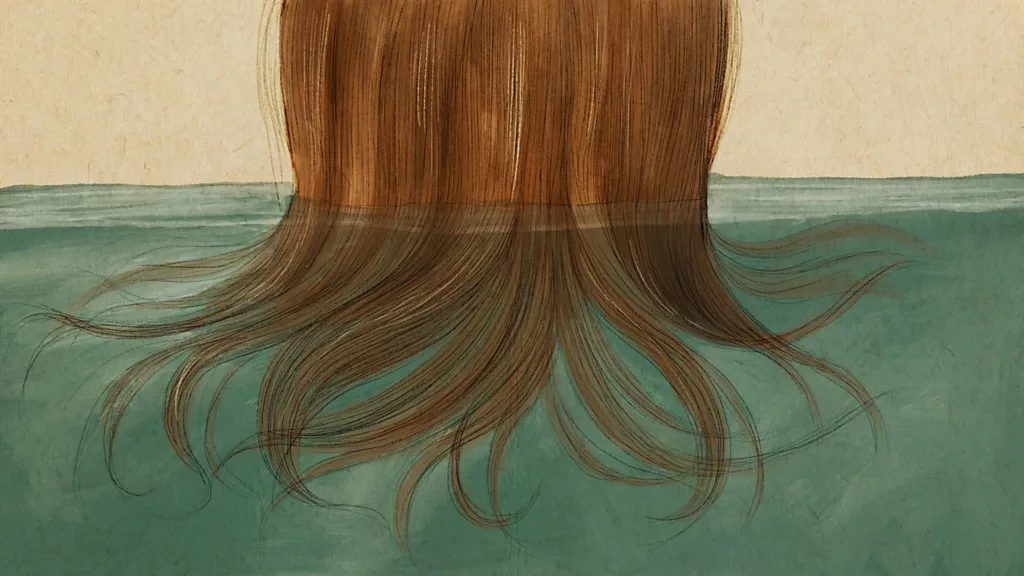
A team of researchers tested what happens when two strands of hair get tangled and pulled to untangle them. Excessive brushing caused hair to break from within, especially in those with split ends. Although healthy hair was less affected, after repeated pressure, it also started to break, with cracks starting to form from the outside to the inside.
David Taylor, a professor of engineering at Trinity College Dublin, Ireland, and author of the study, says, 'In our opinion, this is the main cause of split ends. Because in such a situation, the hair is bent a lot, so it feels more pressure than usual. In fact, the more we brush, the more likely we are to cause damage. But it depends on the force used when brushing, rather than the number of times brushed.'
In various statistical analyses of hair breakage, Trefor Evans of TRI Princeton, a hair research institute, has also shown that frequent brushing causes 'cumulative fatigue damage'.
But according to him, laboratory results do not fully represent real-world effects. Evans says, 'For most people, the effect of brushing hair is very negligible compared to chemical and heat treatments. For most, the damage from brushing hair is not very significant. It's just a few drops in the ocean of damage.'
- Hidden Benefits of Brushing
Corzine says, 'Brushing hair gently and carefully is not harmful. The problem is not in brushing, but in how you brush.'
Regular brushing prevents large knots and tangles from accumulating over time. This helps avoid the problem of having to brush hard, apply pressure, and break hair when brushing after a long time.
Jared Reynolds, a biochemist who started a haircare brand, says, 'Brushing regularly once or twice a day causes much less damage than waiting a week and brushing hard.' He emphasizes that laboratory results cannot fully replicate the natural processes of daily life.
Regular brushing also helps remove shed hair, dead skin cells from the scalp, and dirt. If these accumulate, they can create a micro-environment that causes itching or irritation to the scalp.
- How to Brush Hair?
The best way to brush your hair depends on your hair type. According to Nicola Lynch, owner of a hair salon in Miami, USA, most people with straight or slightly wavy hair should aim to brush at least three times a week. If possible, you can brush up to twice a day. (Reynolds and Corzine also recommend brushing once to twice a day.)
According to Lynch, people with straight or slightly wavy hair should not brush their hair when it is wet. Wet hair may feel stronger and thicker, but it is actually weaker.
The reason for this is that a strand of hair is made up of a 'cortex' (central part) and a 'cuticle'. The cuticle is a collection of keratin tiles, which overlap each other like roof slates. When straight or slightly wavy hair is wet, these tiles lift from the sides and open. This causes the hair to stretch, but also increases the risk of breakage and splitting.
For those with very curly hair, the advice is the exact opposite: never brush dry hair, and only detangle hair when bathing.
According to Michelle Ganes, a professor of chemistry and biochemistry at Spelman College in Georgia, USA, the physical properties of curly and coily hair are very different from those of straight and wavy hair. This has long been overlooked in scientific literature and the hair care industry. She studies the chemistry of hair of different textures.
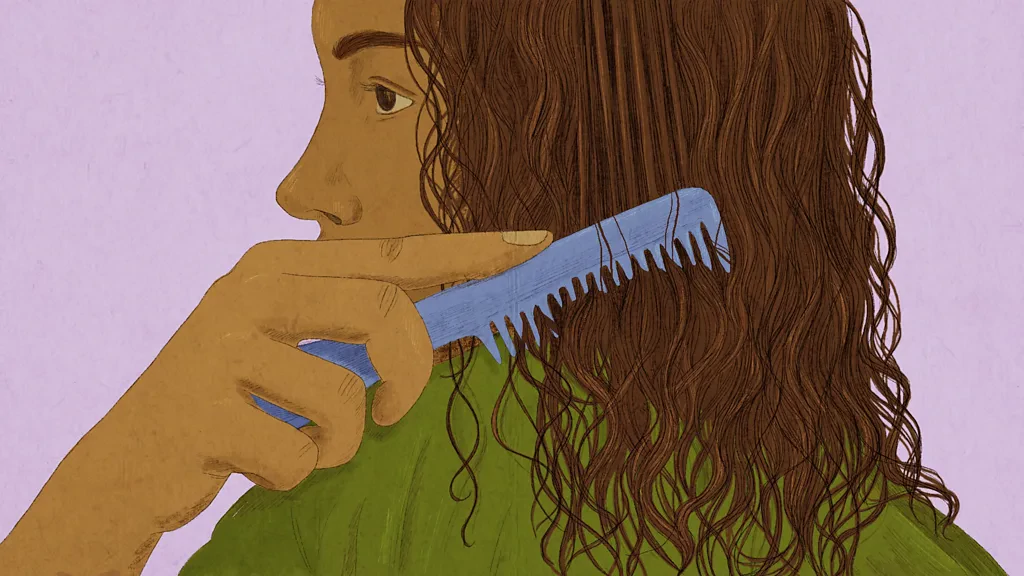
She has invented a method for scientifically classifying types of curly hair. She has discovered that as hair becomes more curly or coily, the presence of certain chemical bonds changes. This affects the physics of the hair fiber, including its strength and susceptibility to breakage.
According to Ganes's preliminary tests, compared to wavy hair, curly and coily hair has smaller cuticle layers, they are closer together, and the edges are rougher. This means they cannot retain moisture well, and they can easily get damaged and tangled.
In addition, socially popular hairstyles demand a lot of manipulation of hair (e.g., combing, straightening, braiding with extensions). This causes even more damage, Ganes says. Therefore, Ganes suggests protecting hair by using products that help the comb and brush glide easily through the hair.
Finally, make sure you are always using the right type of brush, regardless of your hair type.
Lynch says, 'If you have very curly hair, or if you have straight or wavy hair and want to brush it while wet, use a soft and flexible brush designed for detangling, which experts call a 'wet brush', instead of a hard comb.'
For dry hair, use a brush with soft bristles that are comfortable for the scalp to distribute oil from the roots to the ends. Such brushes are still called 'boar bristle brushes' because they were made from wild boar bristles in the Victorian era, when Empress Sisi used to brush her hair 100 times at a time.
To get the best of both, Reynolds is also developing a prototype of a new type of brush. It is a hybrid brush with raised plastic tips and bristles like boar bristles. The long plastic pins separate the hair while the short boar-like bristles soften the hair, distribute oil, and add volume. Reynolds says, 'It's the perfect combination.'
Throughout history, brushes have come in various shapes and sizes. This includes combs made of elephant ivory found in ancient Egyptian tombs dating back to before 3200 BC, as well as combs made from bent branches. And with a deeper understanding of hair chemistry and physics in the future, we may discover entirely new ways to protect our hair.
This specific news has been automatically translated by AI. As a result, there may be some inaccuracies or language errors.