World Blood Donor Day Celebrated Globally

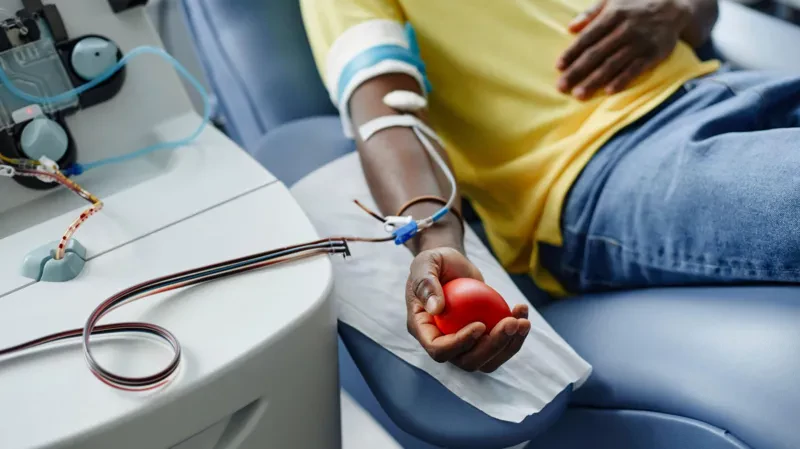
Kathmandu. Today is World Blood Donor Day. This day is being celebrated in various programs in different countries of the world with the slogan 'A drop of blood for humanity, donate blood, save life'.
The purpose of celebrating this day every year on June 14 is to raise awareness about the need for safe blood and blood products and to honor blood donors who donate blood freely and voluntarily.
According to the latest data released by the World Health Organization (WHO), although significant progress has been made towards improving the supply of safe blood globally, there is still a great disparity in access to safe blood. According to data collected by WHO from 132 countries, blood collection worldwide has increased by about 19 percent from 2013 to 2023. Of the estimated 120 million blood donations received in 2023, more than 85 percent came from voluntary and free blood donors.
Access to safe blood and blood products is not equal in all regions of the world. Especially in low-income countries, women with excessive bleeding during childbirth, children suffering from severe anemia, victims of accidents and fires, patients undergoing surgery, and patients affected by diseases like 'Thalassemia, Hemophilia,' immune deficiency, and some types of cancer are facing difficulties in obtaining the necessary blood on time.
WHO Director-General Dr. Tedros Adhanom Ghebreyesus said that no one should lose their life due to lack of safe blood.
Issuing a message on the occasion of World Blood Donor Day, he mentioned that although the increasing participation of voluntary and free blood donors has shown encouraging progress, the place where a person lives still determines whether essential blood transfusion services are available or not. He urged governments to increase investment in building sustainable national blood systems and promoting voluntary blood donors.
According to WHO, high-income countries, which account for only 15 percent of the world's total population, collect 36 percent of the total blood collected worldwide. In contrast, due to limited financial resources, weak infrastructure, transportation and management challenges, and a shortage of adequate blood donors, the problem of insufficient blood supply persists in many low-income countries.
There is also a large variation in blood donation rates by country. In some countries, blood is donated only 0.4 times per thousand population, while in some countries this rate reaches 53. WHO has stated that twenty-four countries collect less than five donations per thousand population.
Weaknesses have also been observed in the governance, regulation, and financial management of the blood system. About one-third of the countries in the world do not have clear legal provisions to ensure the safety and quality of blood and blood products, and only 64 percent of countries have a regular monitoring system for blood services, 62 percent have an licensing system, and only 40 percent of countries have accredited some blood transfusion services.
According to WHO, more than one in seven countries do not have a separate government budget or cost management system for blood services, which raises concerns about the long-term stability of blood supply. Every blood donation saves a patient's life, strengthens the community, and contributes to strengthening the health system.
WHO has also called on all countries to strengthen the governance and regulation of blood services, ensure sustainable financial resources, expand quality assurance programs, promote safe blood transfusion practices, and strengthen monitoring and information systems for evidence-based decision-making.
This specific news has been automatically translated by AI. As a result, there may be some inaccuracies or language errors.



_MrvSPkqfle.jpg)
_B4r5wRpkmN.jpg)