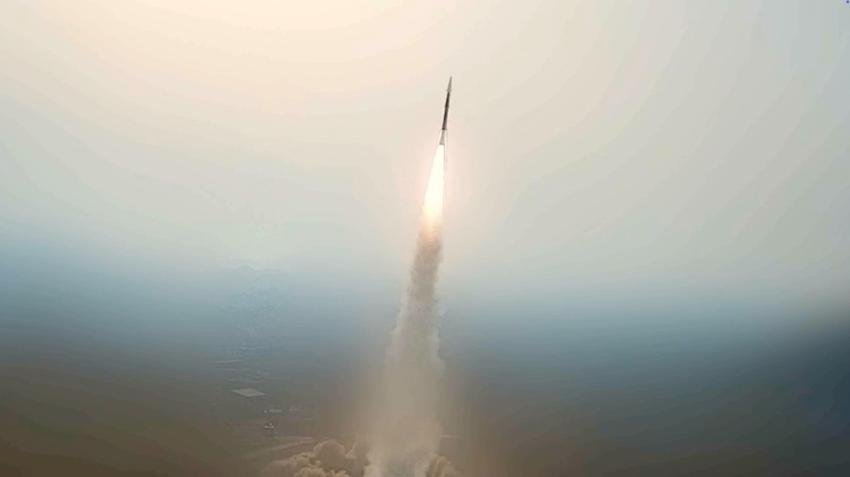
Global Armed Conflict Reaches Historic High in 2025, Norway Report States

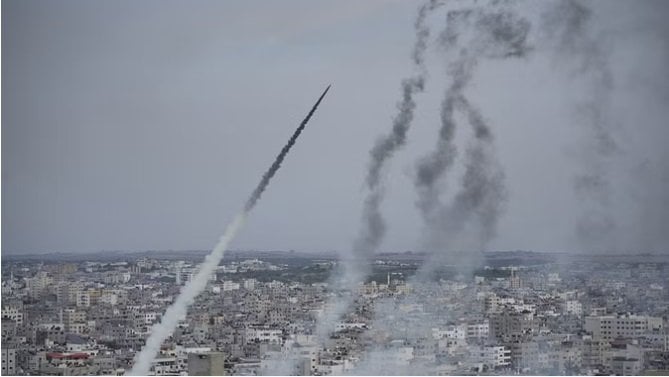
Norway. A new report from Norway shows that state-related armed conflict reached a historic high worldwide in 2025. According to the report, for the first time since World War II, such a large number of conflicts and attacks on civilians were registered in a single year. This indicates that the global security situation has become extremely worrying.
The annual 'Conflict Trends' report, published by the Peace Research Institute in Oslo, Norway, states that at least 65 armed conflicts involving a state were registered worldwide in 2025. The report concludes that this is the highest number since 1946.
The report mentions that border tensions between India-Pakistan, Afghanistan-Pakistan, and Cambodia-Thailand, along with Russia's invasion of Ukraine and Israeli military actions in Syria, have pushed state-to-state conflicts to their highest point in 80 years.
Researcher Siri As Rustad told media outlets including AFP that the situation in the past year has been extremely disappointing. She commented that while some positive trends are usually seen, the statistics this time are unusually high.
According to the report, the post-Cold War period saw 2025 become the third deadliest year. It is estimated that around 245,000 people died in that year in events directly related to fighting or political violence. Of these, about 76,500 incidents were registered as attacks targeting civilians. This is more than 14,200 times higher than in 2024.
The report highlights that the conflict between the armies in Sudan has caused a major humanitarian crisis. It is estimated that about 60,000 people died solely due to the siege and violent incidents in the city of El-Fasher in the Darfur region. This is considered one of the most serious civilian casualties in recent decades.
The report states that this is the third major phase of bloodshed of this magnitude since the Rwandan genocide in 1994 and the Tigray War in Ethiopia in 2021, after the Cold War.
Analysts say Africa has become the most affected region, with 29 major state-related conflicts registered. Asia, the Middle East, the Americas, and Europe follow.
Siri As Rustad said that in the last five to six years, many major conflicts have been active simultaneously, and as they connect with each other, global tensions have deepened. According to her, the world is now caught in a cycle of continuous high-intensity conflict, which is different and more complex than before.
The report is based on data collected by the Uppsala Conflict Data Program and Uppsala University. It divides armed violence into three categories—state-involved conflict, non-state conflict, and one-sided violence against civilians.
According to regional analysis, although Africa is the most affected, conflicts have also intensified in Asia and the Middle East. An increase in violent incidents has been observed in some areas of the Americas, while instability persists in Europe due to the Russia-Ukraine war, the report states.
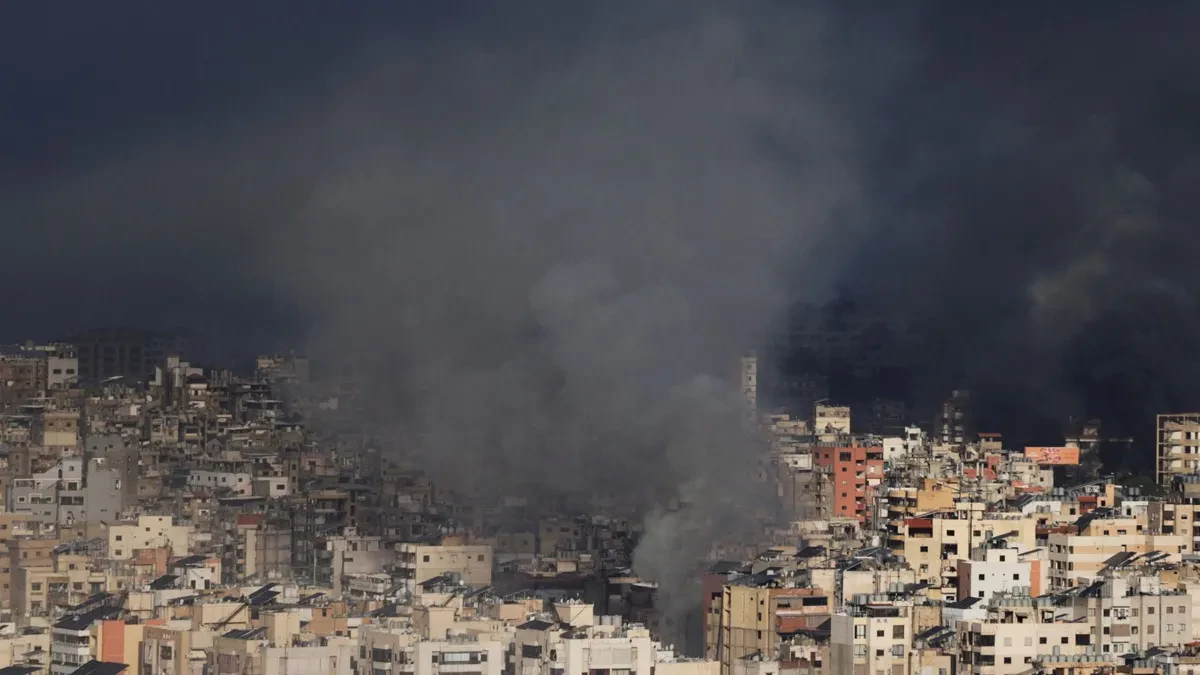
In an analysis concerning Israel, it is commented that due to various military actions against Gaza, Syria, Lebanon, Iran, and the Houthi rebels, the country is currently one of the most aggressively militarily active in the world.
Similarly, regarding the United States, it is commented that both violence and military-economic pressure have increased following President Donald Trump's return. According to Rustad, the world is becoming more polarized due to increasing trade barriers and weakening international cooperation.
She also mentioned that the United Nations Security Council is becoming ineffective, and with the decrease in international cooperation, controlling global conflict is becoming increasingly difficult.
This specific news has been automatically translated by AI. As a result, there may be some inaccuracies or language errors.