Actress Rekha Thapa Shares Experience of Theater Acting
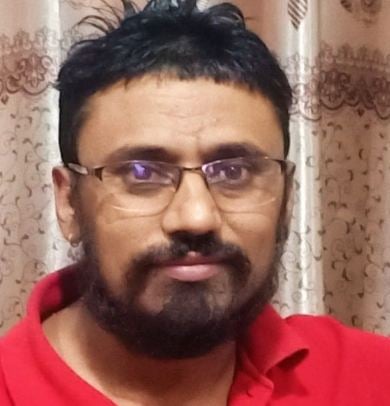
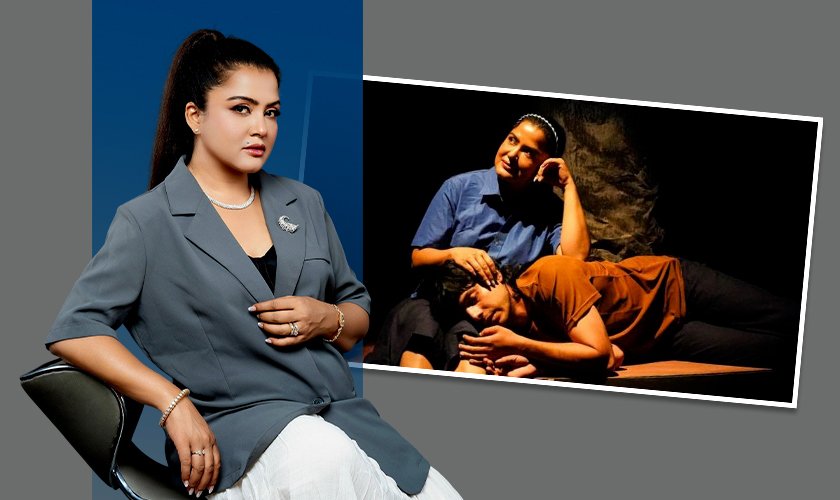
Rekha Thapa is a successful actress in the Nepali film industry. Also known as a producer and director in the film industry, she debuted on the Nepali silver screen with the film 'Hero' after participating in a beauty pageant. In her film career spanning over two decades, she has acted in more than a hundred films. She is credited with elevating traditional and supporting roles to hero-level for actresses. She presented heroism in films like 'Kismat', 'Himmat', 'Hifajat', 'Kali', 'Rampyari', and 'Kasle Choryo Mero Mann'.
Rekha has recently been seen on the stage (theater). She acted in a play called 'Meera' and experienced theater as a form of practice. She believes this journey in theater has added new energy to her artistic journey.
Here is the edited excerpt of the conversation Ratopati had with actress Rekha Thapa about theater acting:
- What was your experience like working on stage for the first time?
It was very enjoyable and challenging. I felt that after becoming an artist, one must experience the stage at least once in their life. Theater is a good place to find and know oneself in a living form.
- After a long journey and success in the film industry, what prompted you to work in theater as well?
I started my theater journey with the play 'Meera'. Firstly, I liked the character given to me in that play. Secondly, I wanted to reawaken my own acting. When people reach a certain height of success, they might have the illusion that 'I am the supreme one'. The offer for the play was a good opportunity for me to test and know myself whether I am truly an excellent artist or not.
Unlike the silver screen in films, here one has to perform live acting standing on the ground in front of the audience. This brought me face-to-face with myself. In theater, one feels that the audience and the spectator are oneself.
Acting in films allows immersion for a short time, but in theater, one gets to live the life of that character for the entire duration.
- What difference did you find between acting in films and theater?
In films, one has to act in pieces by 'cutting', but I always felt like I wanted to act continuously in one shot. I enjoyed that in plays because that facility is available. I always felt shy about acting, but that also disappeared when acting in plays. Unlike films, acting directly in front of the audience in plays made me feel a little uncomfortable and hesitant in the beginning. For some time, I had doubts like 'What am I doing, do I know how to act, was this not necessary for me?'. But later, when I saw the large presence and enthusiasm of the audience, and heard their reactions saying they came to see Rekha Thapa from afar. Then I realized that this is a place to know and meet oneself.
There is a different kind of intoxication and liveliness in plays. Acting in films allows immersion for a short time, but in theater, one gets to live the life of that character for the entire duration. Theater is an addiction. In theater, one gets to live the entire life of a character. That is its best aspect.
- What is theater?
In my understanding, theater is purely a practice. Presenting oneself here is not a trivial matter. During the play's performance, I felt like a practitioner for 15 days. It gave me an opportunity to refine myself and changed my perspective towards theater. Throughout the duration of that play, I felt like I was a practitioner. I had a certain perspective towards theater before, and it changed.
- Unlike films, plays do not have the facility of 'retakes'; how much pressure did this create on your acting?
Rather than pressure, there was more hesitation initially. Personally speaking, I felt a little restless because I had to leave my little niece at home. But ultimately, the result was very good and pleasant.
- Did you also find differences in portraying characters in films and plays?
There is a significant difference. When acting in films, there is the convenience of 'cuts'. If the reaction is not right, tears or laughter can be produced again, but plays are live, so there are no 'cuts'. Tears, laughter, crying, all have to come instantly and continuously. I have done many films in my life, but I have never found the kind of living satisfaction and enjoyment that I did while doing plays.
- What was the audience's reaction like in the play?
I also liked the audience's reaction. In theater, since you can hear the audience's reaction immediately, you get a chance to improve your acting the very next day. As you refine yourself in this way, by the final show of the play, the character becomes very polished and excellent.
When we start to immerse ourselves in that character, all the dialogues and expressions naturally begin to emerge from within.
- Some people view the entry of film actors into theater as a workshop for learning acting; is that the case?
I did not do theater to improve my acting; I had the confidence to portray any character since I entered the film industry. However, I had never formally studied acting or practiced it in my life. Whatever I had was a natural gift (God's gift). Working in theater gave me an opportunity to re-evaluate myself and revive my art.
- How difficult is it for actors to handle long dialogues and continuous movement in plays?
It is not difficult at all; it actually gives more energy. Before the performance of a play, we rehearse continuously for 10-15 days. When we start to immerse ourselves in that character, all the dialogues and expressions naturally begin to emerge from within. In the initial days, there was some discomfort. I was a star, and I had the ego of 'What more do I need to achieve?'. Gradually, I experienced the ego of my inner artistry diminishing, the joy of which is invaluable.
- What kind of feedback did you receive after the successful staging of the play?
I received very good feedback. Many producers and directors from the film industry also came to watch the play. I played a double role (a young woman of 18-20 years and an adult woman of the present) in the play, which everyone liked very much and gave positive feedback.
- Will this theater experience also help in choosing films in the future, right?
In my artistic journey so far, I have never had the word and practice of 'script selection'. I consider myself an artist who can mold herself into any story and script. A writer does not write their creation to be bad. Therefore, I accept the films offered to me as long as time permits and the remuneration and other factors are favorable. Doing justice to any script is the true skill of an artist.
I want to continue theater. It requires sufficient time for plays, so I will act in plays again in the future by managing my time accordingly.
- After the theater experience, do you feel any change in your working style and acting?
Absolutely, a new energy has filled me, and my working style has also changed. In my upcoming film '36 Ko Aankada', the audience will see a clear change and refinement in my acting and presentation. I feel that my acting has become more mature both technically and practically.
- Will you continue theater in the future, or is it enough?
I want to continue theater. It requires sufficient time for plays, so I will act in plays again in the future by managing my time accordingly.
- When successful film actors appear in plays, it probably benefits the theater sector as well?
Rather than benefits or drawbacks, if any artist truly loves the art sector and considers themselves a true practitioner of art, they should evaluate themselves on the stage at least once in their life. Acting in plays does not diminish or enhance an artist's aura; its meaning and depth are very different. It is something to be felt, which is difficult to express in words.
This specific news has been automatically translated by AI. As a result, there may be some inaccuracies or language errors.