Nepal Celebrates 26th World Milk Day with Focus on Sustainable Development

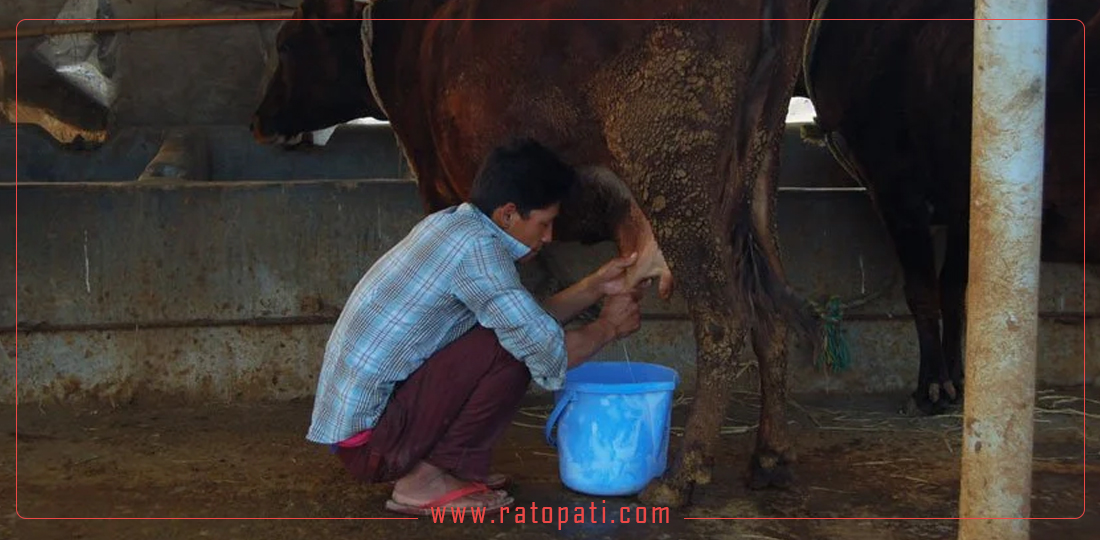
Kathmandu. Today, the 26th World Milk Day is being celebrated across Nepal with various programs under the main slogan 'Sustainable Development of the Dairy Sector, Nutrition Security, and Economic Prosperity'.
While the United Nations Food and Agriculture Organization began celebrating this day worldwide from June 1, 2001, Nepal has been officially continuing it since 2011.
- 380,000 Families in Milk Production
The agricultural sector plays a significant role in Nepal's Gross Domestic Product (GDP), with the livestock sector alone contributing about 25 percent. The dairy business is considered the cash flow system of Nepal's rural economy.
Currently, approximately 380,000 families in Nepal are directly involved in milk production, according to the National Dairy Development Board. This sector not only creates rural employment but also acts as a bridge to bring urban capital to rural areas, according to the Dairy Association of Nepal. The association states that an annual amount of approximately 28 billion rupees flows from urban to rural areas through the purchase and sale of milk.
- Gradual Improvement in Milk Production
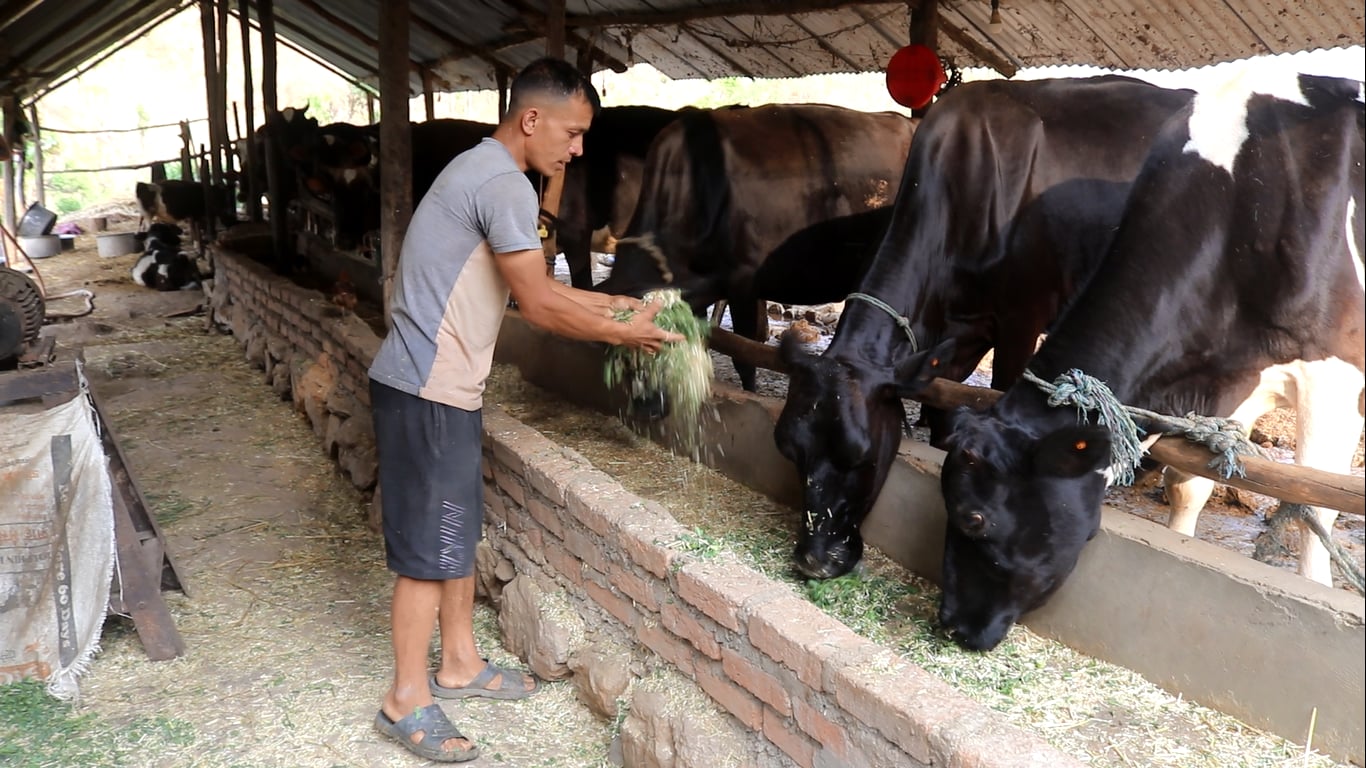
Looking at the statistics of the last five years, there has been a gradual improvement in the milk production rate in Nepal. According to the projected data for the fiscal year 2081/82, the number of milk-producing cows in Nepal has reached 1,055,828 and the number of milk-producing buffaloes has reached 965,920.
In terms of production, in FY 2081/82, a total of 2,718,177 metric tons of milk was produced, including 1,302,094 metric tons of cow's milk and 1,416,083 metric tons of buffalo milk. While the total production in FY 2077/78 was 2,479,899 metric tons, the current production capacity shows an average annual growth rate of 3.4 percent. In terms of milk production per lactation, cows produce an average of 1,233 liters and buffaloes produce 1,466 liters.
- Milk Market Primarily Informal
According to the National Dairy Producers Cooperative Federation, only about 15 percent (1,139,000 liters) of the total milk produced in Nepal is collected by the formal sector (dairy industries), while an estimated 35 percent of the milk is consumed through informal channels.
According to the Dairy Development Board, milk diversification and management of seasonal surplus are also leading to an increase in milk powder production in Nepal. Currently, nine milk powder factories are in operation in Biratnagar, Chitwan, Pokhara, Shivapuri, Suryodaya, Bagmati, Sagarmatha, Mata Manakamana, and Hetauda. In the year 2082, these industries processed 49,798,860 liters of milk, producing approximately 4,150 metric tons of milk powder.
- Export Efforts Increasing
Analyzing the import and export status of dairy products, the trade in this sector has increased by 71 percent in the last four years. According to the data for FY 2081/82, Nepal imported dairy products worth 142,485 (in thousands of rupees) while successfully exporting products worth 4,638,991 (in thousands of rupees), which is considered satisfactory compared to other agricultural products.
The state-owned Dairy Development Corporation (DDC) has announced a radical change in its business practices, prioritizing market expansion and exports. General Manager Dr. Sharan Kumar Pandey states that DDC is being developed into a modern and competitive institution, free from its traditional style.
'For the expansion of the domestic market, DDC has now adopted a policy to make consumer preference and quality the main basis. We are confident that DDC's market share will increase and consumer trust will be further strengthened,' he says. General Manager Pandey mentions that preparations are underway to send products to areas with a significant Nepali population, such as Japan, America, and European countries, with international standard branding and packaging.
- What Nutrients Are Found in Milk?
Milk is a 'complete food' for human health. The protein, lactose, calcium, and vitamins A, D, E, K, and B-12 found in it play an important role in physical and mental development. Campaigns like the 'School Milk Program' have been effective in reducing malnutrition, stunting, and underweight problems, especially in children. Approximately 60 calories of energy are obtained from 100 grams of processed milk, which greatly contributes to nutrition security.
This specific news has been automatically translated by AI. As a result, there may be some inaccuracies or language errors.
_jxKX1kXOlf.jpg)

_htFaNqpIDJ.jpg)