Nepal Chamber of Commerce Expresses Confidence in Budget's Potential to Boost Private Sector and Economy

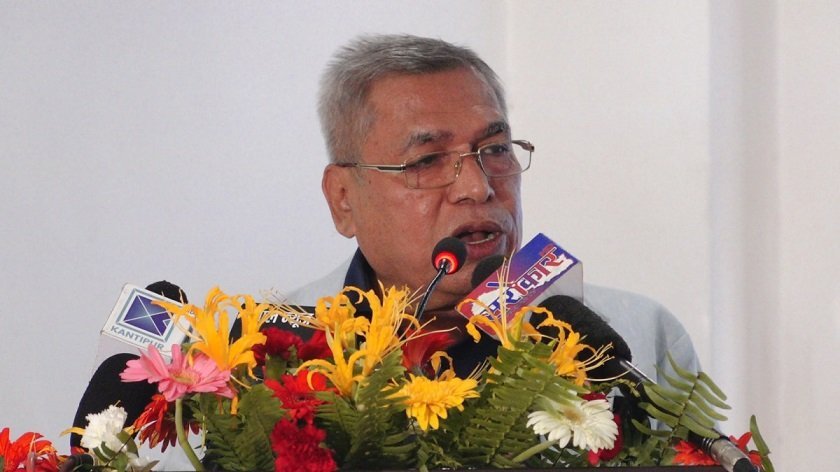
Kathmandu. Nepal Chamber of Commerce has expressed confidence that the budget for the upcoming fiscal year will boost the morale of the private sector and invigorate the sluggish economy.
Chamber President Kamlesh Agarwal stated that although the budget appears somewhat ambitious, its successful implementation could usher the country into a new era of economic prosperity.
The Chamber views this budget, introduced shortly after the formation of the government, as a positive start. President Agarwal expressed gratitude to the Finance Minister, stating that most of the suggestions submitted by the Chamber have been addressed in the budget. The Chamber's conclusion is that this budget has made a significant leap in tax reform.
The Chamber considers the increase in the personal income tax limit to an annual income of up to 1 million rupees, establishing a minimum tax bracket, as the beginning of a transparent economy. Agarwal stated that this new arrangement will provide significant relief, as the tax exemption had been stuck in the range of 500,000 and 600,000 for many years.
Furthermore, the removal of excise duty on 360 types of goods and the reduction of customs duty on 273 industrial raw materials are expected to greatly encourage industrialization. While the introduction of a multi-rate system for Value Added Tax (VAT) is encouraging for the private sector, the Chamber has requested a reconsideration of the 5% VAT imposed on electricity and ride-sharing.
It appears somewhat inconsistent with the principle of making domestic production cheaper in a country with abundant water resources to impose VAT on electricity, and the Chamber expects improvements in this regard in the future.
The Chamber has welcomed the new 'Tax Settlement' plan introduced by the government for entrepreneurs and businessmen entangled in tax disputes for a long time. President Agarwal mentioned that the provision of waiving fines and interest by paying 1% of the total tax will contribute to the government treasury and also provide relief to businessmen.
The announcement to establish a 'Commercial Tribunal' for resolving tax disputes will further boost the confidence of the private sector. The Chamber also considers the provision of a 5-year income tax exemption on transactions up to 100 million rupees for startup promotion and a 5% final tax for freelancers as commendable steps. For capital market reforms, the Chamber views opening investment in the secondary market to Non-Resident Nepalis (NRNs) and introducing the concept of 'Hedge Fund' positively. Although capital gains tax has been clarified as a final tax, the Chamber has suggested removing the ambiguous legal complexities within it. The 'Easy Entry and Easy Exit' policy is believed to attract foreign investors for bringing in foreign investment.
The budget's declaration of the Information Technology (IT) sector as a strategic industry, along with export concessions and priority given to digital infrastructure, is expected to aid in job creation. The Chamber has also welcomed the provision of up to 40% grants for farmers investing 20 million rupees in the agricultural sector. However, the Chamber has urged for reconsideration of the 3% tax imposed on basic sectors like education and health, as it could make services more expensive.
Furthermore, Agarwal analyzes that the increased tax on electric vehicles could somewhat discourage the campaign for clean energy and green transportation. Overall, the Chamber concludes that the government's target of 7% economic growth and revenue targets are not impossible, and if the policies and programs are implemented rapidly, the country could achieve more economic progress than anticipated.
This specific news has been automatically translated by AI. As a result, there may be some inaccuracies or language errors.
_jxKX1kXOlf.jpg)

_htFaNqpIDJ.jpg)