Nepal's Budget Criticized for Overlooking Climate Crisis and Social Inclusion


Kathmandu. The budget, which appears to be overly focused on economic growth and physical infrastructure development, has failed to address the climate crisis and social inclusion issues facing Nepal.
While making roads climate-friendly and replenishing the Chure region to alleviate water scarcity in the Madhes are positive steps from an adaptation perspective, the budget has not embraced climate-smart agriculture, climate-related insurance, and climate-friendly infrastructure development.
Although the budget mentions risk transfer, it is unclear whether this refers to climate-related risk transfer or general insurance. While the budget for fiscal year 2083-84 includes innovative programs such as establishing an AI hub and mobilizing finance in the energy sector, the government appears to have failed to integrate them with the national strategy for climate resilience and disaster risk reduction.
This year, due to the impact of 'Super El Niño' in Nepal's Himalayan region, the rising temperatures in that area are expected to cause glacial lake outbursts, landslides in the mid-hills, and severe droughts and floods in the Terai, leading to multifaceted impacts. The budget has also failed to prioritize the goals set by the country in the Third National Communication (NDC).
Experts have pointed out that by failing to provide a 'climate-friendly cover' to the budget's target of over two and a half trillion rupees in foreign loans and over four trillion rupees in domestic loans, Nepal risks losing significant opportunities for highly concessional loans and green investments that could be obtained from international forums. Furthermore, experts have commented that the lack of a clear action plan in the ministry-wise budget allocation to bring women, marginalized communities, and especially disadvantaged groups, who are at the forefront of climate impacts, into the mainstream of adaptation has added serious challenges to the practical implementation of the budget and has created doubts about the conservation and promotion of environmental sustainability.
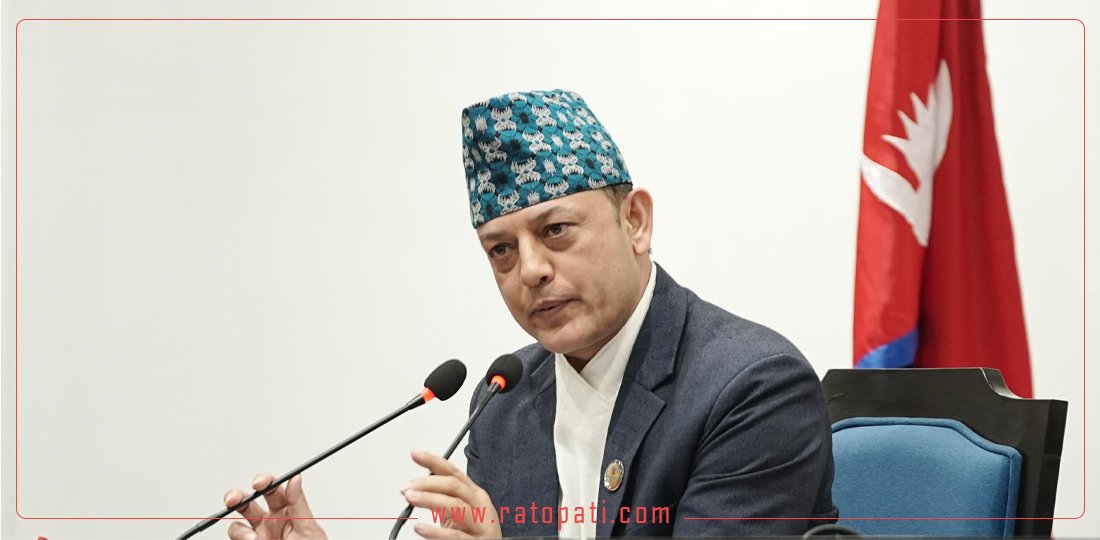
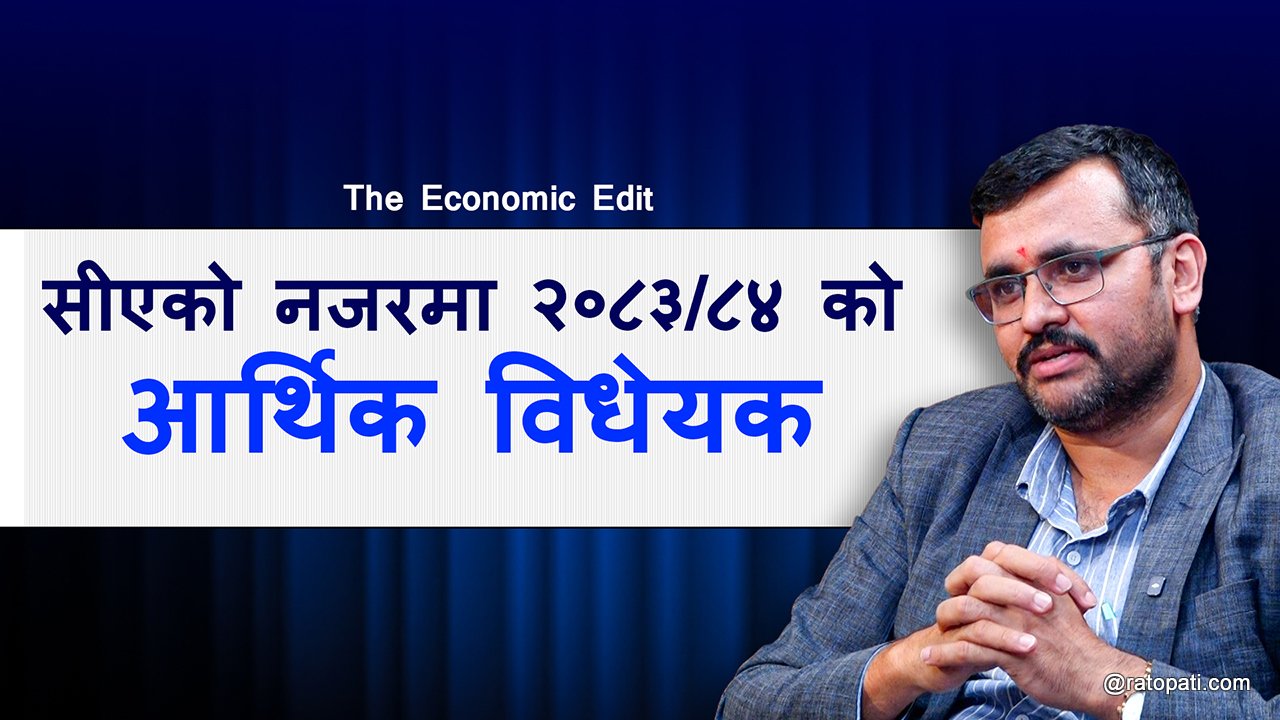
Reviewing the budget from the perspective of climate change and disasters, climate and disaster expert Dr. Dharamraj Upreti and climate finance expert Raju Pundit Chhetri commented that the budget, which adopts a 'blanket approach,' cannot address specific geographical risks. In a brief response to a News Agency Nepal correspondent, gender, social inclusion, environment, and climate and sustainability expert Dr. Samjhana Bisht said that if all ministries, not just the Ministry of Forests, can incorporate a climate perspective during budget implementation, the budget can be considered balanced.
- Opportunity for Foreign Green Finance and Concessional Loans Missed: Raju Pundit Chhetri
According to climate finance expert Raju Pundit Chhetri, in the current situation where climate finance and foreign aid are declining internationally, Nepal does not appear to have formulated its budget strategically. A closer look at the budget unveiled by the government for the upcoming fiscal year reveals that it perceives climate change as a separate and limited sector, whereas it should encompass multifaceted areas such as agriculture, energy, and disaster.
He said, 'Climate change can be linked to this budget in various ways, but to say it is a very climate-friendly budget in terms of guidance, we have to be a bit narrow. The direction it has provided gives less of an impression that we are moving forward in climate-friendly development. Climate change does not cover just one sector; it covers various sectors from agriculture to energy and disaster. However, considering the extent to which Nepal is currently suffering from the impacts of climate change, the climate-related disasters that are occurring, and at the same time, the immense capacity we have to manage green energy, looking at both these aspects, I feel this budget has not done justice to our climate problem.'
While the announcement to mobilize significant finance for green energy production in the energy sector is positive, Chhetri commented that its priority leans more towards exporting energy commercially rather than increasing domestic consumption. He noted that despite the Rastriya Swatantra Party placing climate change as a key pillar among its 'nine pillars' in its manifesto, its actual reflection is not seen in the government's budget.
He says, 'Although the government has adopted policies to issue clean energy bonds and diaspora bonds and to maximize the use of available climate funds, it appears to be focused solely on capital formation for energy production.' While the numbers may seem large, his analysis suggests that this budget is not fully successful in addressing the dire climate-related disasters and environmental challenges currently faced by Nepal. According to him, although the budget appears to be more focused on traditional economic growth and physical infrastructure development, it lacks a clear roadmap to make these structures 'climate-friendly' and sustainable. He added, 'If we look at it a bit positively, it seems to be mobilizing significant finance for green energy production. That is also a positive aspect. However, if we examine it closely, it emphasizes more on how to export energy rather than consuming it domestically. Therefore, overall, the budget appears to be focused on investment in economic and physical infrastructure. If these structures are not climate-friendly, there is a big doubt about their sustainability. Since we are also dependent on foreign aid, building climate-friendly structures would have provided us with a double benefit. One, it would have supported our own sustainable development. Second, providing a climate-friendly cover would have increased the possibility of foreign investment. We have missed the opportunity that could have been obtained by looking at physical structures from a climate perspective.'
Only 6.5 percent of the total allocation is tagged for direct spending in the climate change sector, while this proportion reaches 37 percent indirectly. Approximately one-third of Nepal's total budget is targeted to be met through foreign and domestic loans.
In such a situation, Chhetri believes that if the budget had been given a 'climate-friendly cover,' it would have been easier to attract highly concessional loans and green investments from the international community. He argues that at a time when climate finance is declining in international forums, Nepal has missed a significant opportunity to attract foreign aid through this budget.
Chhetri says, 'With the target of meeting about one-third of the budget through foreign and domestic loans (over 2.5 trillion in foreign and over 4 trillion in domestic loans), if it had been made 'climate-friendly,' highly concessional loans and green investments would have been easily attracted from international donors. At a time when climate finance itself is declining in international forums, Nepal has missed a major strategic opportunity to attract foreign aid through this budget.'
Highlighting the necessity of enhancing the capacity of the Department of Hydrology and Meteorology, strengthening early warning systems, and increasing the adaptation capacity of communities in the mountains, hills, and plains for Nepal, which is suffering from climate-related disasters, he suggested establishing a comprehensive and dedicated 'Climate Change Fund' for the effective mobilization of climate finance. He believes that by accumulating funds from foreign aid, domestic resources, and corporate social responsibility from the private sector, climate adaptation activities can be carried out at the local and provincial levels.
- Failed to Understand the Essence of Climate and Disasters: Dr. Dharamraj Upreti
Climate and disaster expert Dr. Dharamraj Upreti commented that although some innovative aspects have been introduced in the budget in the field of technology, the government has failed to link them with disaster management. He stated that while talking about the use of AI and digital infrastructure, the inability to connect them with disaster management and early warning systems gives the impression that the government has not understood the climate-related problems itself.
He said, 'Some aspects are innovative. There is talk of building an AI hub. Matters related to agriculture and insurance have been omitted. There are discussions about infrastructure. The word 'climate' has been mentioned only twice in the entire budget document, and 'disaster' once. The fact that 'climate' is mentioned only twice and 'disaster' once in the entire budget document clearly shows how narrow this sector is in the government's priorities. Making roads climate-friendly is an excellent aspect. The budget for the Ministry of Forests has been presented mixed together. It is not clear how much budget has been allocated for climate within it. However, it does contain some good aspects like replenishing water in the Chure region. Issues related to expanding the early warning system and ensuring access to early warnings for all are missing from the budget. The implementation of the Third National Communication (NDC) has also been neglected. Climate change causes significant damage to the agricultural sector. Matters related to agricultural insurance have also not been included.'
While making roads climate-friendly and replenishing the Chure region to alleviate water scarcity in the Madhes are positive from an adaptation perspective, he noted that the budget has not clearly included 'climate-smart agriculture' and climate-related insurance in the agricultural sector, and although risk transfer is mentioned, there is ambiguity as to whether it is only general insurance. However, Upreti considers the concept of 'climate-friendly road' construction in the budget as positive.
He says, 'Considering Nepal's geographical conditions and the increasing risk of landslides, making road infrastructure climate-friendly was imperative; if implemented effectively, it will reduce significant damage.' Dr. Upreti added, 'This year, due to Super El Niño, there is a high risk of winter and summer droughts, which will directly affect paddy-growing areas in Sudurpashchim and Lumbini. At such a time, the budget appears to be completely unsuccessful in using AI technology to enhance the capacity of the Department of Hydrology and Meteorology and in the 'Early Warning for All' strategy announced by the UN Secretary-General.'
Although Nepal has made international commitments to implement the Paris Agreement and the NDC, the neglect of these issues in the budget increases the risk that donor agencies may question Nepal's priorities. He argues that if climate is not a priority for the country, it will be difficult to obtain foreign grants, and the lack of systematic data will also pose a challenge in securing competitive grants from international climate funds. Emphasizing the need to improve the shortcomings observed in the climate and disaster sectors through supplementary budgets or special programs, he stated that a 'blanket approach' alone is insufficient for the different risks in the mountains, hills, and plains, and sector-specific targeted budgets are needed. He added that the Ministry of Finance and the National Planning Commission should immediately start working to systematize climate tagging and budget tracking and report internationally, and that if physical structures are not climate-resilient, there is a risk that future investments will be in vain.
- Challenges in Ministry-Specific Narrowing and Inclusive 'Equity': Dr. Samjhana Bisht
Gender, social inclusion, environment, climate, and sustainability expert Dr. Samjhana Bisht stated that the budget has sent a balanced and positive message by encompassing renewable energy, forest management, disaster management, and green agriculture sectors. She argued that the budget should be viewed with a more liberal and positive perspective and that climate budgeting should not be limited solely to the budget of the Ministry of Forests.
Dr. Bisht says, 'There is a narrative that only the budget allocated to the Ministry of Environment is the budget for the environment and environmental conservation. We need to think a bit more liberally. If we only look at the budget of the Ministry of Forests, it is very small and insufficient. However, since climate change is a multidimensional issue, if ministries such as agriculture, energy, and physical infrastructure also incorporate it into their mainstream work, we can include many activities. The budget itself is not a place to provide detailed descriptions of all points; therefore, its actual success depends on the ministry-wise action plans and implementation.'
Dr. Bisht stated that since the poor, women, Dalits, Janajatis, Adivasis, children, the elderly, and gender minorities are the ones who suffer the most from the direct impacts of climate change, the detailed plans to be formulated now must specifically target these groups. She said that the main challenge now is how to achieve sustainable development without harming the environment while advancing physical infrastructure projects and economic development efforts, and how to ensure justice for marginalized groups.
She said, 'Especially in the field of environmental conservation, since the disadvantaged groups, the poor, women, Janajatis, Dalits, and other marginalized communities are most affected, the future plans should target them, considering the benefits of environmental conservation and how to proceed without harming the environment during our physical infrastructure projects and economic development activities, and how to bring these disadvantaged groups into the mainstream. I think this will play a significant role.' She emphasized that the budget should be analyzed not by its figures but solely based on the implementation plan and priorities.
The government has allocated 12.31 billion rupees for the forest and environment sector. The support price for medicinal herbs and non-timber forest products will be determined, and a herb processing center will be established in Karnali. Approximately one billion rupees have been allocated for activities such as conserving water sources, constructing ponds, controlling landslides, and building embankments to ensure a sustainable water cycle in the Chure and Terai-Madhes regions. The government has mentioned in the budget the operation of 'real-time' information exchange using drones and satellites for forest fire control and the implementation of human-wildlife coexistence programs in high-risk areas.
The government plans to operate a results-based 'REDD+' program for emission reduction, prioritizing local communities in the benefits received from carbon emission reduction. Provisions will be made for the private sector to access concessional capital from international climate funds. Similarly, it is mentioned that air pollution monitoring centers in major cities and the Central Environmental Laboratory will be upgraded. (News Agency Nepal)
This specific news has been automatically translated by AI. As a result, there may be some inaccuracies or language errors.
_jxKX1kXOlf.jpg)