Nepal Grapples with 'Guided Republic' Amidst Institutional Challenges


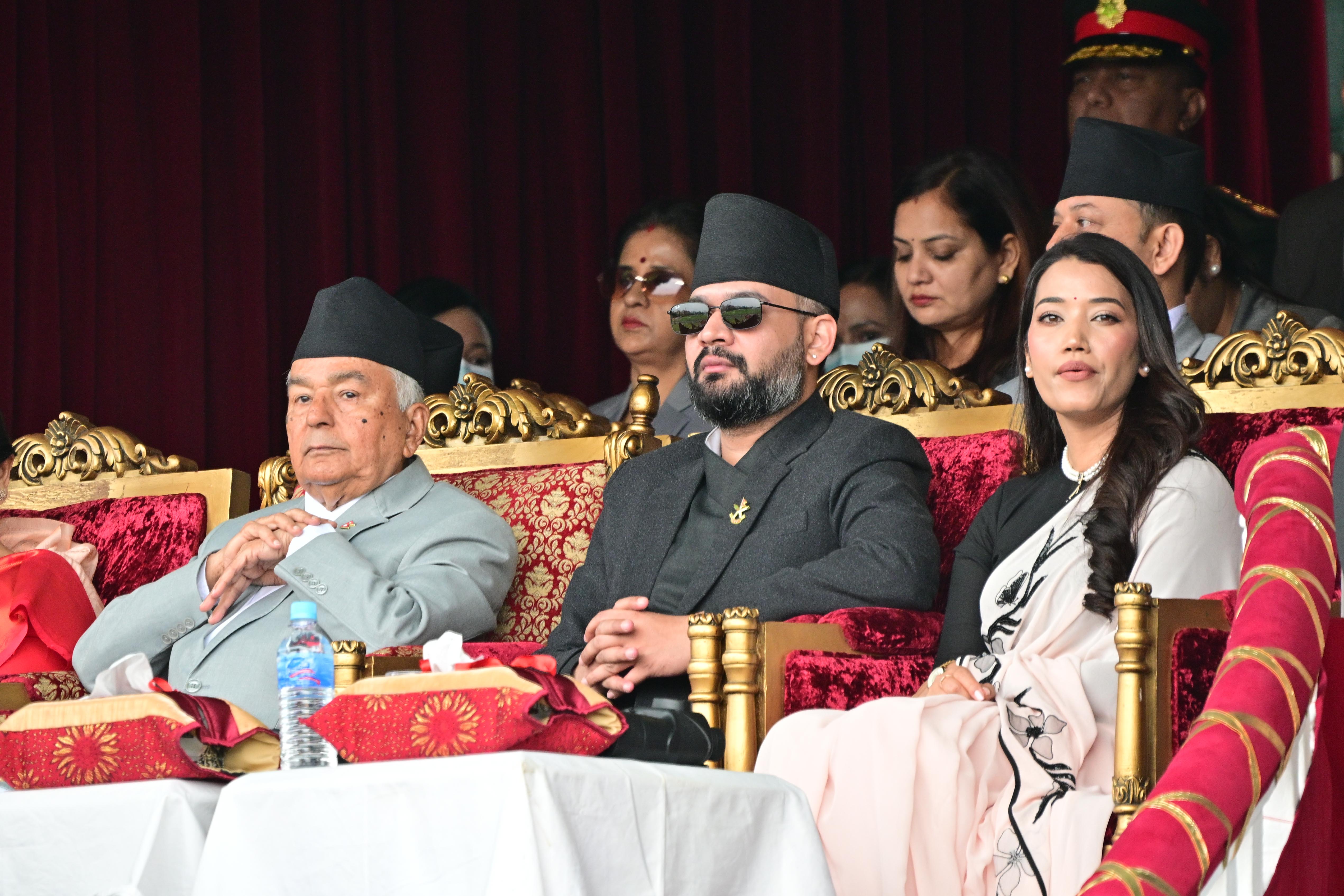
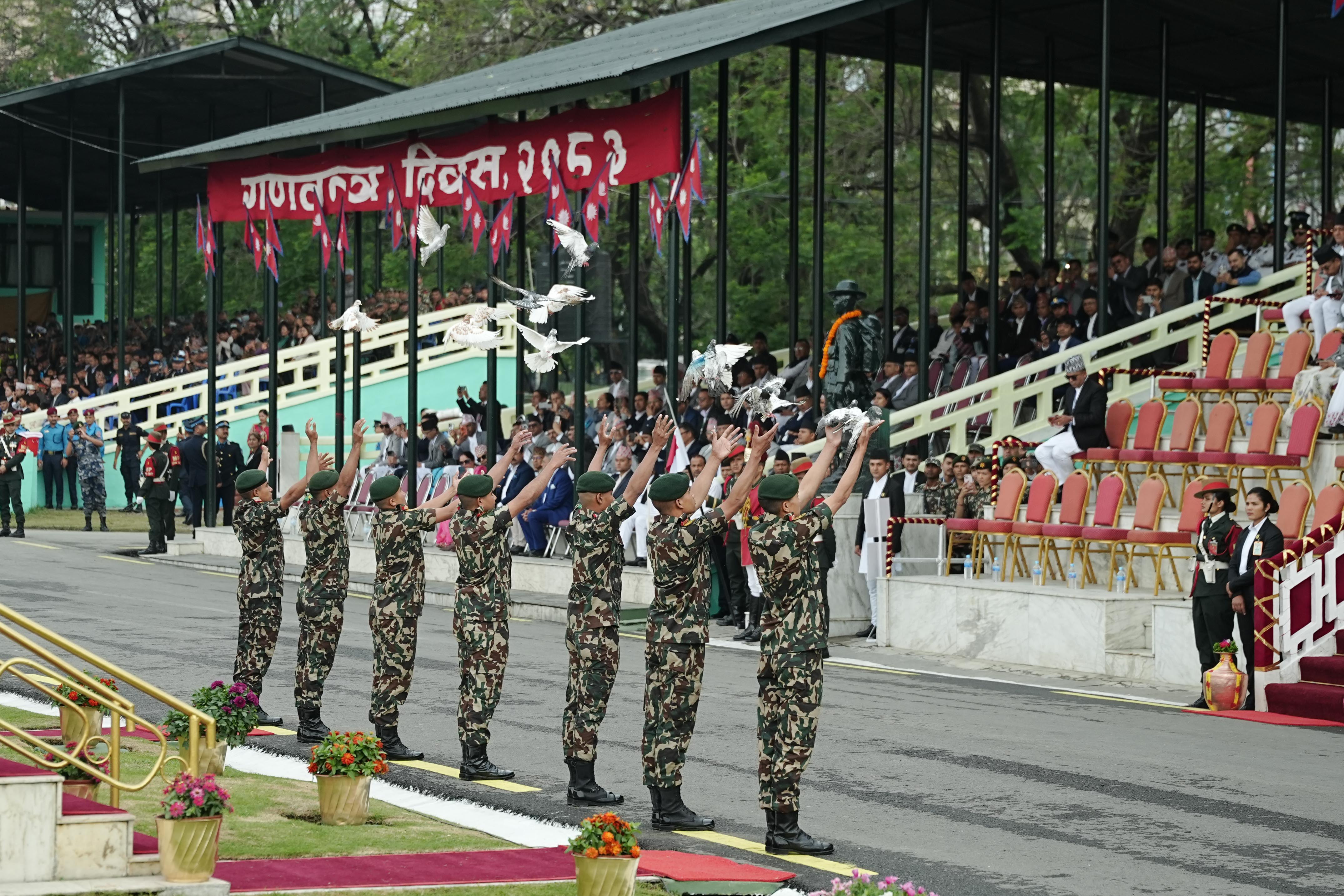
Yesterday, on Jestha 15, we celebrated Republic Day in various ways. As we marked the 19th Republic Day, the glory of the republic resonated not only in Kathmandu's Tundikhel and provincial capitals but also from the streets to the parliament, from radio to reels. However, amidst that resonance, a serious and thought-provoking question occasionally arises among ordinary citizens and then fades away – is the republic we are practicing truly citizen-centric? Or is the country gradually falling into the trap of a 'guided republic'?
On the eve of Republic Day, the day before yesterday, a friend's similar question disturbed the thoughts of this writer.
Just as the word 'democracy' became popular in Nepal during 2062/063 BS, 'tea culture' is popular in Kathmandu these days. Words like teahouse, teasaagar, teawala are equally popular among tea enthusiasts. Some tea stalls even have the theme – 'Friend, Tea, and Chat'. The day before yesterday, in one such tea stall, these topics came up during a chat with a journalist friend.
While passing through Tundikhel, the journalist friend saw the Nepali Army decorating Tundikhel for Republic Day, which reminded him of the Janji movement of Bhadra 23 and 24 last year. Especially in light of the role played by the Nepali Army in the Janji movement, he felt that the program to be held on the military stage in Tundikhel seemed to mock him.
Indeed, the report of the Karki Commission formed to investigate the movement and the study report recently published by the Human Rights Commission have created great suspicion in the minds of ordinary citizens regarding the role of the Nepali Army in the movement.
Are we really in a republic? Or is the republic heading towards a 'guided' republic? The earthquake in Nepali politics in the recent past, the anger of the youth surging on the streets, and the subsequent reports from the Human Rights Commission and judicial inquiry commissions have clearly revealed the face of our 'guided republican' system.
Today's article will focus on this very topic.
Some popular political science books published in the last decade – 'How Democracies Die', 'History is Repeating', 'Fascism: A Warning', 'Why Nations Fail' – share a similar understanding. In the 21st century, the end of democratic and republican systems does not happen through military 'coups' or violent rebellions as in the past. Rather, under the guise of democracy, the autonomy of institutions is slowly and systematically dismantled by elected rulers.
This is a dangerous political form of guided republic, where the external structure, constitution, and elections of the republic remain intact, but its inner soul and spirit are completely hollowed out.
On paper, citizens still seem to have the right to vote. The constitution guarantees fundamental rights and freedom of speech. However, behind this facade of legitimacy, a central power, whether it be the state's internal mechanism (deep state) or the encirclement of party syndicates, determines the limits of acceptable political discourse.
The Janji movement that Nepal recently experienced was an unprecedented and historic popular uprising against this guided governance system and party syndicate.
The relationship between the Nepali Army and the republic has been complex from the beginning. This institution, which was the protector of the monarchy for 240 years, had to suddenly become a republican institution after the people's movement of 2062/063 BS. But institutional culture does not change overnight.
Any guided system first tries to control the means by which citizens express dissent. In Nepal, the then Oli government took authoritarian steps to suppress the voices rising on social media against corruption, unemployment, and misgovernance; on the surface, this itself appears to be the main seed of the rebellion.
The recently published report of the National Human Rights Commission clearly states that the ban imposed by the then government on social media was the main reason for the escalation of violence.
The relationship between the Nepali Army and the republic has been complex from the beginning. This institution, which was the protector of the monarchy for 240 years, had to suddenly become a republican institution after the people's movement of 2062/063 BS. But institutional culture does not change overnight.
Loyalty to the monarchy was deeply ingrained in the army's DNA and still remains to some extent. In the 19 years since the establishment of the republic, the army has never openly taken anti-republican steps. But its silent presence has always remained a question mark. The question of whom the army would side with during political crises has always kept Nepali politics in suspense. And last August, this question suddenly shifted from theoretical to practical.
The issue that generated the most debate and suspicion during the movement was the role of the Nepali Army. When sensitive areas like Singha Durbar and the Parliament House were engulfed in riots, the government decided to deploy the army. The commission led by Gauribahadur Karki, in its report, concluded that the role of the Nepali Army was 'almost inactive' and suspicious, recommending action against four high-ranking military officials.
In the eyes of the Karki Commission, it was a serious lapse in national security and dereliction of duty. The report of the National Human Rights Commission regarding the army also directly corroborates this.
When the civilian government appears weak, the army comes forward to save the 'system', and in this process, the status of democratic institutions diminishes.
The serious issue is, why did the army, which did not step out of its barracks for security even when the country's supreme institutions – Parliament House, Supreme Court, Singha Durbar, and its own Commander-in-Chief's office – were burning on Bhadra 24, engage in dialogue with the so-called protestors to form a government in the name of forming a civilian government?
The question arises: on whose orders did the army come to the streets? On whose orders did it negotiate with the protestors? Through a constitutional process or under someone's invisible direction? This is precisely the role that falls within the definition of a guided republic.
On the surface, a constitutional process, but behind the scenes, the protective shadow of the army. When the civilian government appears weak, the army comes forward to save the 'system', and in this process, the status of democratic institutions diminishes.
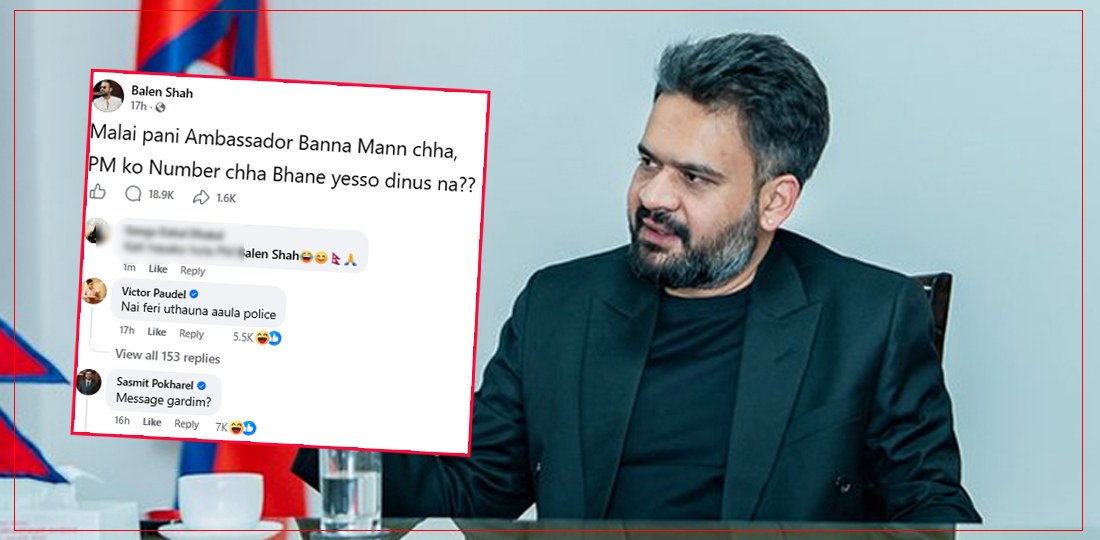
On the other hand, standing on the foundation of that very movement, Balendras Shah (Balen) has become Nepal's youngest Prime Minister. Balen's rise was a confluence of youth anger, the power of social media, and disillusionment with the old parties. However, when Balen's current behavior is viewed in conjunction with his role during the Bhadra movement, an interesting paradox emerges.
Prime Minister Shah has not shown any interest in addressing the parliamentary session so far, let alone responding to opposition MPs.
During the Bhadra movement, Balen was the Mayor of Kathmandu. He expressed support for the movement on social media but did not personally take to the streets, citing his age. Later, he gave a two-hour statement to the National Human Rights Commission. His role was: support from afar, but distance from direct involvement. This caution is understandable, but it also signals his political style.
Today, as Prime Minister, this 'observing from a distance' style of Balen has become even more apparent. Balen walked out during the opening session of the parliament's budget session while the President was reading the government's policy and program. He has continuously ignored the parliamentary tradition that the Prime Minister must be present in parliament to answer questions from the opposition.
Prime Minister Shah has not shown any interest in addressing the parliamentary session so far, let alone responding to opposition MPs. In his absence, Finance Minister Swarnim Wagle and others have had to respond.
Opposition parties chanted slogans in parliament, staged walkouts, and demanded the Prime Minister's presence. Parliament passed a rule requiring the Prime Minister to appear in the house every month. But Balen's reaction? Silence. This silence is not normal. Why is the Prime Minister, with a majority of 182 out of 275 seats, avoiding parliament? Why is he treating parliament as an inconvenience when parliament should be the source of his power because it made him Prime Minister?
_rHJteOzOH0.jpg)
These two aspects, the suspicious protective role of the army and the Prime Minister's anti-parliamentary style, are two sides of the same coin. Both send the same message: someone is above constitutional institutions.
In the case of the army, that 'someone' is institutional power, which intervenes in times of political crisis in the name of 'saving the system'. In Balen's case, that 'someone' is personal charisma, which bypasses institutional accountability with the force of public mandate.
This is the model of guided republic. On the surface, elections are held, governments are formed, parliaments function, but the actual decision-making process is not confined to parliament or government alone. The silent approval of the army and the anti-institutional tendencies of the executive are 'guiding' the democratic process as a central force from within the state's internal mechanisms.
Looking at the report card of the Balen government over two months, most of the commitments in his 100-point reform agenda are 'overdue'. Two ministers resigned within 30 days. Former Prime Minister KP Oli and former Home Minister Ramesh Lekhak were arrested based on the Karki Commission report. However, with the National Human Rights Commission's recently published report bringing Gauribahadur Karki himself under scrutiny, the legal basis for implementing the Karki Commission's report has been questioned.
All these events show the same trend – a style of bypassing institutional processes. Not having to be accountable in parliament is a 'guided' working style, not a people-oriented one.
Nineteen years ago, on the day the monarchy ended, the Nepali people saw a dream – that sovereignty would rest with the people. Institutions would be strong, and power would be accountable. But 19 years later, today, that dream is visibly fading before our own eyes.
This cycle is dangerous. Because when institutions weaken, power becomes concentrated in individuals and institutional elites. And when power is concentrated like this, the republic begins to be 'guided', in someone's invisible hand.
The Bhadra movement showed that even when people take to the streets, the state's first reaction is bullets, and it is never clear who gave the order to fire. When the army comes to the streets, it is not clear whether it came through a constitutional process or by taking advantage of a political vacuum.
And even when people vote for change, the leader who comes to power bypasses parliament, because public mandate is the source of their legitimacy, not institutions.
This cycle is dangerous. Because when institutions weaken, power becomes concentrated in individuals and institutional elites. And when power is concentrated like this, the republic begins to be 'guided', in someone's invisible hand.
Therefore, on this 19th Republic Day, it should not be limited to a mere formal celebration, speeches, and a parade in Tundikhel. It is a serious self-reflection for the political leadership and a great warning for citizens to be aware of the growing danger of a 'guided republic'.
The republic is not an automatic machine that runs on its own; it needs the fuel of continuous public oversight, transparency, and the rule of law.
If we allow the system of checks and balances of democratic institutions to be dismantled in the name of short-term political stability or party alliances, or in the name of central power, we will be left carrying a republic in name only.
That republic will be guided by a limited elite class and political syndicate, where the rights of the majority of the people and the youth will always be curtailed. The message from the Janji movement is clear: the youth of Nepal now want a real and citizen-centric republic, not a 'guided' one. They want a citizen president, not a king. Where rulers will be under the law, not above it.
Therefore, the question we must ask ourselves today is this: are we ready to accept a guided republic in the name of the republic? Or do we demand institutional accountability, parliamentary dignity, and the actual practice of citizen sovereignty?
The answer lies with us. But the time to give that answer is running out.
(Dr. Kushwaha holds a doctorate from Jawaharlal Nehru University, India.)
This specific news has been automatically translated by AI. As a result, there may be some inaccuracies or language errors.