Nepal Government Reduces Agricultural Budget Despite Increased Fertilizer Allocation

Kathmandu. Farmers are disappointed, saying the Nepali government's budget for the upcoming fiscal year 2083/84 has neglected the agricultural sector. The government has significantly cut the total budget for agriculture and livestock for the next year.
While 57.48 billion rupees were allocated in the current fiscal year 2082/83, only 46.92 billion rupees have been set aside for the next year. Although Finance Minister Dr. Swarnim Wagle proposed the highest budget ever for chemical fertilizers while presenting the budget for the upcoming fiscal year 2083/84, the total budget for the agricultural sector has decreased by 10.5 billion rupees.
Fertilizer Budget Increased, Concept of 'Green Urea'
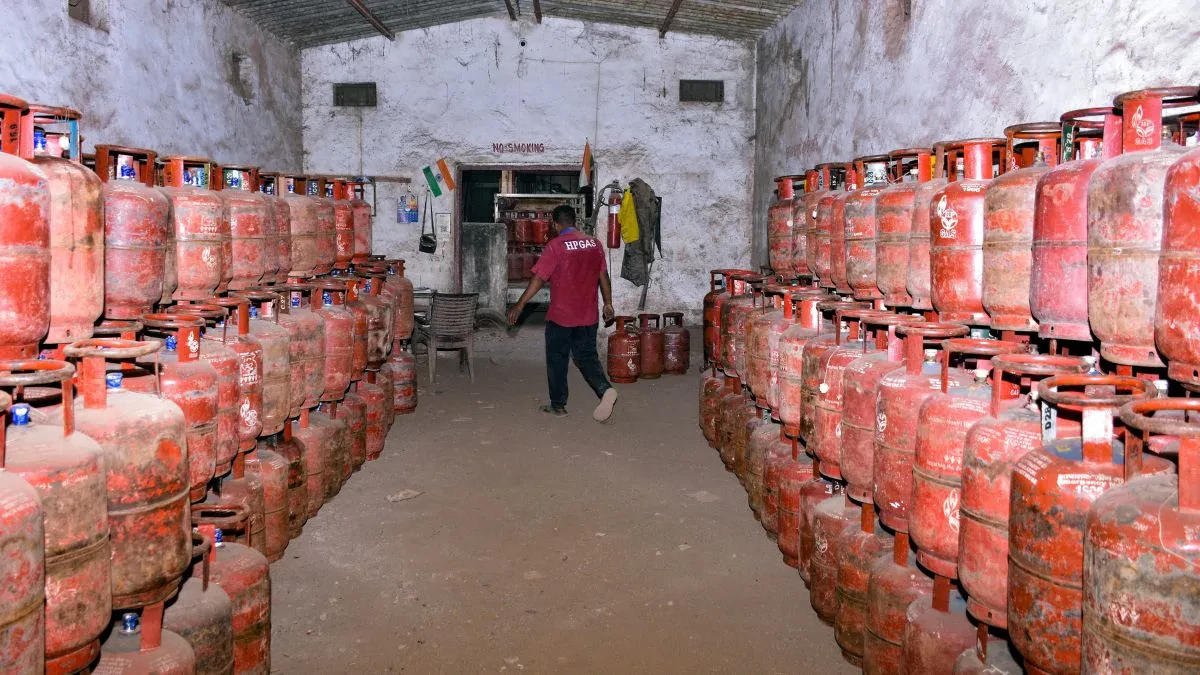
To solve the perennial problem of chemical fertilizer shortage faced by farmers in the long term, the government has allocated 32.46 billion rupees. In the current fiscal year, 28.82 billion rupees were allocated for fertilizers. The budget includes a commitment to prepare a fertilizer supply calendar and ensure timely distribution.
Furthermore, a historic announcement has been made to operate a 'Green Urea' fertilizer industry in a 'company model' in collaboration with the Nepal Electricity Authority and the private sector for fertilizer production within Nepal. A conditional grant of 360 million rupees has also been provided to local levels for the promotion of organic farming.
40 Percent Subsidy for Large Investors
To transform agriculture from subsistence to commercial, the government has introduced a new model of 'Incentive Subsidy'. Farmers or farms investing a minimum of 20 million rupees in agricultural and livestock production will be provided with a subsidy of up to 40 percent. The Finance Minister informed that this subsidy program will be operated as a 'pilot program' with a reimbursement rate of 10 percent annually for 4 years from the date of commencement.
10 Years Income Tax Exemption for Agro-processing Industries
The government has announced attractive tax concessions for the industrialization of the agricultural sector. The budget states that entrepreneurs establishing agro-processing industries will be granted full income tax exemption for the first 10 years of operation. Additionally, a provision has been made to exempt Value Added Tax (VAT) on the import of machinery and equipment required for cold storage, packaging, and testing laboratories. This is expected to attract private investment in agriculture.
Small Farmers' Dissatisfaction
Youth agricultural engineer and farmer Dipesh Nepal claims that the budget unveiled by the government for the upcoming fiscal year will not bring any significant change to the agricultural sector. While the policies and priorities of the budget sound promising, he argues that the implementation framework is 'dire' and 'disappointing'.
Sanumaya Thing, a farmer from Makwanpur, expressed anger, stating that this budget is designed to benefit traders. She accused the budget of being for big businessmen instead of addressing the problems of small farmers. 'In Nepal, only large farmers or corporate houses can invest 20 million rupees,' she said, 'This budget has distributed state coffers to influential traders. We had great hopes, but the budget has disappointed us.'
Engineer Nepal stated that the model of spending more than 55 percent of the total investment on agricultural infrastructure carries a high risk of failure. He claims that policies such as providing loans against buildings constructed on leased land and focusing solely on physical infrastructure will make agriculture even riskier.
'This model encourages people to build physical structures rather than produce, which ultimately leads to the failure of agriculture,' he added.
A former secretary of the Ministry of Agriculture pointed out the weakness of concentrating about 70 percent of the budget on chemical fertilizers. He stated that with no certainty of fertilizer imports, a large portion of the agricultural budget will remain 'held up', hindering other research work.
According to agricultural experts, although more than 2 billion rupees have been allocated for agricultural insurance, its mechanism is old and flawed. 'Mixed farming is practiced in Nepal, but the current insurance mechanism cannot address such diversity. The government has allocated funds, but it has failed to create a mechanism for farmers to receive hassle-free claims,' commented Nepal, who is also an expert.
Manohar Chaulagain, a young farmer engaged in tunnel farming in Kavre, complained that although the government prioritizes youth in information technology and sports, it has failed to increase attraction towards agriculture. He expressed his displeasure, saying the budget attempts to portray agriculture merely as a profession for those returning from abroad or those who cannot find other work.
What Other Programs Are There?
To increase production, irrigation has been prioritized, with a target of providing irrigation facilities to an additional 15,800 hectares of arable land in the coming year. National pride projects such as the Sunkoshi-Marin Diversion, Babai, Sikta, and Rani-Jamara-Kulariya will be accelerated. For river control, the budget mentions the construction of 70 kilometers of embankments and reclaiming 210 hectares of land for cultivation.
Digital Agriculture and Land Reform
The government is set to begin distributing digital identity cards for farmers. 'Land banks' will be established at the local level to utilize fallow land, and collective farming on large plots will be encouraged through 'agropooling'. A 'warehouse receipt financing' system has also been arranged, allowing farmers to obtain loans by pledging their produce.
Youth-Targeted Startups and Insurance Subsidies
To attract youth, both within and outside the country, to agriculture, special startup facilities will be provided to one thousand young entrepreneurs. To mitigate risks, 2.19 billion rupees have been allocated to provide an 80 percent subsidy on premiums for agricultural and livestock insurance.
To promote products with specific geographical identities, special 'zones' and cold storage facilities for apples and walnuts will be constructed in Karnali. Mango processing centers will be established in Siraha and Saptari, and a tomato processing center in Sarlahi, connecting local production to the market. A policy has been adopted to provide special support to industries processing high-value and intellectual property goods.
This specific news has been automatically translated by AI. As a result, there may be some inaccuracies or language errors.
_jxKX1kXOlf.jpg)
_htFaNqpIDJ.jpg)