Nepal's Republic Faces Challenges Amidst Political Shifts

Nearly two decades have passed since the declaration of the end of monarchy in Nepal. With the goal of socialism and a people's republic, the Maoist party, which had been engaged in a people's war for ten years, and the then parliamentary democratic forces, through a joint people's movement, established an interim parliament. In a meeting on Jestha 4, 2063 BS, an 'Resolution Proposal' was passed to immediately suspend the monarchy and hold elections for a Constituent Assembly for a republican constitution, opening a new chapter in Nepal's history – the Republic of Nepal.
This was an unprecedented event in Nepali history. It marked a complete halt to the 250-year continuity of monarchy in Nepal, transferring the sovereign political authority of the country to the Nepali people. Elections for the Constituent Assembly were held in Chaitra 2064 BS, and on Jestha 15, 2065 BS, Nepal was formally declared a republic.
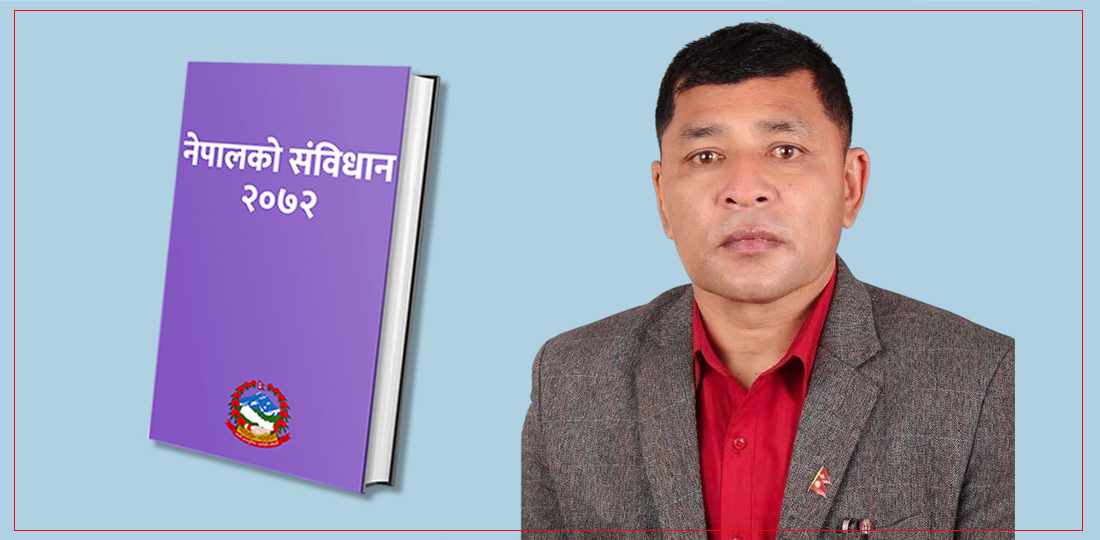
The first Constituent Assembly failed to draft a constitution, and the second Constituent Assembly promulgated the constitution of the Federal Democratic Republic on Ashoj 3, 2072 BS. This constitution has dissatisfactions among the people, and many still exist. Movements are ongoing, and amendments to the constitution are being made as needed. This is a continuous process.
This is also a way to correctly position the contradiction between power and the people and to fix the state's mechanisms. However, the way the country has been run after the republic has not been right. In terms of achievements, the people have gained nothing but political rhetoric and emptiness. The political parties, invoking the history of sacrifice and long political struggle and engaging in political rhetoric of the people, have exploited state power but have failed to deliver on the basic needs of the people such as education, health, and employment.
As no political party has proven itself to the satisfaction of the people, the people's trust has always remained divided. As a result, no political party has secured a majority in parliamentary elections, and coalition governments have become a political culture in Nepali politics. This has turned the country into a den of corruption. It has become the character of Nepali politics for everyone to loot and blame other parties to appear righteous.
When politics becomes shameless and irresponsible towards the people, it is natural for the bureaucracy, security system, and judiciary, in short, all the bureaucratic systems of the government, to become unrestrained. It is natural for the power structure not to respect politics that has morally degenerated. As a result, the entire system has turned into a system of plunder, where the people could only watch corruption and political irresponsibility, while politicians and officials with access to all state systems succeeded in climbing the ladder from the lower class to the middle class and from the middle class to the wealthy class.
The statistics of the economic rise of the commission agents who broker national and international deals in the economic sector, hollowing out the power structure like termites, are separate. Overall, this was a business of plunder in the name of the country and the people.
In essence, the political operators of power, i.e., political parties and their leaders, instead of uplifting and improving the living standards of the people in line with public expectations, became busy in the exchange of power. For this reason, the popular narrative of the upheaval of Bhadra 23 and 24 was created against the backdrop of disappointment and anger among the people. The immediate cause became the death of student protesters in the repression by the then KP Oli government.
A new group emerged in politics by burning the Parliament building, Singha Durbar, the Supreme Court, and the houses of leaders of then political parties. This nascent group had no political legacy. Initially, they were students seen on the streets raising slogans of good governance and eradication of corruption. However, it was later revealed that those who came forward as leaders of the so-called Gen Z upheaval had their legacy linked to NGOs and INGOs.
They, as if by magic, took the Prime Minister's resignation, formed an interim government under Sushila Karki, and the interim government led by Karki conducted elections. The new group, which was not political, gathered under the umbrella of the Rastriya Swatantra Party (RSP) after performing many circuses.
The narrative 'all old politicians are bad', 'only Gen Z youth are good', and 'let's elect the new' was created and established across the country. Elections were held, and as if by magic, except for a few exceptions, RSP candidates won nearly two-thirds of the seats nationwide. The candidates who contested elections on RSP tickets were not different in character from the candidates of other political parties.
Most of them were from the middle class, economically well-off, earned through dubious means, had criminal histories, and had secured their lives by engaging in other professions during the country's political change struggle. However, to everyone's surprise, they defeated veteran leaders who had spent decades in politics with bumper votes.
It was surprising in the sense that there was no difference, yet the votes went in their favor. This was either a subtle game plan under the cover of a narrative. It was a vote given unconditionally in favor of the 'new' in a widening field of anger. From this perspective, it is not 'new' as advertised, but only new in packaging in terms of tendency. And, currently, there is a government with nearly two-thirds majority under the leadership of RSP.
At this time, many may find the discussion of Gen Z upheaval and RSP on the occasion of Republic Day inappropriate. But the reality is that all this is happening within this democratic republican system. And, the people still have only rhetoric and emptiness in their hands.
However, the elements and narratives that are becoming active and established following the Gen Z upheaval of the Bhadra movement and the formation of the new RSP government have raised many sensitive questions. It has not been a hundred days since the RSP government was formed. But during this period, landless squatters across the country became the first target of attack.
Evicting those who came to cities from villages or the urban working class who built shacks on public or encroached land in metropolitan cities and big cities to sustain their lives was the first contract of the RSP's 'new' government. The claim was that squatters had occupied land in the name of the landless. There might have been a few, they should have been investigated. But the powerful remained comfortable, and the working poor were evicted.
The government should have managed the landless and cleared public land, but it wanted to gain popularity by showing that it had established good governance within the middle class.
Another victim of RSP was the right of employees, students, workers' trade unions, teachers, and other professional organizations to organize politically. Instead of regulating whether they fulfilled their responsibilities during work hours, attacking political rights was the second contract of the new government.
Thirdly, the Prime Minister elected from RSP's disregard for the President and choosing the path of ordinances while the parliament was in session suggests a different understanding of democracy and the constitution.
The list of non-democratic actions of the current government is long, but the purpose here is only to clarify the tendency. The first attack on the landless shows that the poor and working people are not in their priority. Otherwise, the RSP government would have relocated them after managing the landless. Secondly, snatching the right of students, teachers, and workers to organize politically exposes RSP's commitment and tendency regarding democracy or people's rights.
In all political changes in Nepal, teachers and students have fought on the front lines. This action by RSP seems to disregard the history of Nepal's democratic struggle. To what extent, even this new government was successful due to the student movement. Thirdly, the disregard for the President and bringing ordinances even while parliament is in session shows that they are trying to create a structure favorable to themselves by any means.
RSP wants to replace the old influence in the entire power structure and make it favorable to itself sooner rather than later. Since the parliamentary route is slow, it has chosen the path of ordinances. Possibly, RSP may bring many more ordinances, which can give it unlimited power. From a democratic perspective, disregarding the constitution is a terrible thing.
The Prime Minister did not speak. In parliament, Finance Minister Dr. Swarnim Wagle expressed the view that his party is a neoliberal party. He also said that they are not communists. Indirectly, he was admitting that RSP is not a socialist party. But the constitution is oriented towards socialism! So what will RSP do? Will it take steps against socialism in the constitution? RSP's political documents confirm this.
If so, does RSP want to amend the constitution and remove the word socialism? If they do not believe in socialism, this possibility cannot be denied. The silence of the army during the Gen Z movement, but its activity in the then political management, the enthusiasm of supporters of regressive thinking before the republic, and RSP's open support for capitalism raise concerns about whether this republic is heading in the wrong direction.
If so, this is terrible.
It is a dangerous tendency to aim to be popular in all actions, events, and tendencies occurring between power, politics, and the people, and to continuously define politics as inherently bad and try to create a non-political environment. Sooner or later, this will lead us to fascism. It is not unusual for the ruling class to move towards authoritarianism when the public is politically disempowered and the history of people's struggle is ignored.
Certainly, the political parties are to blame for the current republic reaching this sensitive stage, as they have degenerated from political ideology. But the alternative to political rights is not non-politics, but correct politics or people's politics. The initial expectation that this republic should be a republic of the people in the true sense remains.
This specific news has been automatically translated by AI. As a result, there may be some inaccuracies or language errors.