Government Decisions Face Judicial Scrutiny Amidst Judicial Vacancies and Political Tensions


Kathmandu. The government led by Balen Shah, formed with a nearly two-thirds majority from the Rastriya Swatantra Party (RSP), is beginning to face a shadow court. There are three vacant judge positions in the Supreme Court. By August 15, Justice Til Prasad Shrestha will retire due to reaching the age of 65. After that, the number of vacant judge positions is expected to reach four.
On the other hand, with the assumption of office by Chief Justice Dr. Manoj Kumar Sharma, the question of who the senior-most justice is has arisen. Since the senior-most justice is also a member of the Judicial Council, that position is currently vacant.
While judicial positions remain vacant in the Supreme Court, causing delays in justice delivery, the process of appointing judges needs to be advanced by finalizing the council members. However, indications suggest that the appointment of judges will be delayed as Chief Justice Sharma is preoccupied with the intention of appointing a senior-most justice favorable to him.
Thousands of old cases are pending in the Supreme Court. The number of cases is many times greater than the number of judges and their capacity. Currently, there is a backlog of over 26,000 cases in the Supreme Court. The problem of ordinary people's cases not getting heard persists, as cases involving political parties take priority in hearings.
Advocate Kirtinath Sharma Paudel states that judges are hesitant to rule on cases related to government decisions. He claims that the ruling party is trying to influence the judicial process by threatening judges with impeachment.

Advocate Paudel believes that the current government, with its two-thirds majority, is speaking in a threatening tone, instead of allowing the judiciary to function independently and deliver justice.
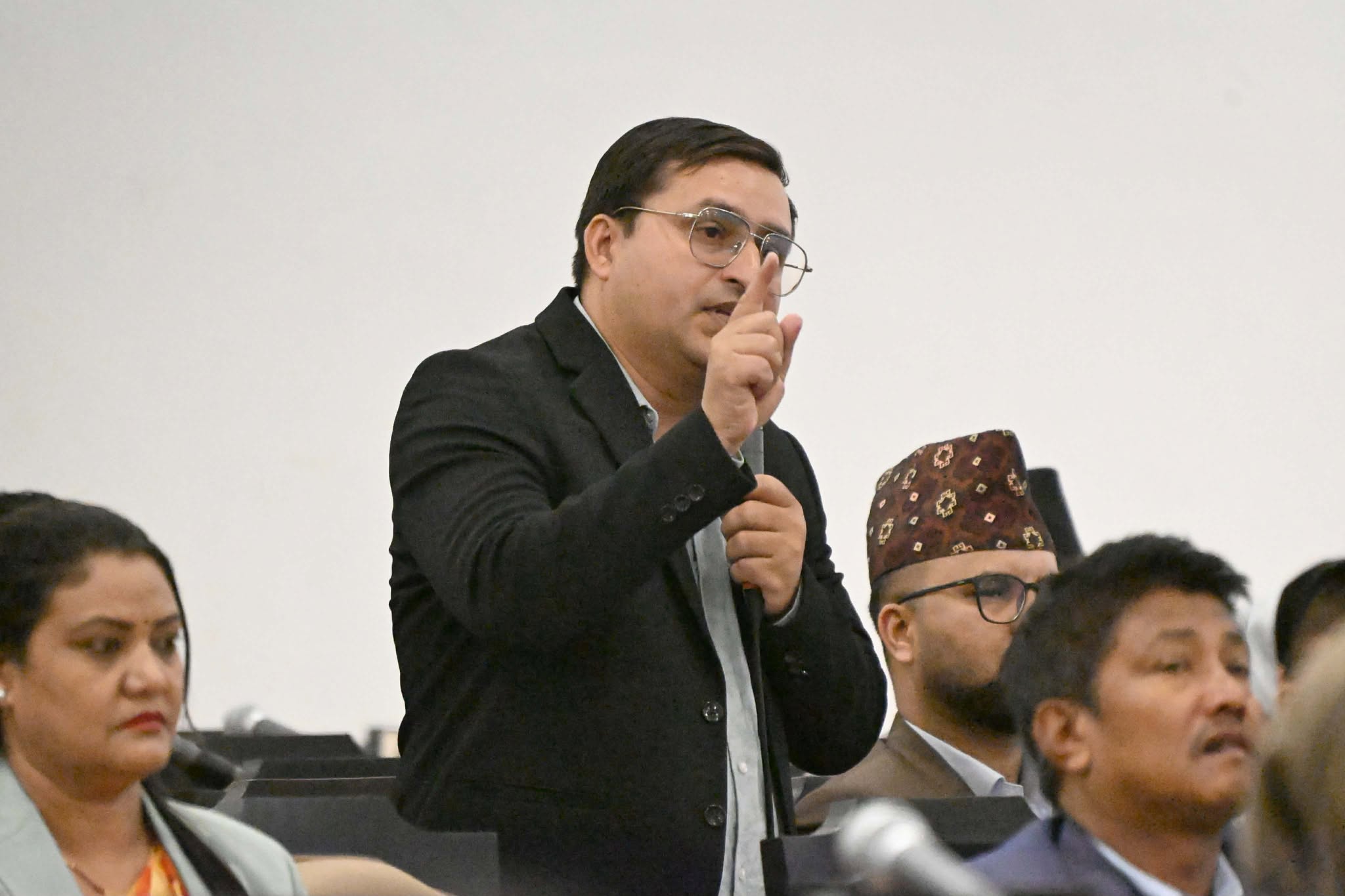
On May 4, RSP lawmakers raised serious questions about the role of the judiciary in a meeting of the House of Representatives. When Justice Sapana Malla Pradhan issued a written order to register a petition against the rejection of a writ petition challenging the recommendation for the Chief Justice, RSP lawmakers questioned the judiciary's role.
Lawmaker Yagyamani Neupane accused Justice Sapana Pradhan Malla's order of being influenced by the 'principle of self-interest'. He claimed that the court has not shown transparency in its administrative and judicial processes and that orders are being issued without clarification from the bench.
Lawmaker Neupane questioned the judges, asking, 'When there are 27,000 pending cases, why is judicial activism only seen when it comes to demolishing slum settlements or halting the government's administrative work? Why is the court, which remains silent on 8,000 cases older than 5 years, in a hurry to make the government fail?'
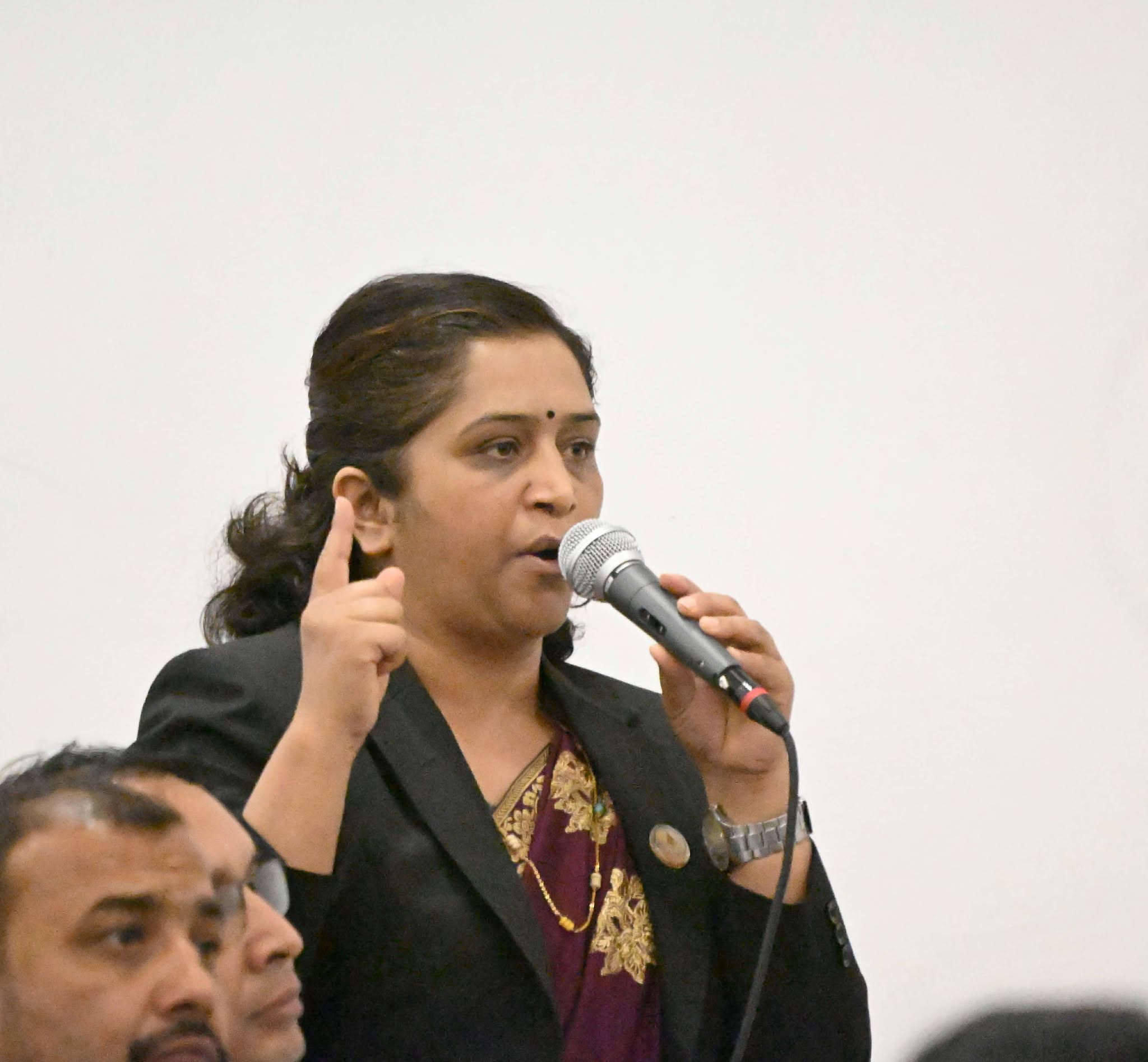
Another RSP lawmaker, Samikshya Baskota, challenged judges to 'take off their robes and enter politics'. She accused the judiciary of forgetting the 'principle of separation of powers' and interfering in the executive's jurisdiction.
However, Article 105 of the Constitution prohibits discussions in parliament regarding cases pending in court. Ruling party lawmakers argued that they were raising concerns not about judicial verdicts but about 'administrative anarchy' and 'conflict of interest' within the judiciary.
No Clear Order on Government Decisions
In some cases filed against government decisions, the Supreme Court has not been able to make a decision on issuing interim orders beyond issuing show-cause notices.
In a writ petition filed against the government's decision to impose a customs duty of 100 rupees at the Nepal-India border, the Supreme Court's joint bench issued an order stating that the state has the sovereign right to impose customs duties and that the legality and justification of the 100 rupee limit will be considered during the full hearing. The bench issued an interim order to not cause inconvenience to the general public while bringing goods for the time being.
The court stated that while it is the state's duty to control the smuggling or illegal import of commercial goods, it should not obstruct medicines related to public health, essential items for social customs, and minimal goods brought by local residents of border areas for personal use.

Advocate Mitesh Pandit and others had filed a writ petition making the Office of the Prime Minister and Council of Ministers a defendant. The writ requested that the notice published in the Nepal Gazette on Jestha 15, 2082, in accordance with Section 13(3) of the Customs Duty Act, 2081, and the practical difficulties encountered in its implementation, be immediately halted.
Similarly, a demand was made for an interim order to overturn the government's decision to set the limit at one hundred rupees, questioning its legality and justification.
Furthermore, the case related to cooperative fraud involving Rastriya Swatantra Party (RSP) chairman Ravi Lamichhane has been pending in the Supreme Court for a long time. The constitutional bench of the Supreme Court could not make a decision on the writ filed against the decision of the then Attorney General Sobita Bhandari to withdraw the organized crime and money laundering case related to Lamichhane's cooperative fraud, and the case has been sent to the full bench.
It remains uncertain whether Lamichhane's two charges will be withdrawn.
The full bench will further interpret whether the Supreme Court can interfere in matters of district court jurisdiction. The authority to grant final permission for amendment of charges lies with the concerned district court. The full bench will also resolve the technical question of whether the Supreme Court can interfere in this matter before the district court makes a decision.
Impeachment Weapon of Two-Thirds Majority
Article 101 of the Constitution contains provisions related to impeachment. Under this, an impeachment motion can be filed against the President, Vice-President, Chief Justice, Supreme Court justices, members of the Judicial Council, or heads or officials of constitutional bodies.
Constitutionally, an impeachment motion can be registered in two ways. First, one-fourth of the members of the parliament currently in session can register an impeachment motion in parliament, stating the grounds and reasons. In doing so, it must be specified that there are grounds and reasons such as serious violation of the constitution and laws, lack of work capacity or misconduct, failure to perform official duties honestly, or serious violation of the code of conduct.

Second, any ordinary citizen can file a complaint on the grounds of serious violation of the constitution, lack of work capacity or misconduct, or failure to perform official duties honestly, or serious violation of the code of conduct. If three members of the legislative parliament certify that such a complaint is admissible, the complaint will be submitted to the impeachment recommendation committee.
If the committee, after investigating the complaint submitted in this manner, finds sufficient grounds to recommend impeachment, it can submit its recommendation to the parliament. If one-fourth of the total members of the parliament currently in session vote in support of the report submitted to the parliament, it will be sent back to the impeachment recommendation committee for further investigation.
Once a proposal is received through either of these methods, it is considered that proceedings have begun, and in such a situation, the person against whom impeachment is filed cannot perform their duties while holding office.
The impeachment recommendation committee, upon receiving a proposal, will provide the accused person a maximum of 7 days to present their defense. Considering the defense provided by the person, the committee may conduct further investigation.
In the course of such investigation or inquiry, the committee can record the statement of the accused person, search the place and office related to the accusation, take depositions from other individuals if necessary, and examine case files. The committee must submit its report to the parliament within a maximum of 30 days after conducting such an investigation.
If the parliament discusses the report and the impeachment recommendation is passed by a two-thirds majority of the members currently in session, the person will be removed from office. The parliament can also send the report back to the committee for reconsideration within 7 days. After the committee conducts further investigation and submits its report, the parliament can pass the impeachment recommendation with a two-thirds majority. If the recommendation is passed, the dismissed person can be prosecuted for corruption and other offenses according to the prevailing laws.
Such a person will be barred from holding any public office for life and will not receive any benefits from the state. The person may also face punishment according to the law.
This specific news has been automatically translated by AI. As a result, there may be some inaccuracies or language errors.
_BSX4jxIBxx.jpg)

_CuZWldRsJU.jpg)