
Karnali Province Faces Industrial Stagnation Due to Infrastructure, Energy, and Policy Deficiencies

From a development perspective, Karnali Province is far behind. With the lack of physical infrastructure development, it is naturally lagging in industrialization. Physical infrastructure development is also necessary for industries and factories.
I have been active in industry and business in Karnali for 30 years. I established a company called 'Karnali Eco Village' and have been marketing Karnali's products. I am working with friends in Kathmandu, Bhairahawa, and Nepalgunj. I also sell locally. My focus is more on Kathmandu. My main objective is to brand Karnali's products and send them out.
In Jumla, paddy is about to ripen, but last year's paddy is still remaining. That paddy has not been able to be sent to the market. There is no 'market chain'. Governments have not paid attention to this. We are trying to create a 'market chain'.
The main challenge for the lack of development of large industries in Karnali is energy. Due to energy shortage, there is no situation to open large industries here. Even the existing small industries are in crisis. Now, the work of the 132 KVA electricity transmission line connecting to Karnali via Kohalpur in Banke has been completed. Although this work has been completed after many years of waiting, there are reports that towers in Banke have been damaged due to storms in between.
We had expected that the completion of the 132 KVA transmission line would solve Karnali's electricity crisis. However, the situation remains the same.
Karnali's geography is difficult and remote. Therefore, the state's policy in the field of industry and factories should provide some facilitation for Karnali.
The second problem is infrastructure. Energy alone is not enough for industrial development; we also need roads. When there are no good roads, it is difficult to bring raw materials needed for industries. When there are transportation problems, the cost of raw materials increases. When the cost of raw materials increases, the price of the produced goods also increases. As a result, goods produced in Karnali cannot compete outside. Transportation, i.e., traffic, is another major problem for the lack of development of large industries.
Let alone large industries, even small, cottage, and small industries, and industries based on local raw materials, are not prioritized by the federal and Karnali provincial governments. Local products like kodo, phapar, chino, kaguno, rice, handicrafts, fruits like oranges, apples, and herbs like timur and spice crops can be processed to produce various products, but it is expensive to bring raw materials from outside, and such products cannot compete in the market.
So far, four to five large industries have come for registration in Karnali. The main reasons for these industries not being able to operate are the problem of electricity and the problem of transporting raw materials needed for industries. Along with transportation, there is also a market problem.
Out of Karnali's approximately 1.7 million population, 500,000 to 700,000 are outside. There might be around 1 million consumers here. Looking at it this way, our consumers are also few. Therefore, the market is also limited. Investors are going to Nepalgunj, Bhairahawa, Butwal, and Birgunj.
Another major problem in Karnali is the lack of manpower. There are people to work, but we lack skilled manpower. For example, if we need to bring a good cook to our hotel now, there is no manpower here. We are forced to bring them from outside. If we need a good chef, we have to bring them from outside. Even a good electrician, or technicians who repair ACs or refrigerators, have to be brought from outside. Therefore, the lack of skilled manpower is another reason and challenge for the absence of large industries.
The private sector alone cannot invest and compete. An industry in Surkhet is finding it difficult to run compared to a sanitary pad or soap industry operating in Butwal.
In my 30 years, I have ventured into many areas of industry and business. My experience working in hotel business, dairy business, and agro-based industries like ginger and turmeric tells me that only industries based on local raw materials can survive in Karnali. Industries based on local resources are progressing now. Friends are also enthusiastically moving forward in this. We are currently doing good sales of products made from Karnali's local raw materials. However, running industries in Karnali by bringing raw materials from outside is not possible. We cannot compete with industries in Birgunj, Biratnagar, Butwal, and Banke.
Another major problem is the state's policy. Karnali's geography is difficult and remote. Therefore, the state's policy in the field of industry and factories should provide some facilitation for Karnali. It is difficult to work in Karnali under the policy applicable to Biratnagar or Banke. The facilities provided to Butwal and the facilities provided to our Surkhet or Jumla cannot be the same. Since we are geographically remote, the state should provide us with subsidies. If there is support in transportation, farmers' fertilizers and seeds, technology, or training, only then our costs will decrease and we can survive in the market.
The private sector alone cannot invest and compete. An industry in Surkhet is finding it difficult to run compared to a sanitary pad or soap industry operating in Butwal. Many such industries have already closed down in Surkhet. Butwal easily gets raw materials and a large market, but it is very difficult to survive in Karnali. Therefore, instead of bringing raw materials from outside, industries based on local herbs, spices, wood, and stone found in Karnali should be promoted. We have raw materials for cement, and gas work is underway in Dailekh. If attention is paid to such areas, only then large industries will come and development will occur.
Our main pillars are agriculture and tourism. Our focus should now be on minerals, agriculture, forest products, and tourism. We have places like Rara, Phoksundo, and Kakre Bihar. The climate and natural resources here are our capital. If millions of tourists can be attracted, our Marsi rice, timur, oranges, apples, and turmeric-ginger will be easily sold. For this, the state's correct policy is necessary.
The development of large industries requires the right policy and leadership. Valuable metals like kyanite are found in Dailekh and Jajarkot, but there are policy and political problems there too.
According to current data, there are 30,000 small and cottage industries registered in Karnali, but most of them are in crisis. About 70 percent of the industries are in name only. They are registered, paying taxes, and have files for bank loans, but are not active in practice. The remaining 30 percent of industries are also in trouble due to the impact of Covid and bank interest rates. Trade has declined by 70 percent. The cost of transportation has doubled due to the rise in petroleum prices.
- What is the future path for Karnali's industry?
We have to struggle a lot in this. Because we are unable to enter the industrial path at all. Land from Chhinchu to Jahare for the provincial industrial area has been studied and EIA has been done, but land alone is not enough. For an industrial environment, roads, electricity, raw materials, and skilled manpower are needed. We need to increase investment in wine, juice, herbs, and dairy industries in Karnali itself. Only by prioritizing industries based on animal products and value chains will Karnali's future be bright.
Therefore, the development of large industries requires the right policy and leadership. Valuable metals like kyanite are found in Dailekh and Jajarkot, but there are policy and political problems there too. The state says not to send raw materials abroad, but there are no processing industries here, nor are there trained workers. The state claims underground property, but landowners cannot dig. Untangling such knots is the job of politics and leadership.
The main thing is political will. There is no shortage of resources in Karnali, but there is a lack of wisdom to utilize them properly. Herbs are piled up in Humla and Mugu, but the state's policy obstructs their transport. It would be so good if leaders wore our local ALLO, Bhange, and cotton clothes instead of promoting foreign brands!
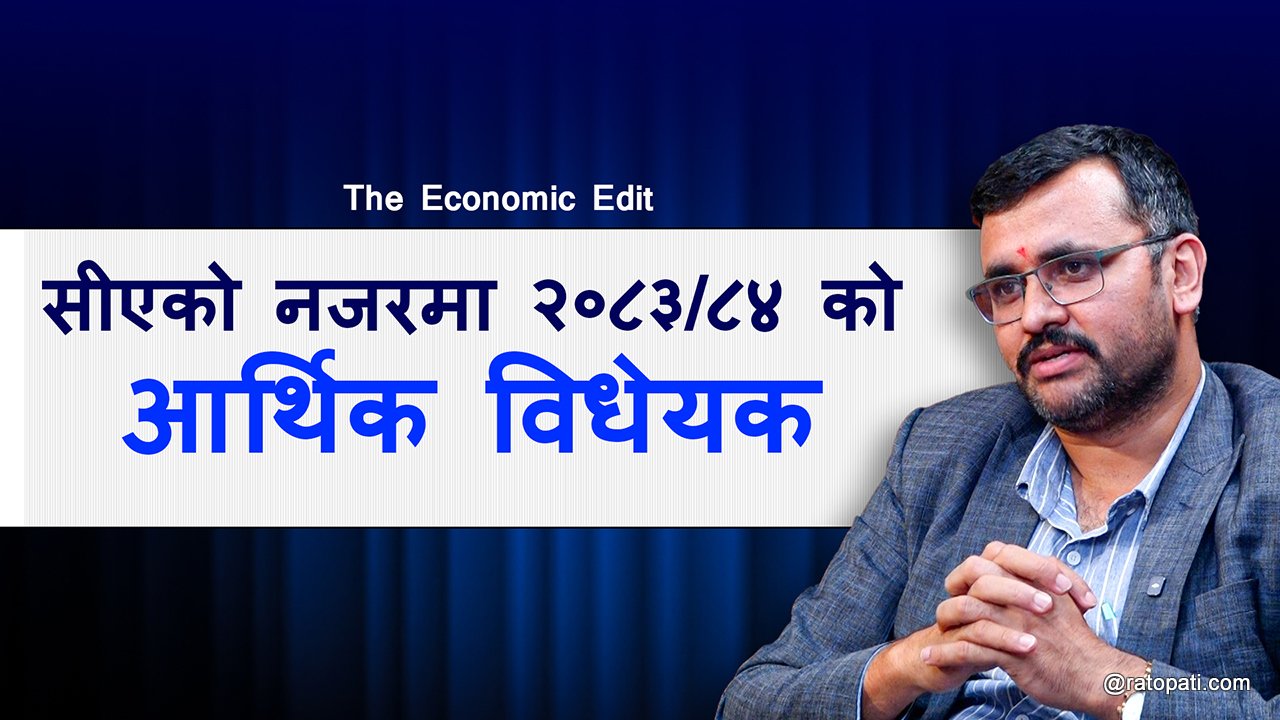
(Based on an interview conducted by Pankhabahadur Shahi for Ratopati with Udiram Dangi, founder chairman of Karnali Province Small Industrial Village and central member of the Federation of Nepalese Chambers of Commerce and Industry.)
This specific news has been automatically translated by AI. As a result, there may be some inaccuracies or language errors.
_IvrWQ1hN9m.jpg)

_jxKX1kXOlf.jpg)

_htFaNqpIDJ.jpg)