
India-Nepal Diplomatic Relations Face Setbacks Amidst Unresolved Border Disputes

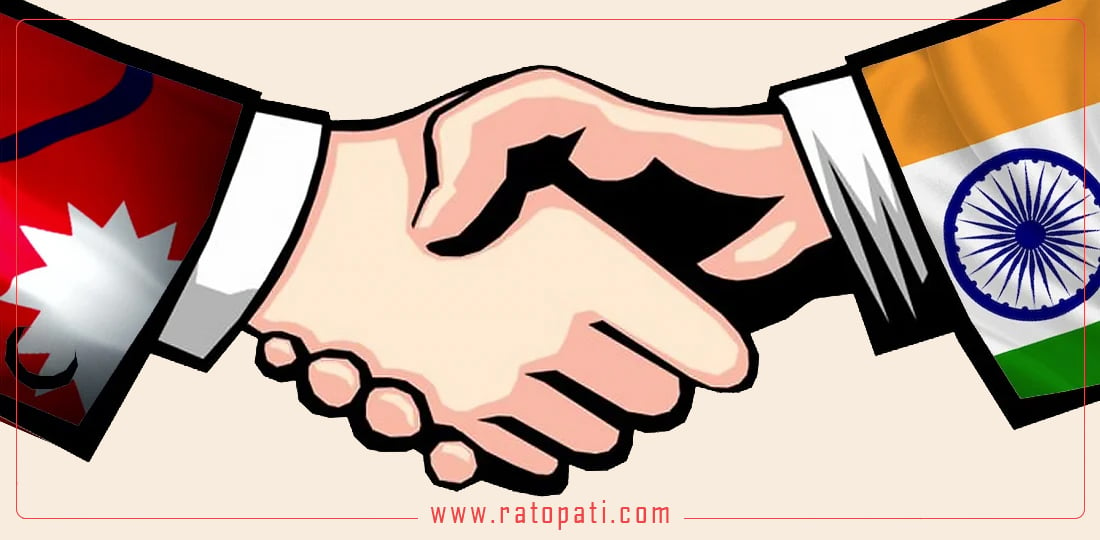
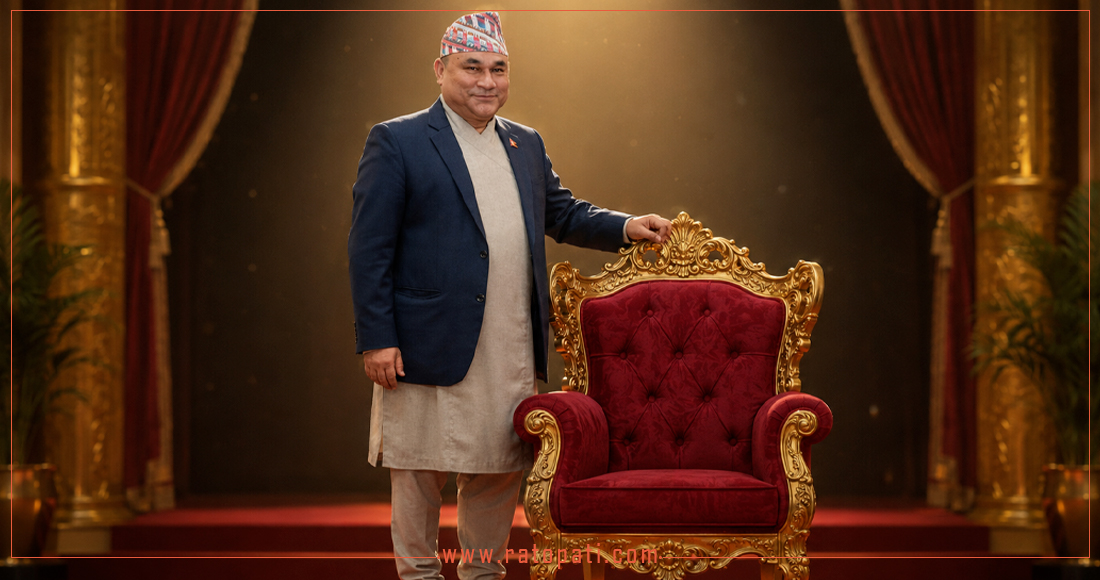
Kathmandu. After the National Independent Party (NIP) achieved a nearly two-thirds majority victory in the elections held on February 17, Indian Prime Minister Narendra Modi called senior NIP leader Balendra (Balen) Shah and Chairman Rabi Lamichhane to congratulate them. Following the congratulatory call, Prime Minister Modi wrote on social media 'X', 'Had a telephone conversation with NIP Chairman Mr. Rabi Lamichhane and senior NIP leader Mr. Balendra Shah. Congratulated both leaders on their electoral victory and the splendid success of the NIP in Nepal's elections. Conveyed best wishes for their upcoming new government and expressed India's commitment to work together with them for the shared prosperity, progress, and welfare of our two countries. I am confident that with our joint efforts, India-Nepal relations will reach new heights in the coming years.' Subsequently, on March 29, the day Balen was appointed Prime Minister, Indian Prime Minister Modi again congratulated him via 'X', writing, 'Heartfelt congratulations to Mr. Balendra Shah on taking the oath as Prime Minister of Nepal. Your appointment is a reflection of the trust the Nepali people have placed in your leadership.' Prime Minister Modi further added, 'I look forward to working closely with you to elevate the friendship and cooperation between India and Nepal to greater heights for the mutual benefit of the people of both countries.' Not stopping there, Prime Minister Modi also sent a written congratulatory message through the Indian Embassy in Kathmandu, inviting Prime Minister Balen for a visit to India. Although both countries' leadership appeared enthusiastic initially, cracks began to appear in the relationship within a month. India has postponed the visit of its officials to Nepal and has also pushed back the plan to bring Prime Minister Balen to India. The sudden postponement of the visit by India has surprised the Ministry of Foreign Affairs. A joint secretary at the Ministry of Foreign Affairs said, 'If there is any problem between the two countries, it can be resolved through mutual understanding, but postponing the discussion and meeting and stopping the visit altogether does not send a good message.' In a weekly press conference held on May 12, Indian Ministry of External Affairs spokesperson Randhir Jaiswal emphasized the deep and multifaceted partnership between India and Nepal and informed that New Delhi had received an invitation for Foreign Secretary Vikram Misri's visit to Kathmandu. He stated that the schedule for this would be determined based on the 'mutual convenience' of both nations. Jaiswal highlighted the vibrant diplomatic activity between the two neighboring countries since Balen Shah assumed office as Prime Minister of Nepal. He emphasized that both capitals are working closely to 'further strengthen the already strong alliance.' Addressing reports in Nepali media suggesting that the proposed visit of Foreign Secretary Misri was postponed due to the Nepali Prime Minister's alleged reluctance to meet foreign dignitaries, Jaiswal maintained a positive outlook on the direction of bilateral relations. He said, 'We have a multifaceted partnership with Nepal. After the elections in Nepal, our Prime Minister extended congratulations and expressed our unwavering commitment to further strengthening our strong India-Nepal friendship and traditional relations through discussions with the Prime Minister of Nepal.' He also mentioned the successful diplomatic meeting in Mauritius, where External Affairs Minister S. Jaishankar held bilateral talks with his Nepali counterpart, Shishir Khanal. 'Currently, both sides are working closely to further deepen our partnership at various levels. We have received an invitation from the Nepali side for our Foreign Secretary's visit to Nepal. The date of the visit will be determined based on the mutual convenience of both sides, and we will keep you informed about these developments,' Jaiswal added. Similarly, there was talk of Foreign Minister Shishir Khanal attending the meeting of BRICS Foreign Ministers in India on May 14 and 15. Internal preparations were also underway at the Ministry of Foreign Affairs. However, sources from the ministry indicated that he did not participate in the program as no invitation was received from India. It is understood that Foreign Minister Khanal himself was preparing to travel to India with the aim of improving the deteriorating relations between the two countries. He was preparing to visit India to participate in the 'Big Cat Alliance' conference held in India. The first International Big Cat Alliance conference was scheduled to be held in New Delhi on June 1. This conference was to be organized jointly with the Fourth India-Africa Forum Summit. However, this program has also been postponed for now. With the decision to organize the Fourth India-Africa Forum Summit at a later date in consultation with the African Union Chairperson and the African Union Commission, it has been decided to postpone the first IBCA conference as well to ensure broad and active participation from African countries and all major habitat countries. India has stated that the new date for the conference will be announced in due course after consultation with participating countries and stakeholders. What are the main issues of dispute? Nepal expressed dissatisfaction after India and China agreed to resume the Kailash Mansarovar Yatra via Lipulekh on April 30. In a six-point press note released on May 2, the Ministry of Foreign Affairs stated, 'The Government of Nepal has once again conveyed its clear stance and concerns to both India and China through diplomatic channels regarding the proposed Kailash Mansarovar Yatra via Nepali territory Lipulekh.' On the same day, India released a press note stating, 'The Kailash Mansarovar Yatra via Lipulekh pass is an old route that has been continuously operational since 1954 and is not a new issue.' India stated that Nepal's claims over certain territories are not based on historical facts and evidence, and such unilateral claims are unacceptable. An expert from India studying India-Nepal security affairs said, 'India has repeatedly stated that if there are problems related to borders or any other issues, let's resolve them through dialogue. India must have been displeased because Nepal is moving forward unilaterally while we are ready for discussions.' When the dispute arose over Kalapani, Lipulekh, and Limpiyadhura from the beginning, India had proposed to find a solution through dialogue. Prime Minister Narendra Modi himself made such a request when the then Prime Minister K.P. Sharma Oli visited India. A committee comprising officials from both countries was formed for dialogue, but it has met only once. The Indian side claims that Nepal has been postponing the meeting, citing lack of preparation. Although the meeting of the joint working group on border issues between the two countries has been held several times, discussions on the Lipulekh border dispute have not taken place from Nepal's side, and when India raised the issue, it has been evaded by saying 'lack of preparation.' A former secretary of the Ministry of Foreign Affairs also admitted that Nepal often lacks preparation for meetings with India, and some meetings are postponed without any preparation. He said, 'This preparation is not done by the Ministry of Foreign Affairs; the Ministry of Foreign Affairs only facilitates diplomatic coordination. In fact, the preparation should be done by the Ministry of Home Affairs and the Ministry of Land Management, but the lack of preparation from Nepal's side is true.' Recently, disputes have arisen not only over border issues between Nepal and India but also in trade matters. India is dissatisfied with Nepal imposing customs duties on goods exceeding one hundred rupees, while Nepal is upset by India's obstruction of Nepali tea exports. India has also been obstructing the import of wheat and sugar at times. Meanwhile, India has been displeased by Nepal's occasional bans on the import of Indian agricultural products, citing excessive pesticide content in vegetables and disease outbreaks in bananas. According to sources from the Ministry of Agriculture, the Nepali government had recently decided to bring chemical fertilizers from India, and India had also agreed to provide them. However, it has now come to light that the issue of fertilizer import is also in uncertainty. All these issues indicate a deepening dispute between the two countries. After Balen became Prime Minister, Foreign Minister Shishir Khanal went to participate in a program organized in Mauritius. During the meeting with Indian External Affairs Minister S. Jaishankar on the sidelines of the program organized by the Indian Ministry of External Affairs, Minister Khanal informed that Prime Minister Balen had accepted India's invitation and would visit India soon. Following this, External Affairs Minister Jaishankar stated that he would send Indian Foreign Secretary Vikram Misri to Nepal to prepare for Prime Minister Balen's visit. Both countries had started preparing for the visit. Preparations were made regarding the agenda of discussions, and Secretary Misri was scheduled to arrive in Kathmandu on May 11. However, the visit was postponed due to the sudden resurgence of issues including the border dispute.
This specific news has been automatically translated by AI. As a result, there may be some inaccuracies or language errors.
_UIDnxrYIZi.jpg)

_BSX4jxIBxx.jpg)
_CuZWldRsJU.jpg)
