
Prime Minister Balen Shah Under Fire for Ignoring Parliament, Opposition Alleges Authoritarian Tendencies
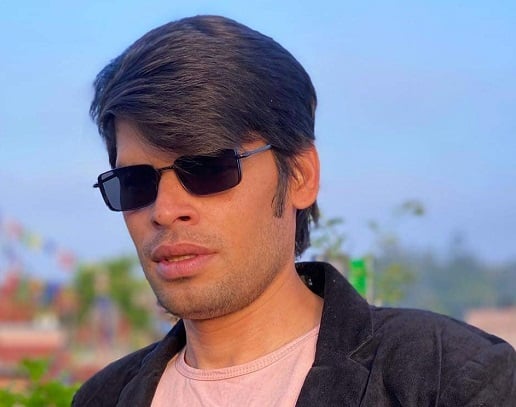

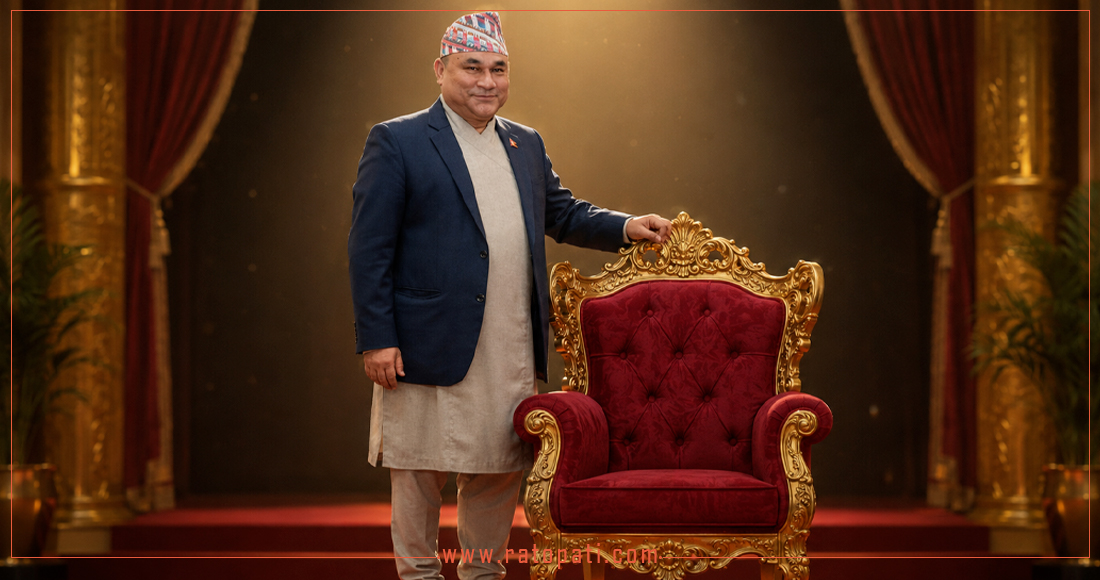
Kathmandu. Within the National Independent Party (NIP), which leads the government with a nearly two-thirds majority, Rabi Lamichhane and Balendra (Balen) Shah are the two main leaders. Whether these two leaders will provide political stability to the country for the next five years or will be torn apart by personality clashes remains to be seen. However, many have already started paying attention to this.< /p>
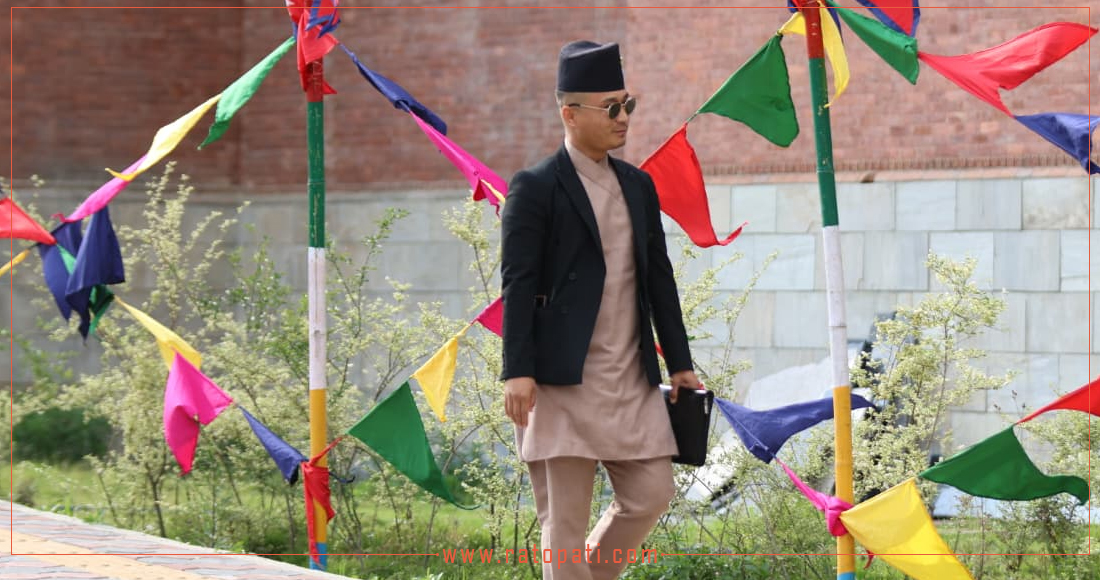
Specifically, Prime Minister Balen Shah has been continuously ignoring the parliament, and opposition parties have started raising strong voices against it. Since taking office, Prime Minister Balen Shah has not addressed the parliament even once. He also did not answer questions raised by MPs on the government's annual policy and program. Finance Minister Swarnim Wagle answered the questions raised on the policy and program instead of him.< /p>
The main reason for the NIP winning 182 seats with nearly 5.2 million popular votes in the election appears to be the popularity of Balen and Rabi among the general voters. The election results show that the public mandate has endorsed 'populism' rather than the party's agenda, philosophy, principles, past contributions, and capabilities this time.< /p>
However, the public is gradually becoming apprehensive that the government led by Balen and the NIP itself may not be able to live up to that trust. Such apprehension is also visible among NIP leaders.< /p>
NIP Member of Parliament Dr. Amresh Kumar Singh expressed anger against Prime Minister Balen's working style in the House itself. On Jestha 5, in a House of Representatives meeting, he expressed concern that if past traditions are broken, the relevance of the parliament itself will be lost.< /p>
'We should not break everything in the name of newness. If we keep breaking all traditions, the relevance of this parliament will be lost. The parliamentary system will be lost,' he said. He expressed dissatisfaction with the Finance Minister's absence from the House during the pre-budget discussion.< /p>
MP Singh reminded that Nepal's constitution adopts a parliamentary system and clarified that questions are directed at the government, and MPs also present the people's concerns to the government.< /p>
Becoming more angry with the Prime Minister, he said, 'Let's break down Singha Durbar, let's break down the Prime Minister's post. Let's break down the ministerial posts too. Let's change everything. I was forced to speak because it became too much. That's why it ignited.'< /p>
Two days ago, in a television interview, Singh made a serious allegation that the government was moving towards a Pakistani model. He cautioned that no government with a two-thirds majority has been successful in Nepal.< /p>
'No government with a two-thirds majority has been successful in Nepal's history. BP formed a two-thirds government, it fell in 16 months. Girija Prasad's government fell in 2048 BS. The majority government of 2056 BS fell,' Singh said, 'The CPN government formed in 2074 BS did not last.'< /p>
He stated that history has repeatedly shown instances where people become intoxicated after gaining a two-thirds majority and cannot handle it.< /p>
Former Prime Minister and coordinator of the Nepali Communist Party, Pushpa Kamal Dahal 'Prachanda', had warned that if the two-thirds majority NIP government does not shed its arrogance, history will repeat itself. Expressing dissatisfaction with the government's working style in the House on Baisakh 29, Prachanda recalled the state of communist governments in 2064 and 2074 BS.< /p>
During his address, Prachanda said, 'Just as it is difficult to tolerate defeat, it is even more difficult to digest victory. Numbers are never permanent, nor is public support unconditional. Yesterday, as the CPN, we were also of this size, but due to our own weaknesses, it did not last. Learn from our experience and history; do not let this majority become fertilizer for arrogance.'< /p>
NIP leaders themselves are beginning to say that Prime Minister Balen's tendency to ignore parliament could prove costly for the NIP. According to one leader, the party could suffer a major setback if Balen cannot rise above the Kathmandu Metropolitan City and Rabi above Galaxy 4K Television.
Rule 56 (1) of the House of Representatives Regulations 2079 BS provides for question-and-answer sessions with the Prime Minister or concerning matters directly related to his portfolio in the parliament during the first week of each month. The Speaker is to determine one hour on a day in the first week of each month for asking questions, and if it is postponed for any reason on that day, one hour will be scheduled in the immediately following meeting. However, opposition parties have strongly protested the government as question-and-answer sessions were not found in the calendar provided by the Parliament Secretariat up to Asar.< /p>
On Thursday, opposition parties obstructed the parliamentary session, searching for the Prime Minister in the parliament. As it became difficult to conduct parliamentary proceedings, Speaker Dol Prasad Aryal held discussions with the Prime Minister, but no clear response has emerged.< /p>
NIP leaders themselves are beginning to say that Prime Minister Balen's tendency to ignore parliament could prove costly for the NIP. According to one leader, the party could suffer a major setback if Balen cannot rise above the Kathmandu Metropolitan City and Rabi above Galaxy 4K Television.< /p>
'Balenji could not rise above the Metropolitan City, and Rabi couldn't rise above Galaxy. Neither of them shows the maturity to run the country. It is not acceptable to not answer questions raised in parliament. If we start breaking traditions and practices without studying them properly, it can cause great damage to the party,' said the leader.< /p>
Political analyst Bhim Bhurtel claims that Balen does not even accept the NIP as his party. 'Balen Shah has not accepted the NIP as his party. This is evident from his behavior. There is a report that he stood up during the President's address to the parliament saying this is not mine. The policy and program were written by Swarnim Wagle based on his ideology and the party's ideology. Prime Minister walking out in the middle means this is not mine,' Bhurtel told RatoPati.< /p>
He questioned Balen's intentions, noting that after becoming Prime Minister, he has only participated in Nepali Army programs so far.< /p>
'He does not express through his actions that he is the Prime Minister from this party, that he belongs to the party, that he is the parliamentary party leader. He hasn't said it, but his actions suggest it,' Bhurtel said.< /p>

Bhurtel analyzes that there might be significant 'back support' from the army behind this. 'It seems he has very strong backing from the military. It appears the army is also dominant in running the government,' he said.< /p>
Giving an example, he presented the issue of the government bringing an ordinance to amend 150 laws in just 20 days. 'It seems the bureaucracy or the military has worked a lot for this,' he said.< /p>
Bhurtel views with suspicion Balen's public call during the Janji movement for the protesting parties to negotiate with the army, his application to the army headquarters in Bhadrakali to become the interim government's prime minister, and the inclusion of former army officials in political appointments.< /p>
Opposition parties allege that the working style of the Balen government over the past nearly two months appears to be moving towards autocratic dictatorship.
He said, 'Another basis confirming my statement is the recent public announcement of offers being made to many people with military backgrounds, such as Major Generals, Brigadier Generals, Full Colonels, and Directors General, for various political appointments. According to the constitution, the Prime Minister should be formed from parliament, and there should be accountability and responsibility towards it, but this is not seen.'< /p>
On Bhadra 24, when the country was devastated by arson, Balen was at the Lainchaur office. Water and medical treatment were arranged by the Metropolitan City for the protestors. That evening, he wrote on social media Facebook, 'Now your generation must lead the country. Be ready! Also, be ready to negotiate with the Army Chief. But remember – parliament must be dissolved before negotiating.'< /p>
Based on that status, Balen was questioned by the investigation commission led by Gauribahadur Karki and the National Human Rights Commission. In the statements taken by both commissions, Balen replied that although he had moral support for the peaceful protest on Bhadra 23, he did not participate in the protest.< /p>
Opposition parties allege that the working style of the Balen government over the past nearly two months appears to be moving towards autocratic dictatorship.< /p>
Analyst Bhim Bhurtel even claims that the NIP has no future due to Balen's tendencies. His analysis is that the party will not last even five years according to the nature of Balen and Rabi.< /p>
'The NIP has no future at all. It will not last five years. As time goes by, if there is a powerful institution backing it, then the Rabi Lamichhane group will have to leave the NIP,' he said.< /p>
Bhurtel stated that Balen is not the kind of person who can run a political party. He said, 'His character is not that of a leader of a political party. He appears to have the nature of a military-backed puppet.'< /p>
This specific news has been automatically translated by AI. As a result, there may be some inaccuracies or language errors.
_UIDnxrYIZi.jpg)

_BSX4jxIBxx.jpg)
_CuZWldRsJU.jpg)
