
Constitution Amendment Debate: Task Force Coordinator Emphasizes National Consensus


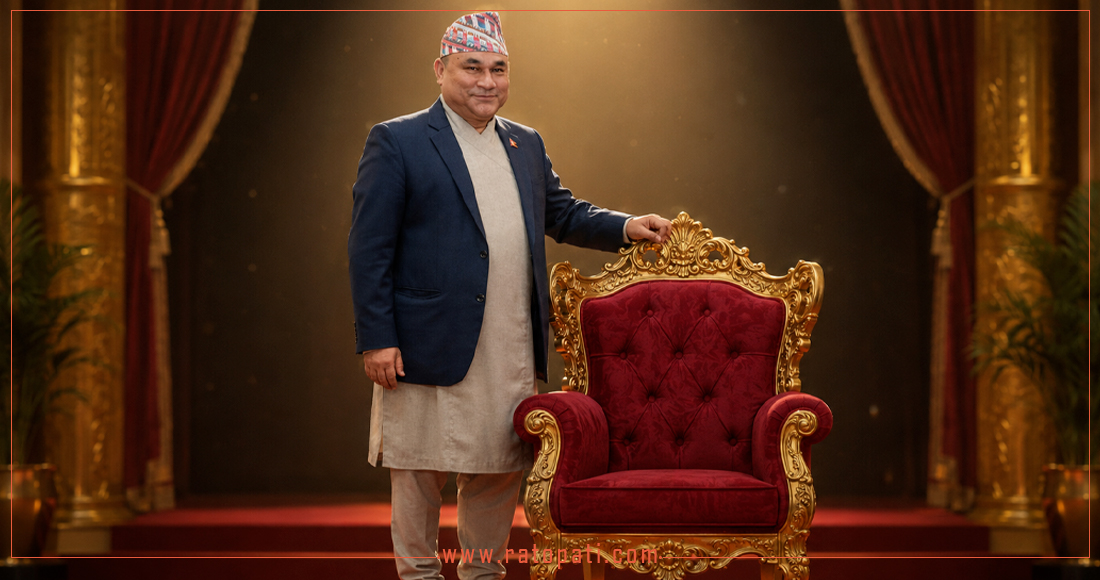
Kathmandu. Asim Shah, coordinator of the task force formed to prepare a debate paper for constitutional amendment and political advisor to Prime Minister Balen Shah, has clarified that the constitutional amendment will be advanced based on national debate and consensus.
While collecting suggestions from leaders of various political parties on the preparation of the constitutional amendment debate paper, coordinator Shah stated that the government is not trying to amend the constitution unilaterally, but is focused on finding common ground by including all political parties in national consensus.
Speaking at the task force's discussion held today at the Office of the Prime Minister and Council of Ministers, coordinator Shah recalled the political struggle, people's movement, Madhes movement, and the sacrifices of martyrs at the time of the constitution's promulgation, stating that the government is serious about the sensitive aspects of the constitution. He said that the task force is identifying in which areas common consensus is possible and where there are differences. According to him, after the debate paper is prepared, it will be made public for national debate.
"The government is in no hurry in this process. The government is fully aware that there is no scope for constitutional amendment without national consensus. This process has been initiated to understand the common views of political parties and powers on which issues to amend, which to touch, and which not to touch," he said.
Leaders of various political parties participating in the discussion presented their suggestions on the form of government, electoral system, and provincial structure.
Here are the leaders' suggestions
Dr. CK Raut, Chairman of the Janmat Party, who participated in the discussion, argued that the republic should be further strengthened through constitutional amendment and proposed radical structural reforms. He emphasized the need for a directly elected president and directly elected provincial chiefs by changing the form of government. He suggested that heads of constitutional bodies should also be elected, the expensive electoral system should be changed, and the 'right to reject' and 'right to recall' should be guaranteed in the constitution.
Chairman Dr. Raut argued that ministers should be appointed from experts, MPs should not be subject to whips, and even Supreme Court judges should be elected. He suggested replacing the term 'socialist-oriented' in economic policy, which he claimed discourages the private sector, with 'social democracy', and redrawing electoral constituencies in the Terai-Madhes region based on population. He stressed that provinces should be given full autonomy with specific rights.
Min Bishwakarma, a leader of the Nepali Congress, expressed the view that fundamental aspects and the preamble of the constitution should not be tampered with. Defining the constitution as a dynamic document, he suggested not interfering with fundamental achievements such as republicanism, federalism, inclusivity, and national sovereignty.
Leader Bishwakarma emphasized simplifying the constitution so that ordinary people can easily understand it. He also presented options for reducing the number of representatives and ministers in the federal and provincial governments and balancing inclusivity within the direct electoral system. Leader Bishwakarma expressed the view that inclusivity should be ensured within the direct electoral system and a multi-member electoral system should be implemented.
Krishna Bhakta Pokharel, central member of the CPN (UML) and member of the Constituent Assembly, expressed the view that the fundamental pillars of the constitution should not be shaken during the amendment process. He stressed reducing the number of members of the National Assembly, adopting a system where the Vice President also holds the responsibility of the National Assembly Chairman, and having a maximum of five to seven ministers in the provinces. He stated that there should be no hesitation in granting non-residential Nepalis rights other than political ones.
Madhav Sapkota, a leader of the Nepali Communist Party, said that there should be a fully proportional electoral system and a directly elected executive head. He also mentioned that it would be appropriate to appoint the Vice President as the Chairman of the National Assembly and to select ministers from experts.
Leader Sapkota stated that impeachment and checks and balances mechanisms should be clear to prevent the head of state from becoming autocratic. He also proposed that the heads of rural municipalities and municipalities could be given the role of provincial assemblies instead of provincial assemblies.
Former Foreign Minister Ramesh Nath Pandey suggested that a long-term roadmap for constitutional amendment should be drawn only after an unbiased review of the strengths and weaknesses of the past seven constitutions. He warned that hasty decisions could make the constitution lifeless and urged the current government, which he said is not in a political hurry, to do historically mature work.
During the discussion, Kabhindra Burla Koti, chief whip of the Rastriya Swatantra Party parliamentary party, said that now is an opportune time for constitutional amendment and urged to move forward quickly by incorporating the views of the general public.
He opined that it is positive that the issue of constitutional amendment will move forward soon as all political parties have engaged in internal preparations and mutual dialogue. Chief Whip Burla Koti said that it is an encouraging and welcome sign for the country's political way out that all parties have come together to resolve legal and constitutional knots that have been stuck for years and that the government's steps are positive.
Similarly, Keshav Kumar Jha of Rastriya Mukti Party Nepal, who participated in the discussion, commented that the uniqueness, philosophy, and culture of Nepal are missing in the current constitution and pointed out the need for extensive revision. He suggested that local levels should be under provinces and local levels should be free from political parties. Pointing out the need for extensive changes in the constitution, he suggested including all democratic movements so far in the preamble itself.
Former Minister Kalpana Dhamala emphasized practical arrangements for the implementation of fundamental rights and obtaining citizenship easily in the mother's name, suggesting that one should not be allowed to repeat more than once in the proportional inclusive quota. In the same vein, Deepak Kuinkel, a leader of the Nepali Congress and member of the Constituent Assembly, emphasized reducing the number of parliamentarians and ministers.
This specific news has been automatically translated by AI. As a result, there may be some inaccuracies or language errors.
_UIDnxrYIZi.jpg)

_BSX4jxIBxx.jpg)
_CuZWldRsJU.jpg)
