Balen Shah Breaks Diplomatic Protocol, Declines Meetings with Foreign Officials

New Delhi. In Nepal, communist parties have been in power in one form or another since the end of the monarchy in 2008. Last year in September, due to the Genji movement, the communist parties were completely sidelined.
In this year's elections in Nepal, Balen Shah emerged, and for the first time in Nepal's democratic history, a party formed the government on its own strength.
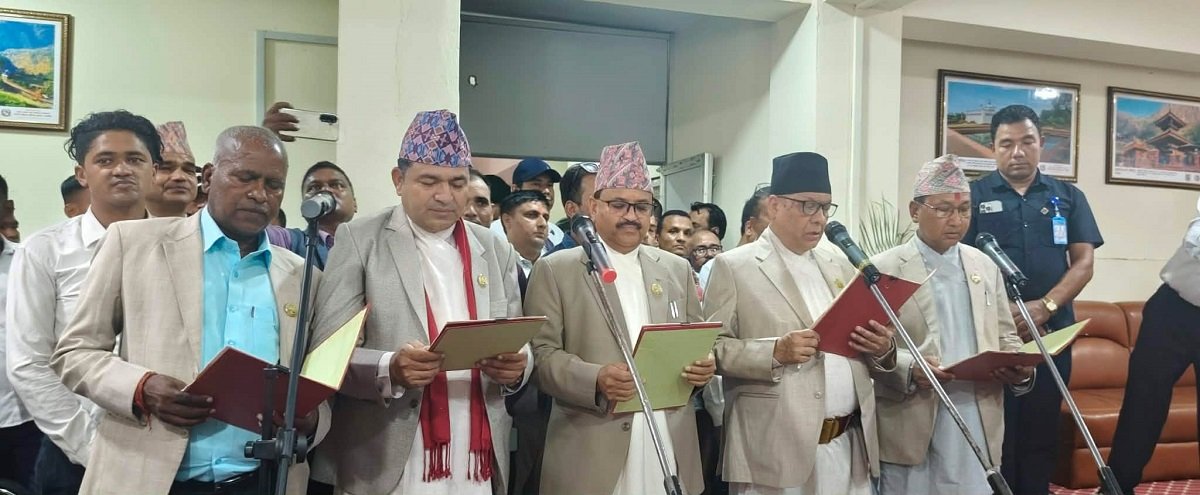
In the parliamentary elections held on March 5, the Rastriya Swatantra Party (RSP) secured almost a two-thirds majority, and Balen Shah took the helm of the government on March 26.
_T2VZIfj2ue.jpg)
There was an expectation in India that relations between the two countries would warm up with Balen Shah. After the election results in Nepal, Prime Minister Narendra Modi expressed his happiness in the congratulatory message sent to Balen Shah.
However, Balen Shah showed neither haste nor much enthusiasm towards India. It was discussed in the Nepali media that the Indian Ambassador in Kathmandu, Naveen Srivastava, wanted to meet Balen Shah to congratulate him, but it did not happen.
Previously, it was quite common for the Indian Ambassador to personally meet and congratulate the new Prime Minister of Nepal.
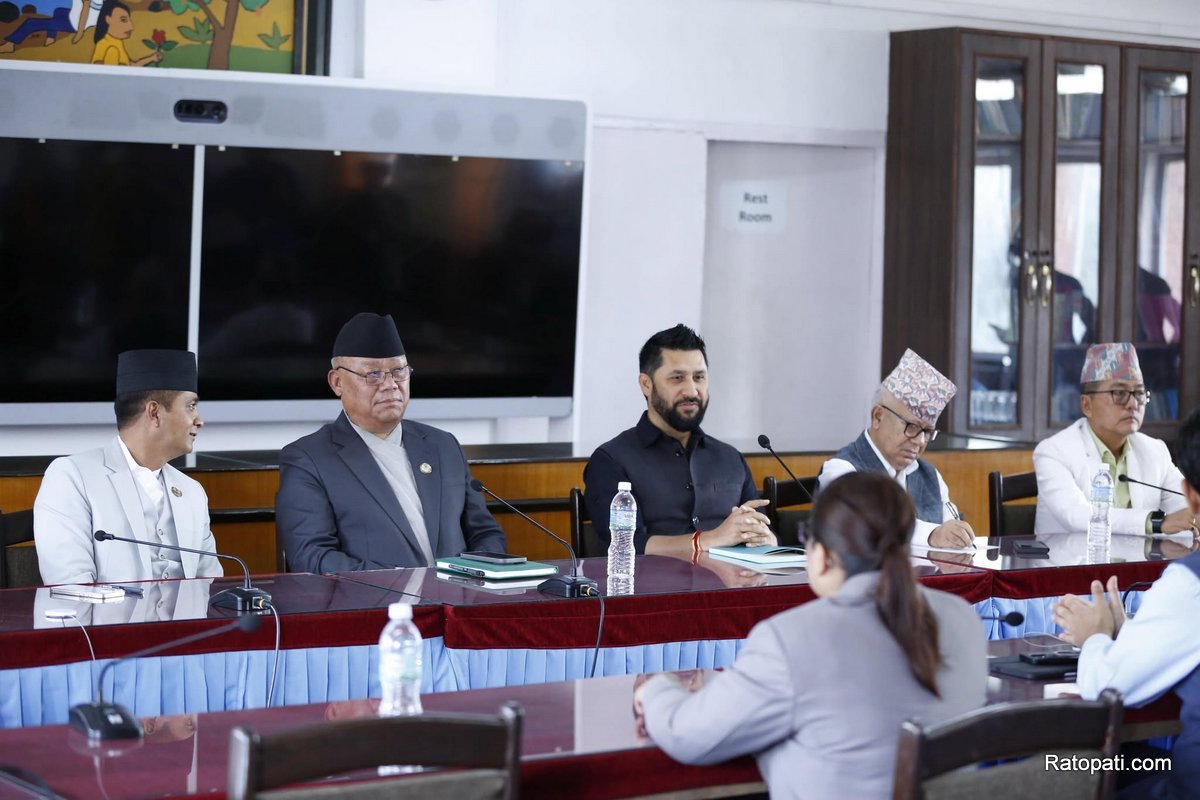
Balen Shah broke the tradition of personal meetings with foreign ambassadors and gave time for a collective meeting with all ambassadors in Kathmandu. That is, there was no special treatment for the Indian Ambassador.
Prime Minister Modi had also invited Shah to visit India along with his congratulatory message, which Shah had accepted. According to the old tradition, the new Prime Minister of Nepal used to make their first foreign visit to India.
However, Prachanda broke this tradition in 2008 by making his first visit to China.
- Meeting did not happen
It was expected that Balen Shah would visit India soon, but suddenly the RSP issued a statement saying that the Nepali Prime Minister would not make any foreign visits for at least one year.
_8vhTaZSunr.jpg)
According to Nepali media, Indian Foreign Secretary Vikram Misri was preparing to come to Kathmandu to deliver Prime Minister Modi's formal invitation. According to a report in Nepal's leading English daily, The Kathmandu Post, Balen Shah did not even agree to meet Misri, as he was adamant about not meeting any foreign officials below the ministerial level.
What does Balen Shah want to achieve with such an attitude? Former Indian Ambassador to Nepal, Ranjit Ray, believes that Balen Shah can do this because people also like this approach. That is, public opinion is also like this.
Ray told BBC News Hindi, 'Balen Shah wants to build an image of a nationalist leader, and this image will only be strong if he does not accept certain things from India. Balen Shah pursued similar politics when he was the Mayor of Kathmandu, but I thought there was a big difference between a mayor and a prime minister.'
'So far, the continuation of Balen Shah's politics as mayor is also visible in his role as Prime Minister. When communist parties were in power in Nepal, anti-India nationalism used to be promoted, but even after Balen Shah came, this has not stopped,' he said.
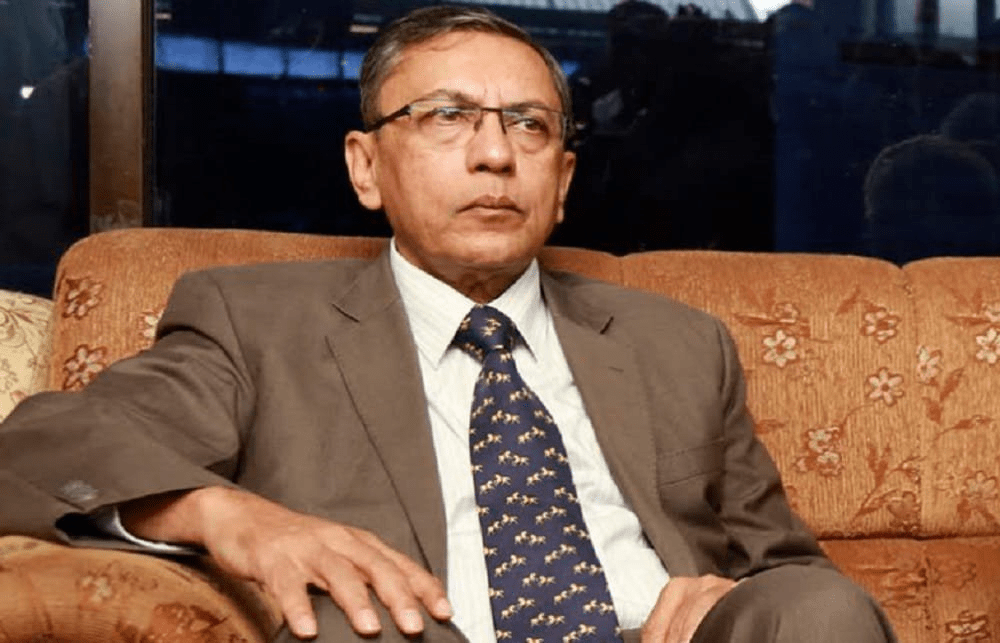
Ray says, 'It is true that until now, meeting the Prime Minister of Nepal was not a big deal for the Indian Ambassador. If Balen Shah wants to stop this, it is his right. But the question is, what will be achieved by this? India is an important country for Nepal, and I think ease in relations is in the interest of both countries. Balen Shah is still very popular in Nepal. Therefore, he is getting to do as he pleases. But popularity is also not permanent. What happened to Prachanda's popularity?'
Former Nepali Ambassador to India, Deep Kumar Upadhyay, supports Balen Shah's decision. Upadhyay told BBC News Hindi, 'The relationship between India and Nepal was beyond protocol, but it was not benefiting anyone. I think diplomacy and international relations should not be outside of protocol.'
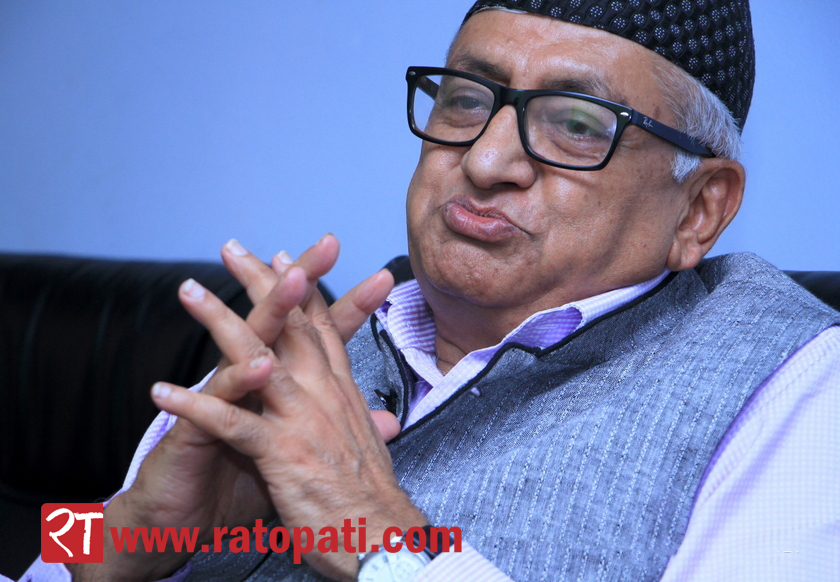
'There should be a protocol for the Indian Ambassador to meet the Prime Minister of Nepal as well. This protocol would also apply to us in New Delhi. I think there was a lot of dust accumulated under the carpet in the relations between the two countries, which Balen Shah is dusting off. It is certain that how Balen Shah wants to handle geopolitics is still not clear. I think Balen Shah should be given some time.'
- What does Balen want to achieve?
The Kathmandu Post defended Balen Shah's move in its editorial on May 11.
The Kathmandu Post wrote in its editorial, 'As soon as Balen Shah took office as Prime Minister, he established an important tradition by informing foreign ambassadors collectively about the priorities of the new government. Previously, ambassadors from powerful countries would often visit the private residence of the new Nepali Prime Minister. These meetings had no record, and no representative from the Ministry of Foreign Affairs was present.'

The Kathmandu Post wrote, 'Ambassadors from major powers like India, China, and the United States would easily have private and informal meetings with the Prime Minister. The focus of these meetings was often on building personal relationships rather than strengthening bilateral ties. This led to a conflict of interest. For years, the easy access of foreign diplomats to the private sphere of our top government officials has been detrimental to Nepal's national interest. However, no one before Shah had the courage to draw a clear line in this regard.'
The rise of RSP in Nepal's politics is extraordinary. The party was founded in 2022 and won 21 seats in the House of Representatives in its first national election in November of the same year. Balen Shah himself entered electoral politics as an independent candidate and was elected Mayor of Kathmandu in May 2022.
In the elections held on March 5 this year, RSP won 182 out of 275 seats in the House of Representatives, including 125 through direct elections and 57 through proportional representation.
This was a huge mandate for such a new party. This victory was taken positively in India. However, India was also aware that there are two centers of power in this party – one is party chairman Ravi Lamichhane and the other is Prime Minister Balen Shah. Prime Minister Modi spoke to both when he called to congratulate.

During the tenure of Nepali Congress, CPN-UML, and Maoist parties, it was common for the Prime Minister to meet foreign ambassadors within a few hours of taking office. In some cases, this happened without the presence of officials from the Ministry of Foreign Affairs. But Balen Shah changed this.
In its editorial, The Post wrote, 'Balen Shah not only refused personal meetings with foreign ambassadors but also refused to meet some top foreign officials. Recently, the proposed visit of Indian Foreign Secretary Vikram Misri to Kathmandu was canceled because his repeated requests for a meeting with the Nepali Prime Minister went unanswered.'
'Earlier, Sergio Gore, the US President Donald Trump's special envoy for South and Central Asia, also could not get an appointment to meet Shah. Interestingly, in both cases of Misri and Gore, other members of the cabinet, such as Swarnim Wagle and Shishir Khanal, had urged Shah to reconsider his decision. But Shah remained firm in his stance.'
- Lack of coordination between party and government
It is also being said that Balen Shah and his party do not have the same thinking. The understanding with India was of the old leadership of RSP. Balen Shah had joined the party only a few months before the election.
_5bw2rkvjt3_iDsXPuappV.jpg)
Former Ambassador of Nepal to Denmark, Vijaykant Karna, says, 'Many leaders of RSP do not agree with Balen Shah's attitude. I think there are many good people in this government, but Balen Shah is not handling geopolitics well. If he wants to maintain popularity by resorting to nationalism, it will not benefit Nepal. Yes, he has done many good things, especially regarding corruption, and no other government could have done this.'
Looking at Balen Shah's attitude, the distance in the relationship between Kathmandu and New Delhi seems to be increasing. However, many questions are also being raised within Nepal regarding Balen Shah's policies.
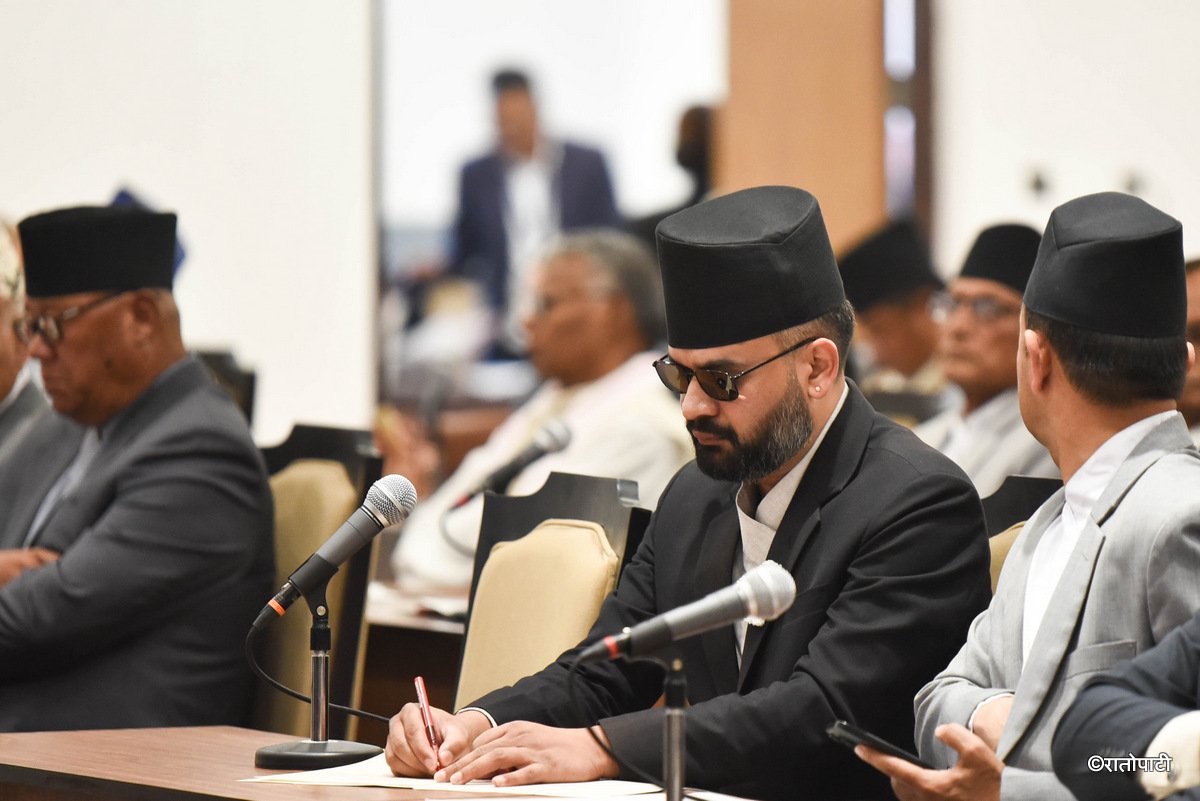
Balen Shah refused to participate in the parliamentary question-and-answer session. Just a few days before that, during the inaugural session of parliament, when the President was reading out the policy and program of his own government, Shah left the house midway.
Questioning Shah's attitude, senior Nepali journalist and writer Kanak Mani Dixit wrote on 'X', 'Nepal's Prime Minister seemed to send a message of disregard towards the institution, the President, the MPs, and the voters during the formal parliamentary session. This disregard is clearly visible in refusing to address the house, maintaining distance from parliament, and behaving without a smile, in extremely informal clothes and shoes, and leaving the house during the President's address.'
This specific news has been automatically translated by AI. As a result, there may be some inaccuracies or language errors.