Garincha: The Unforgettable Brazilian Football Legend

Those who understand the world of football consider dribbling to be the hallmark of beautiful football. Dribbling, that is, such coordination between the player and the ball, which amazes the opposing players and moves the ball towards the goalpost before one can blink. It is considered one of the most difficult arts in football.
This is the reason why Lionel Messi's magic has continued in modern football for years. Along with Messi, Brazil's superstar Ronaldinho and France's legend Zinedine Zidane are also remembered for their dribbling. The craze for their game is still the same in the world today.
Talking to some old football fans, they say that dribblers like Diego Maradona are born only once in a century. Similarly, the previous generation is found discussing the dribbling of England's George Best and Netherlands' Johan Cruyff.
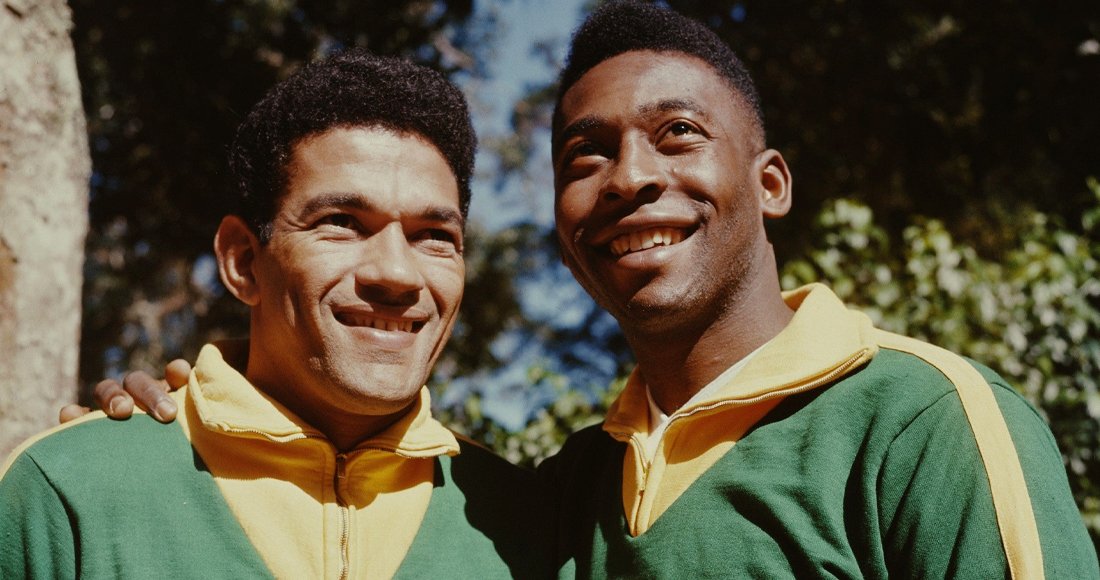
But let's talk about the footballer who is called the uncrowned king of dribbling. A player whose brilliance was distinct even in the era of Pele, considered the magician of football.
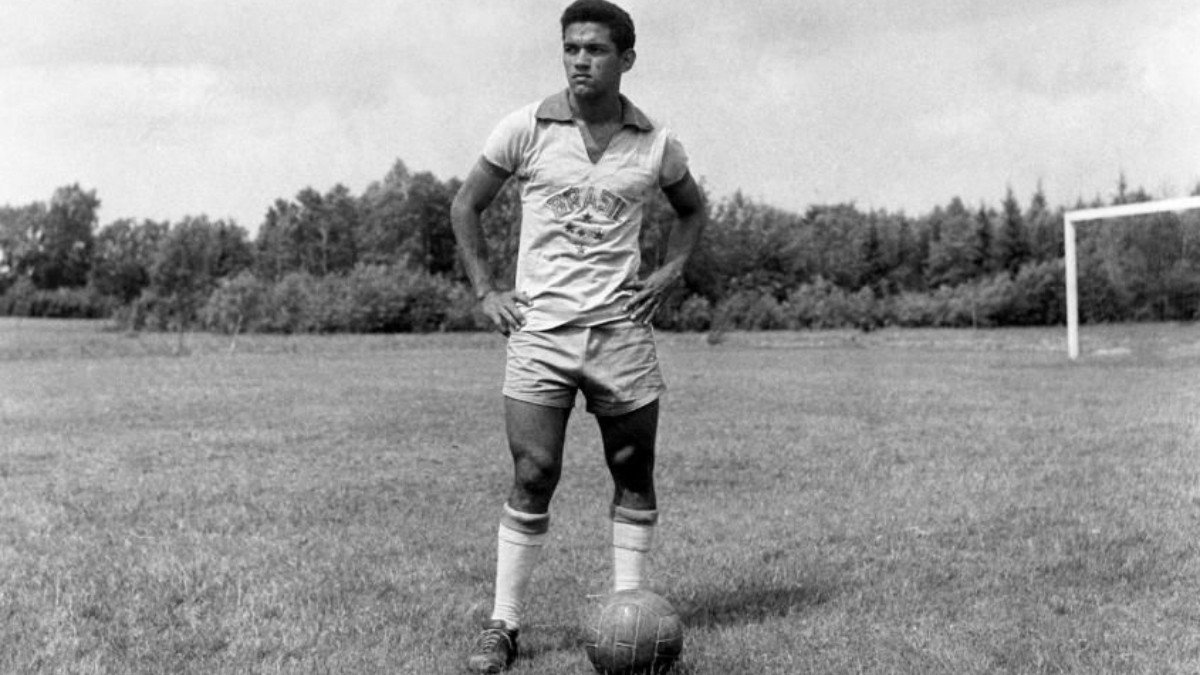
The name of this player who took Brazilian football to new heights was Garincha. His influence was so great that newspapers would carry headlines like this about teams even with Pele participating – 'Garincha's magic will be seen again next Thursday.'
For a long time in the world of football, he was considered a greater player than Pele. The name of this footballer was Garincha.
The story behind this name is no less interesting. Garincha was very small and weak compared to his peers. So his sisters named him after a small local bird, 'Garincha'.
Garincha and Pele were compared then, and they are still compared today. But before talking about that, let's know the story of Garincha, about whom doctors were of the opinion that he could not even become an ordinary player.
- Best Dribbler
Born on October 28, 1933, in a slum in Rio de Janeiro, Brazil, Garincha had a problem with his legs. His right leg was six centimeters shorter than his left, and his left leg was turned inward.
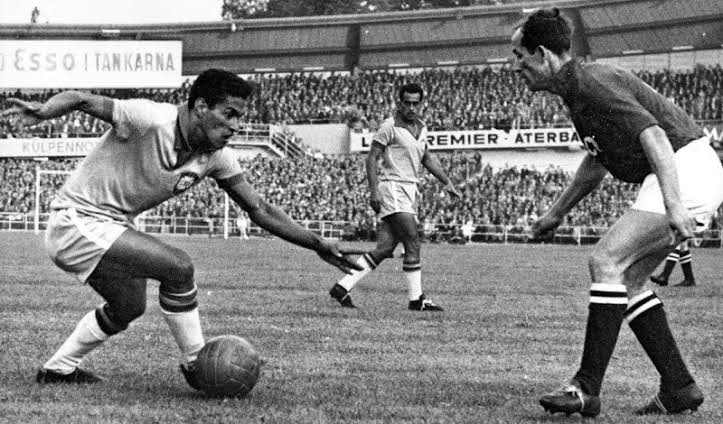
In a way, he could not stand straight. But Garincha turned this weakness into a strength through his dribbling. When he would outwit the opposing team's defenders in his unique style, the stadium audience would be in fits of laughter.
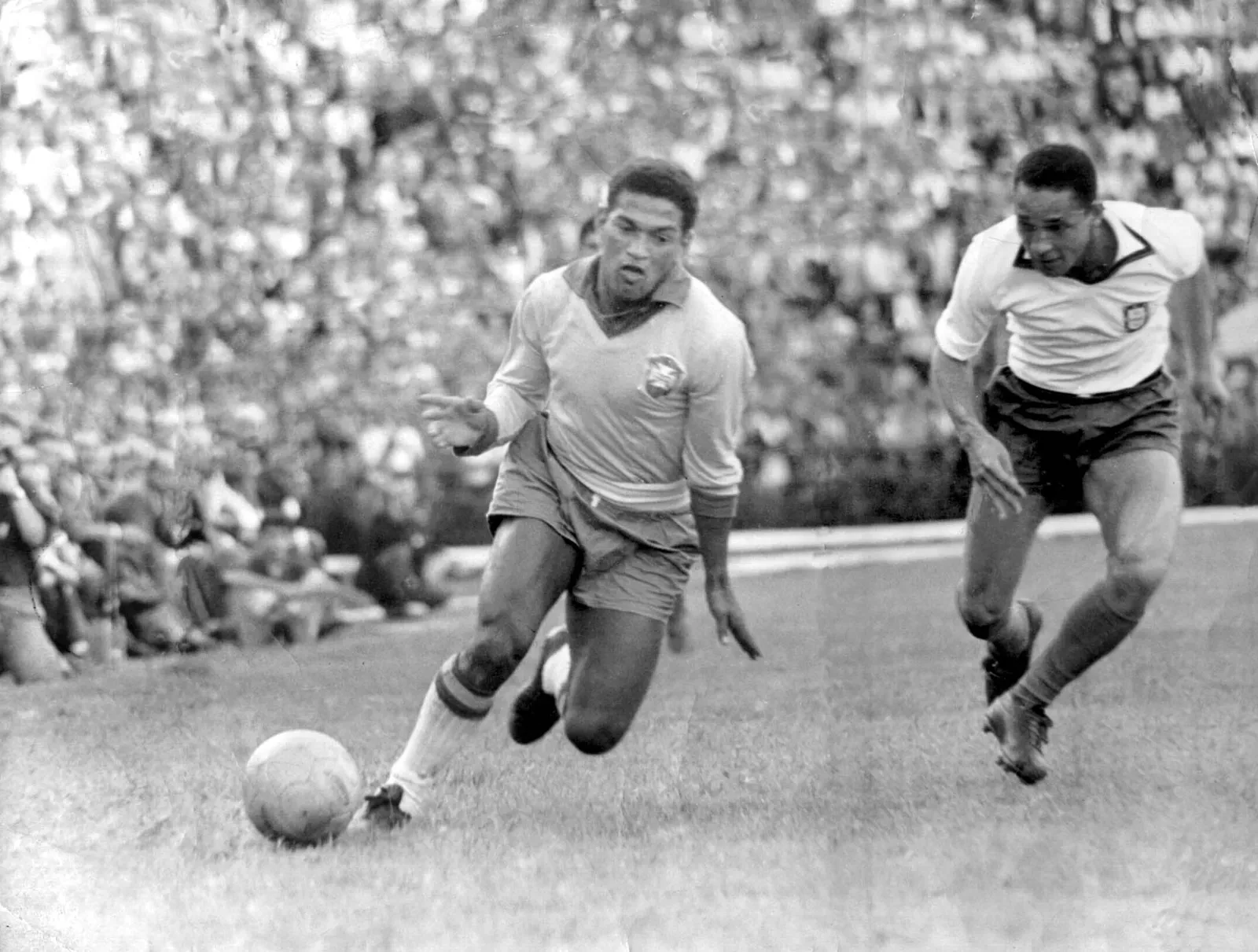
This is why Garincha was known in the world of football as the 'Joy of the People'. He had the same status as Charlie Chaplin of football.
From his alcoholic father, Garincha only inherited a drinking habit. From the age of 14, he started working as a laborer in a textile factory to make a living. He was seen as a lazy employee, but he was the star of the factory's football team. This is why he didn't lose his job.
If Brazilian journalist Ruy Castro had not written the book 'Garincha: The Triumph and Tragedy of Brazil's Forgotten Footballing Hero' about him, this story of Garincha's struggle might not have reached the world.
This book was published 12 years after Garincha's death. Its English translation came about 10 years later. As soon as the translation was published, it received much praise in the sports world.
The book details Garincha's journey from poverty to superstardom and the ups and downs in his life due to his addiction to alcohol and women.
Garincha did not get the opportunity to hone his skills at a big football club. When Brazil's great footballer Nilton Santos noticed the 19-year-old Garincha, he brought Garincha to the Botafogo club.
At an age when Pele had already made it to the national team, Garincha was only noticed by a major football expert for the first time at an older age.
In 1953, Garincha got the chance to play for Botafogo. He impressed everyone by scoring a hat-trick in his very first match. With this performance, he proved Nilton Santos's trust right.
However, he did not make it to Brazil's national team for the 1954 World Cup. Despite this, Garincha continued to perform excellently at the club level.
In 1957, he scored 20 goals for Botafogo. After that, the national team selectors' attention was drawn to him, and he was included in the team as a right winger.
Pele also wrote many interesting things about Garincha in his autobiography 'Why Soccer Matters'. In fact, the world saw the magic of Pele and Garincha together for the first time in the 1958 World Cup.
The team management had doubts about Garincha's physical abilities from the beginning. Also, he had not passed the mental test.
Pele wrote in his book, 'Garincha misspelled his profession. If correct spelling were the criterion for selection, perhaps none of our team members would have participated in the World Cup.'
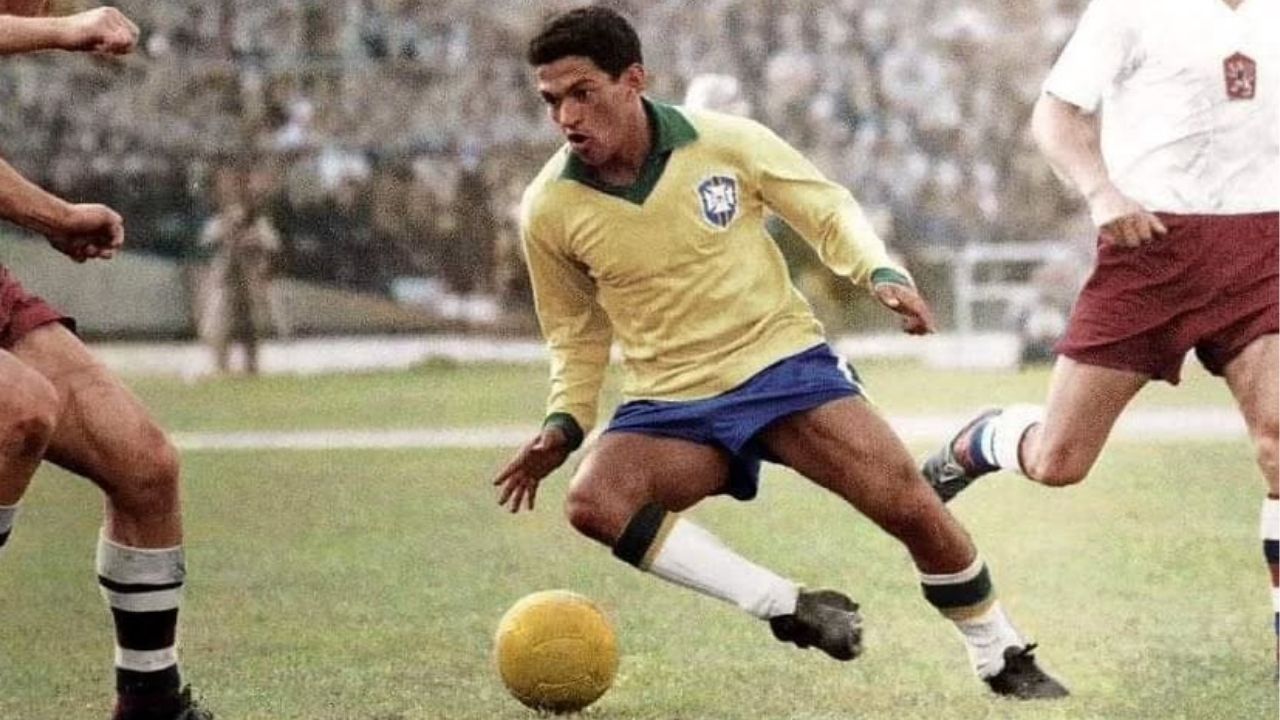
- When Brazil Became Champion for the First Time
Interestingly, besides Garincha, another player in the team had also failed the mental test. That player was Pele. Doctors believed that Pele, due to his young age, could not handle the pressure of a big competition like the World Cup.
However, the team coach made a decision contrary to the opinions of the doctors and psychiatrists. He included both Pele and Garincha in the team. Later, these two players proved instrumental in making Brazil world champions for the first time.
Recalling the 1958 World Cup final, Pele wrote in his book, 'In the final moments against Sweden, I scored the fifth goal with a header. After scoring, darkness clouded my vision. I lay motionless in front of the goalpost.'
Pele writes, 'Garincha was the first to run towards me. He was a very kind person. He immediately came to help me. He lifted my legs. He wanted to restore blood flow to my head at all costs. After a while, when I regained consciousness, I saw other players celebrating.'
In the 1958 World Cup, Wales defender Mel Hopkins was also impressed by Garincha's game. After the match, he said, 'Compared to Pele, Garincha was much more dangerous. Watching him play was like watching magic.'
There was a great understanding between Pele and Garincha on the field. It is said that Brazil never lost a match when these two played together.
Together they played 40 matches. Brazil won 36 of these matches, and four ended in a draw. The team did not face a single defeat.
It is said that only a talented person can truly recognize the greatness of another talented person. In this regard, Pele's words hold great importance.
On August 1, 2018, Pele wrote on his Facebook account, 'I have never played with or against a better player than Garincha in my life. On the field, we were colleagues, but off the field, we were brothers.'
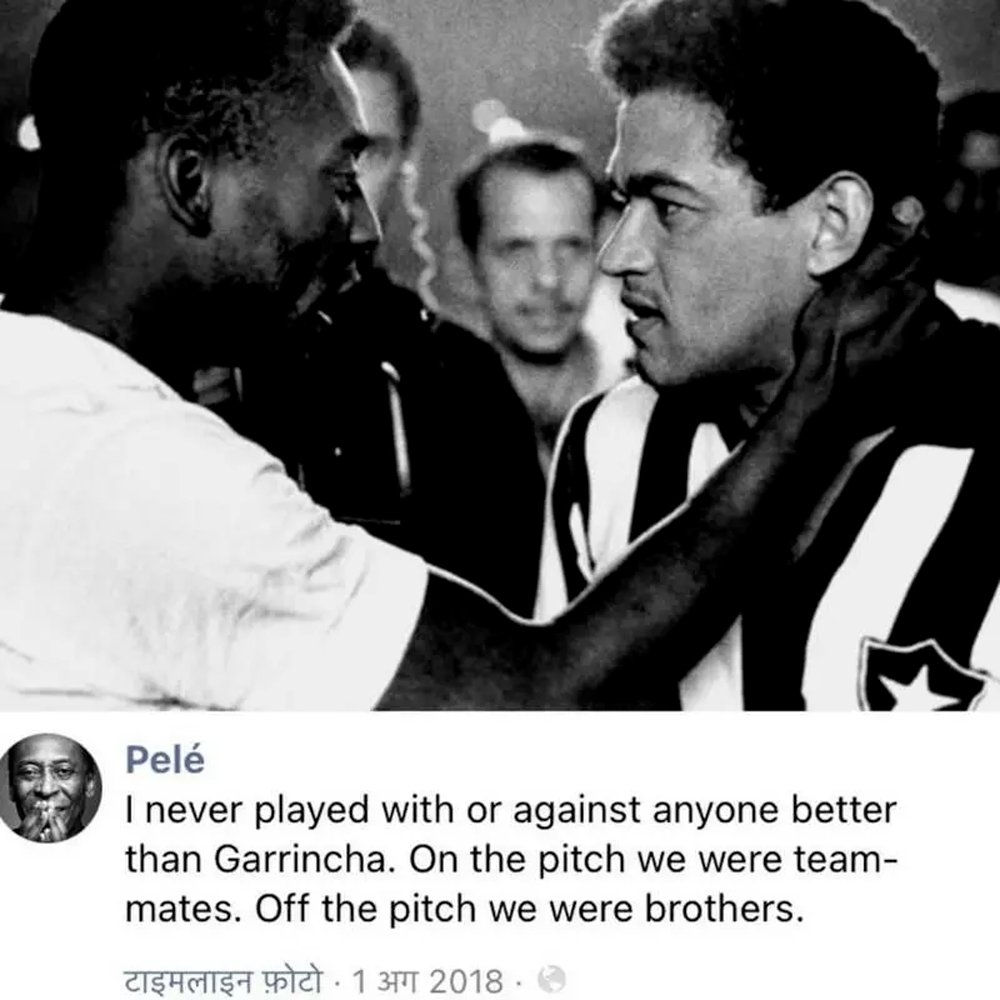
In any case, after the 1958 World Cup, the influence of Pele and Garincha in Brazil was no less than that of superstars. Their popularity can be gauged from the BBC Channel Four documentary 'Gods of Brazil: Pele and Garincha' released in 2002. This documentary, made in two parts, clearly shows how much craze people had for these two players.
The story of Pele and Garincha also tells what good environment and proper guidance can give to a player and what its absence can take away from him.
Ruy Castro mentions in his book that after 1958, Pele hired an experienced manager. That manager made a deal for Pele with Santos club for $500 per month. This contract also included a provision for an annual salary increase.
On the other hand, the managers of the Botafogo club presented Garincha with a contract with a blank space for the amount. Garincha did not have any manager to look after his interests. So he signed the paper with the blank space. As a result, for the next three years, the club paid him only $300 per month.
This example clearly shows the importance of the people around a player when they rise to the peak of fame.
While Pele became increasingly serious about his career and professional future, Garincha gradually got lost in the world around him.
In the BBC Channel Four documentary, Garincha says, 'After 1958, I became very popular. Wherever I went, people recognized me. They waited to meet me.'
- Won the 1962 World Cup on His Own Strength
Garincha's steps began to falter from poverty and deprivation. He drowned himself in alcohol addiction. His weight started increasing. Also, there were constant discussions about his relationships with women.
However, the world of football was yet to witness that era of Garincha, which was to be recorded in history. Four years passed in the blink of an eye, and the 1962 World Cup arrived. Garincha somehow managed to secure a place in the Brazilian team for this tournament to be held in Chile.
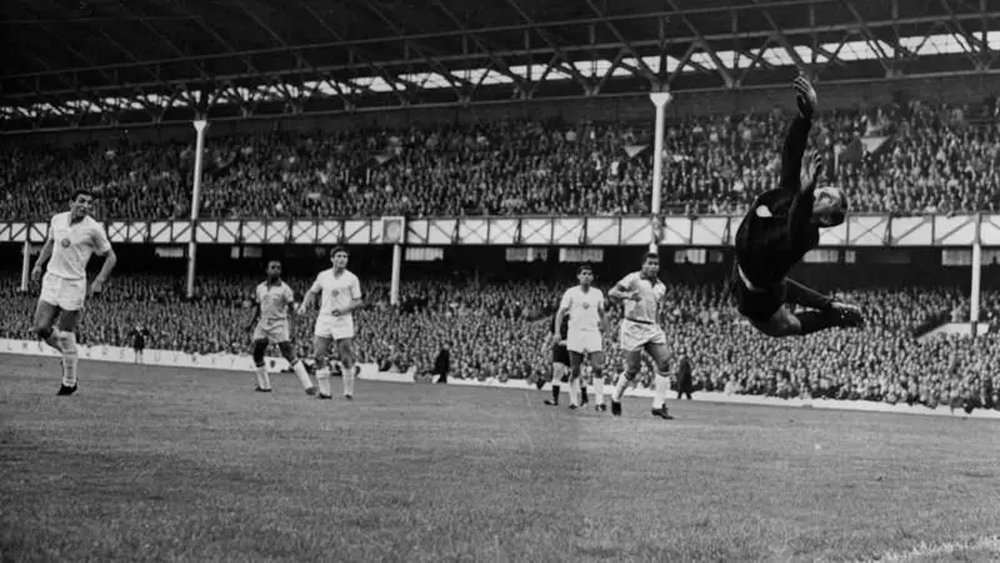
In the second match of the tournament, Pele got injured and was out. After that, the team's responsibility largely fell on Garincha's shoulders.
At that time, Alberto Casorla, president of the Chilean Football Coaches Association, had said, 'Brazil has two teams. One team with Pele and another without Pele. The team without Pele cannot win the World Cup.'
Casorla probably didn't realize that his statement would soon be proven wrong. Garincha did this.
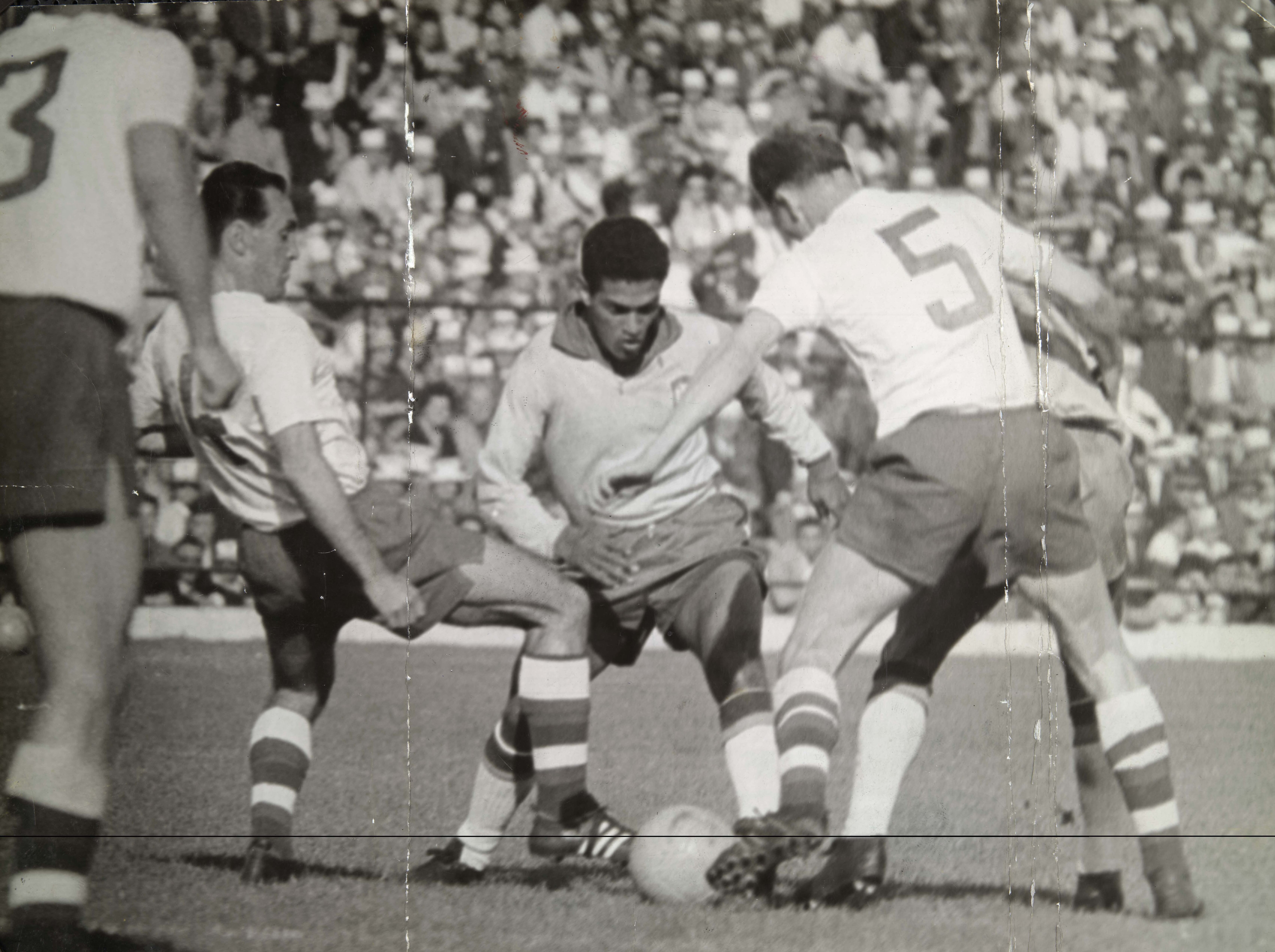
Garincha scored four goals in two crucial matches against England and Chile. Brazil registered a 4-2 victory against Chile in the semi-final.
In this match, Garincha scored two goals and played a significant role in another goal. Both his goals are still remembered today. The first goal was scored with a powerful shot from his left foot from about 20 yards. The second goal was a spectacular header.
Chilean players tried to stop him throughout the match. Amidst constant fouls and marking, Garincha's behavior also became aggressive. In the 83rd minute of the match, the referee showed him a red card. He was then suspended from the final match.
- Player of Exceptional Talent
A major controversy arose after the referee's decision. Brazil also objected to this decision before FIFA's disciplinary committee. According to Ruy Castro's book, the Prime Minister of Brazil also strategically raised this issue.
Later, the referee stated that he did not see Garincha's alleged foul with his own eyes. He had shown the red card based on the linesman's information.
The book also mentions that leaders from many Latin American countries spoke with FIFA officials. Then the linesman was removed, and Garincha was allowed to play in the final.
Very few people know that Garincha played in the final against Czechoslovakia despite having a high fever. He is said to have had a fever of 102 degrees.
Despite this, the impact of his presence was evident. Brazil succeeded in winning the World Cup for the second consecutive time.
Many football historians believe that Garincha was the biggest hero of Brazil's success in the 1962 World Cup. It is believed that he almost single-handedly led the team to the title.
Football fans witnessed a similar performance in the 1986 World Cup when Diego Maradona led Argentina to the championship.
Uruguayan writer and sports journalist Eduardo Galeano wrote about Garincha's game, 'When Garincha was in his best form, the football field turned into a circus. The ball moved at his command, and the spectators watched in awe.'
But there was another side to Garincha's story. The player who weaved magic on the field was battling alcohol addiction in his personal life.
According to Ruy Castro, his intoxication often reached dangerous levels. On one occasion, while drunk, he hit his own father with a car. His father was injured. Garincha was so intoxicated when people stopped him that he couldn't even properly understand what had happened.
Another incident mentioned in the book claims that while drunk, he hit his mother-in-law with a car, resulting in her death.
- Ups and Downs of Life
Besides alcohol addiction, his relationships with women also deeply affected Garincha's career and personal life. Garincha had 14 children from five women. These were the relationships he publicly acknowledged.
Garincha was married twice. He first married a colleague from his factory. His second marriage was to Elza Soares, a famous samba singer from Brazil. Eventually, both relationships broke down and ended in divorce.
The impact of alcohol addiction and marital stress also affected his game. By the 1966 World Cup, Garincha appeared far from his previous form.
His lackluster performance is considered one of the reasons why Brazil could not fulfill its dream of winning the World Cup for the third consecutive time.
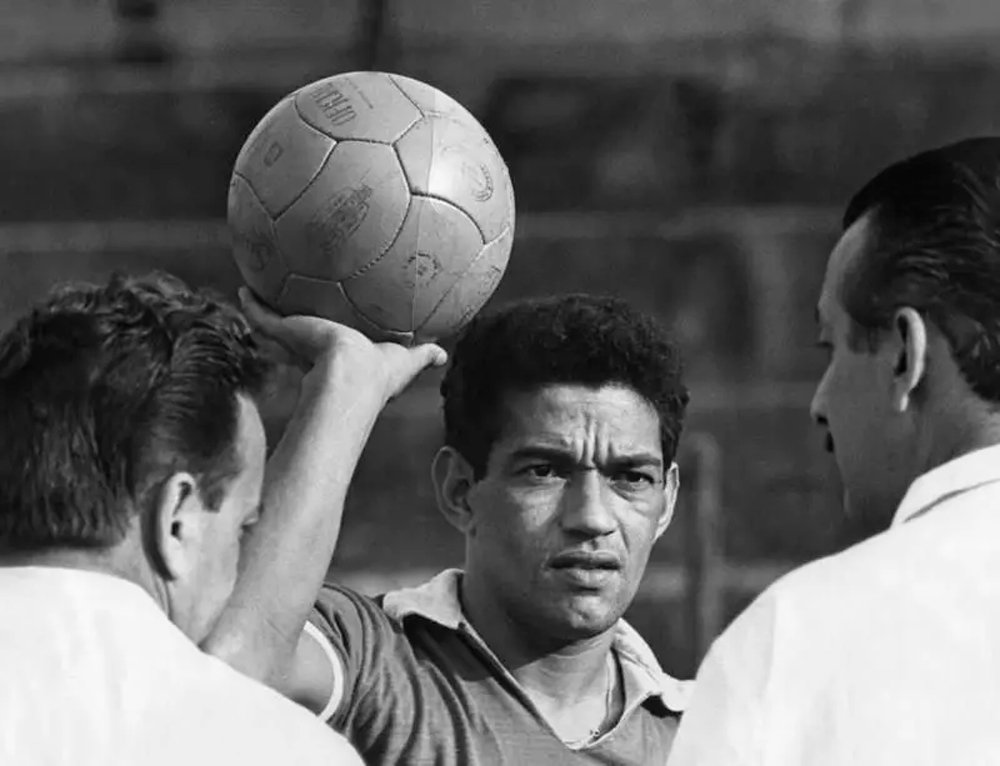
Amidst all this, however, a question is often asked – why did Garincha not achieve the global recognition that Pele did?
Ruy Castro attempts to find the answer to this question in his book. According to him, Garincha's priorities were entirely different from Pele's.
Castro writes that Garincha never traveled by air for commercial reasons. He rarely showed interest in wearing ties and suits. He was neither close to politicians nor to big business houses.
Garincha remained a symbol of Brazilian popular life throughout his life. Football, samba music, alcohol, and women – his world revolved largely around these things. He never tried to gain or become more than this.
But his story was not like that of an ordinary superstar. In the final years of his life, he also faced financial hardship.
In January 1983, at the age of only 49, he died of liver cirrhosis, a liver disease.
Garincha's death occurred in a hospital in Rio de Janeiro. However, it was his last wish to be buried in his ancestral village.
When his body left the Maracanã Stadium in Rio for his village Pau Grande, a large number of people took to the streets.
Ruy Castro writes, 'Thousands of people bid their final farewell to their beloved player during that journey of about 65 kilometers.'
When the body reached his village, there was seating for about 500 people in the church. But about 3,000 people were present there.
Seeing the crowd, the priest quickly completed the final prayers. Then, when Garincha's body was taken to the cemetery for burial, a crowd of about 8,000 people had already gathered there.
The situation was such that many of Garincha's relatives could not even see his face for the last time.
Garincha's farewell was as spectacular as his football on the field. Full of color, emotion, chaos, and drama. A farewell that, like his life, remained in people's memories.
Published on behalf of Collective Newsroom for BBC.
This specific news has been automatically translated by AI. As a result, there may be some inaccuracies or language errors.