Community Prepares for Disasters and Non-Communicable Diseases in Bhajani


Kailali. The sweltering heat of the afternoon. Hot winds are blowing. Man Bahadur Chaudhary of Pakariya, Bhajani Municipality-3, does not look hot at all.
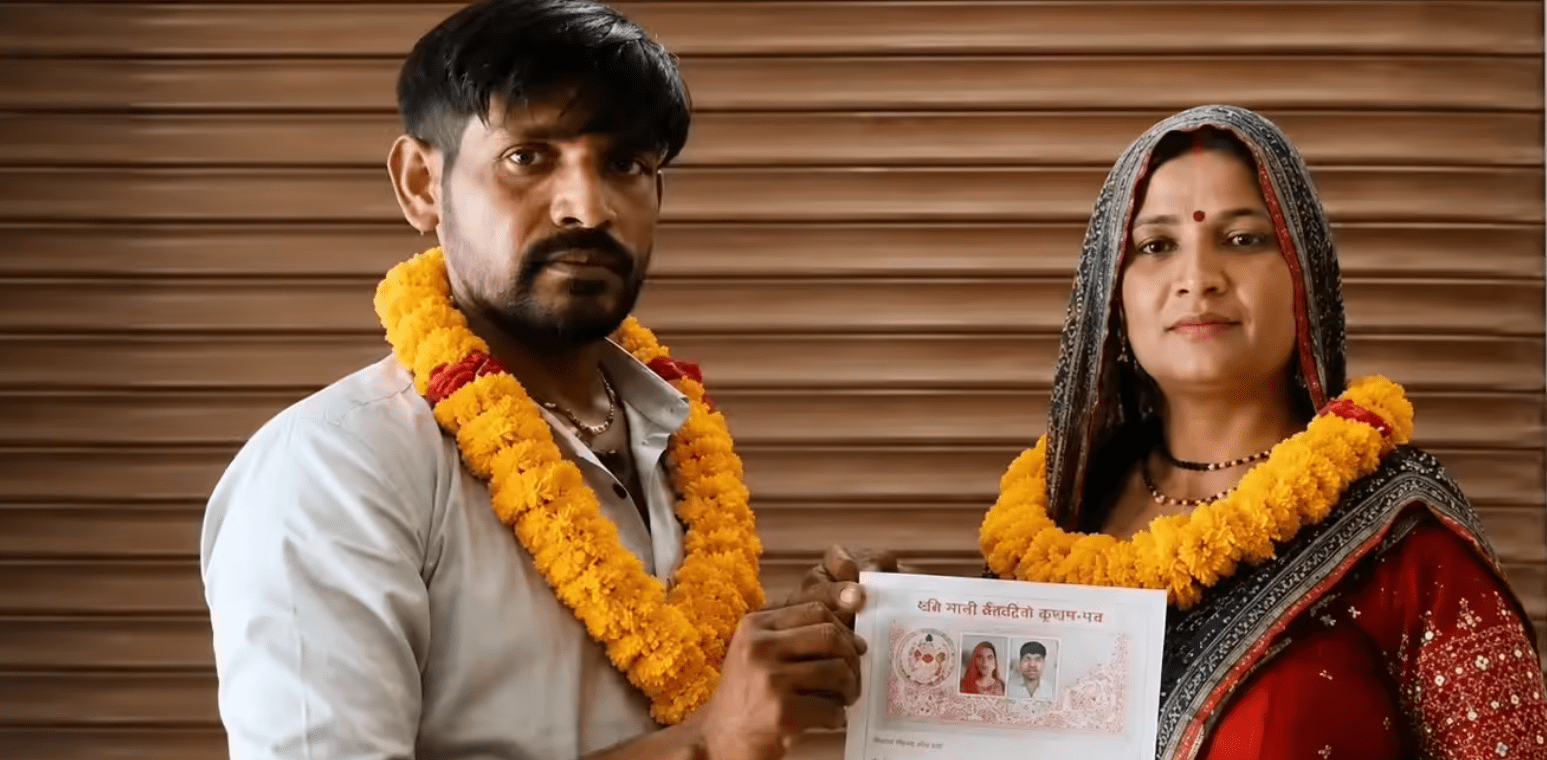
Found in the open courtyard of a public safe shelter, 40-year-old Chaudhary is leading the second term of Badghar (Bhalmansa). According to him, there are 626 households under Badghar. He did not feel like listening to the political program at the shelter. Why didn't you go? He said, "What is there to gain? By listening to speeches. By clapping? Those who give speeches do not come to save during disasters. We have to protect our own people."
At that time, he was busy with a mock drill for the testing and implementation preparation of the essential care 'package' for non-communicable diseases during disasters, being conducted in collaboration with the Nepal Red Cross Society and Bhajani Municipality. He was rehearsing how to immediately build temporary shelters during disasters and how to keep people with non-communicable diseases, including the community, safe. Arranging the tarpaulin marked with the Nepal Red Cross symbol with bamboo supports, he said, "Practicing such things during times when there are no floods and inundations makes it easier in the future." According to him, there is not a year when the rivers Kandara, Mohana, Kanha, Pathariya, and Karnali do not bring the havoc of inundation and erosion.
Man Bahadur, the wife of Badghar, Brephani Chaudhary, was also busy informing the community about disaster early warnings through 'mikings'. She was very busy with "How to deliver disaster information and alerts to the community?". She had learned the methods and ways of information dissemination in a training provided by the Nepal Red Cross Society. As soon as the weather forecast information issued by the Department of Hydrology and Meteorology, Meteorological Forecasting Division, reached the Badghar, she took the 'mike' and left her house.
She disseminated information in her mother tongue to the locals, saying, "The water level in the river is rising, there is a possibility of inundation, everyone should be highly alert, and those who are most vulnerable should take special precautions." New information was added to her early warning message. Brephani was repeating, "During floods, people with non-communicable diseases and their caregivers should pay attention. Ensure regular medication for such patients. Stock up." In places where 'mikings' are not heard, the municipality also disseminates information through multi-purpose 'sirens'.
'Miking' heard, female volunteer Kirana Jaisi quickly grabbed her bag and left her house. The bag contained medicines for non-communicable diseases (blood pressure, diabetes, cancer, heart and blood vessel diseases, and respiratory diseases) as well as diarrhea and fever, along with some first-aid supplies. She said, "It is challenging to ensure continuity of care for people with non-communicable diseases during disasters, and this mock drill will enhance the knowledge and skills of the community and people with non-communicable diseases in disaster preparedness and pre-disaster actions. It is necessary to make the community accustomed to this."
Here, the Badghar works to unite, organize, discipline, and mobilize the community for development work. Badghar is also a unique custom of the Tharu community. Badghar disseminates information according to the unique communication system of the Tharus. It is a tradition for the person in charge of Badghar to personally visit every household in the village to provide information. While disseminating information, they inform all houses in the village, either in writing or orally. Badghar Man Bahadur said, "Since the Badghar itself is more credible, I work myself as long as I have time."
High Risk of Floods, Inundations, and Non-Communicable Diseases
According to the Mayor of Bhajani Municipality, Kedar Chaudhary, all nine wards of the municipality are at high risk of floods and inundations. Although there have been no human casualties due to floods and inundations for the past three years, the damage to crops due to inundation and erosion has not stopped.
He said, "In recent years, the increase in non-communicable diseases has made the city dwellers even more affected during floods. The 'graph' of non-communicable diseases here is continuously rising." According to him, to protect the community from the high risk of floods and inundations within the municipality, more than a hundred elevated houses have been built to assist and 18 elevated houses have been built to accommodate displaced people.
In January and February, the municipality conducted a 'screening' campaign for non-communicable diseases in the municipal area. According to Kailash Bahadur Dagora Tharu, head of the Municipal Health Branch, out of 1,180 people aged 30 and above tested at primary health centers Bhajani, basic health centers Paltpur, Mantrifanta, Dharauana, Godchaur, as well as Lalabojhi health post, Thapapur health post, urban health center Charra, and Khailad health post, 255 had high blood pressure, 95 had diabetes, 16 had kidney problems, and 244 were overweight. He said, "The search for individuals with non-communicable diseases in the community is ongoing. Such individuals are being provided with 'cards' for identification. This will help in the continuity of treatment services for people with non-communicable diseases during disasters."
In Bhajani Municipality, the 'Resilience Non-Communicable Disease Treatment' project is being operated from April 2024 to May 2026 with financial support from Novo Nordisk Foundation and collaboration from Danish Red Cross, Canadian Red Cross, and Aarhus University.
Anil Maharjan, Health Program Coordinator of the Nepal Red Cross Society, Health Services Department, informed that the project is assisting in advocacy and facilitation activities through the 'Pain de Package' essential care package for non-communicable diseases during disasters to ensure the continuity of treatment services for people with non-communicable diseases during disasters in Bhajani.
Pramod Adhikari, coordinator of the 'Resilience Non-Communicable Disease Treatment' project, said, "The main objective of the 'Resilience NCD' project is to reduce the gap between the health sector and disaster risk management system by ensuring the continuity of treatment services for people with non-communicable diseases during disasters. Prioritizing patients with non-communicable diseases during disasters can reduce the risk of acute complications and death, as well as reduce the mental stress of patients. People can be saved by preventing serious conditions from diabetes, high blood pressure, and heart disease. If the 'Pain de Package' is included and worked on policy-wise, people with non-communicable diseases would not have to face further complications during disasters."
Bhajani is suffering from the dual blow of disaster and non-communicable diseases. The final draft of the essential care package for non-communicable diseases during disasters, 'Pain de Package', developed in collaboration with the Nepal Red Cross Society and the Epidemiology and Disease Control Division, has been completed, and Bhajani Municipality is preparing to include and implement this package in the municipality's policies and programs from the next year. Mayor Chaudhary said, "This package will facilitate the continuity of treatment services for people with non-communicable diseases during disasters, so in the future, people affected by non-communicable diseases in Bhajani Municipality will not be deprived of treatment during disasters."
Dr. Sabin Parajuli, Community Health Specialist at the Epidemiology and Disease Control Division, informed that the 'Pain de Package' will help in the continuity of treatment services for people with non-communicable diseases during disasters and stated that it is necessary to implement the learning from Bhajani and Laljhadi in other municipalities.
This specific news has been automatically translated by AI. As a result, there may be some inaccuracies or language errors.