Supreme Court Atmosphere Becomes Peaceful as New Chief Justice Returns to Bench

Kathmandu. After a long period of uncertainty and internal wrangling, the atmosphere of the Supreme Court has become peaceful and smooth since Wednesday. With the newly appointed Chief Justice Dr. Manoj Kumar Sharma returning to the bench after a 12-day break, there has been no obstruction in the judicial work at the Supreme Court.
After being recommended for the post of Chief Justice on April 24, some misunderstandings arose among the Supreme Court judges regarding the issue of seniority. Following a minor dispute in the 'Full Court' meeting on April 25, Justice Sharma had not taken the bench. However, with Sharma fully returning to work from Wednesday, the court's atmosphere has become peaceful.
After being appointed Chief Justice, Dr. Sharma sat in a joint bench with Justice Shrikant Poudel on Wednesday and heard cases. A total of 32 cases were scheduled for the bench assigned through the lottery system. Of these, the joint bench of Chief Justice Sharma and Poudel completed the hearing of 17 cases. The remaining cases have been kept in the 'to-be-heard' category. With the Chief Justice himself returning to the bench, there has been a positive enthusiasm among other judges and legal practitioners.
All benches of the Supreme Court operated in a smooth environment throughout Wednesday. The resumption of the bench under the leadership of the Chief Justice is expected to remove the delay in the hearing of cases for the general public.
Senior advocates have also stated that it is a positive step for the judiciary to focus on delivering justice instead of getting entangled in leadership disputes. With Chief Justice Sharma signaling his intention to move forward by taking his fellow judges into confidence, the 'undeclared stalemate' that had emerged in the Supreme Court for a few days has ended.
_PHezL1NqDo.jpg)
End of Dispute and Smooth Atmosphere
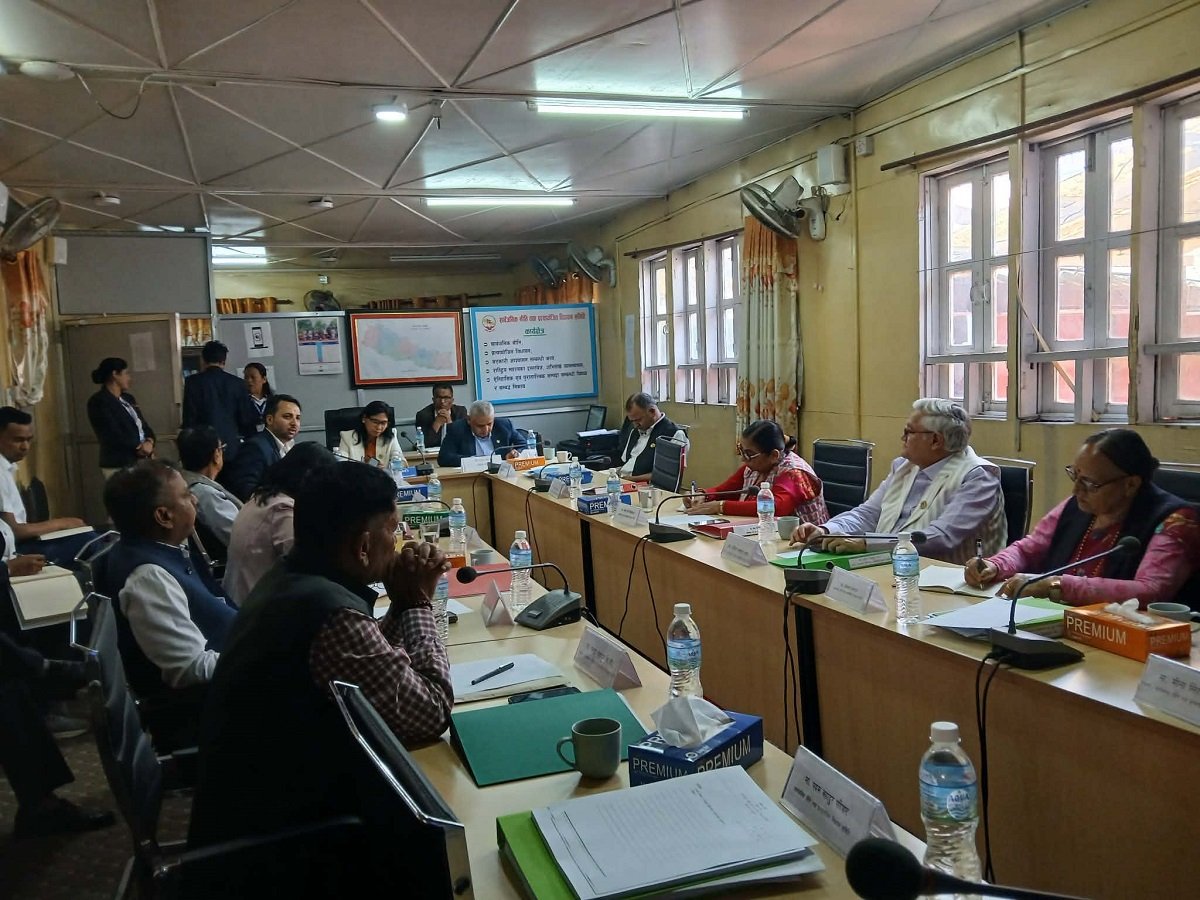
Acting Chief Justice Sapana Pradhan Malla had publicly expressed dissatisfaction, stating that the Constitutional Council had made a recommendation by violating seniority, which had made the atmosphere at the Supreme Court somewhat tense for nearly two weeks. After Sharma's name was recommended for Chief Justice by the Constitutional Council, Sapana Malla Pradhan, in her capacity as the then Acting Chief Justice, convened a Full Court meeting of all Supreme Court judges.
Following a verbal altercation among the judges during the Full Court meeting on April 25, Sharma had not sat on the bench since that day. Sharma, who had been spending his time only attending the Supreme Court and writing judgments, was unexpectedly approved by the parliamentary hearing committee for Chief Justice through a fast-track process on Tuesday.
Upon arriving at the Supreme Court to assume office after taking the oath from President Ramchandra Paudel on Tuesday evening, Justice Sapana Malla Pradhan had approved her own leave for 20 days. Justice Pradhan has not been present at the Supreme Court since Wednesday. Some view this as part of internal management, which has averted potential clashes in the work area for the time being.
There was an analysis that senior judges might boycott the bench, which could create obstacles in the court's justice delivery system after Sharma's arrival. However, on Tuesday evening, among the three senior judges, Justice Kumar Regmi welcomed Chief Justice Sharma by offering him a garland and shaking his hand. Justice Hari Prasad Phuyal also congratulated Sharma and sat with him in his chamber.
Following the daily practice of drawing lots for benches, Justices Kumar Regmi and Hari Prasad Phuyal also drew lots and sat on the bench on Wednesday. In the bench of Justices Kumar Regmi and Balkrishna Dhakal, 38 cases were scheduled, with judgments issued in 8 cases and orders in one case; the remaining cases were kept in the 'to-be-heard' category. Similarly, in the joint bench of Justices Hari Prasad Phuyal and Nripadwaj Niroula, 41 cases were scheduled, with judgments issued in 10 cases and orders in three cases. Four cases were postponed, 11 were kept in the 'to-be-heard' category, and 13 were deemed not to be heard.
_5WWPUGZvA3.jpg)
Mood Change of Nepal Bar, Which Had Announced Protests
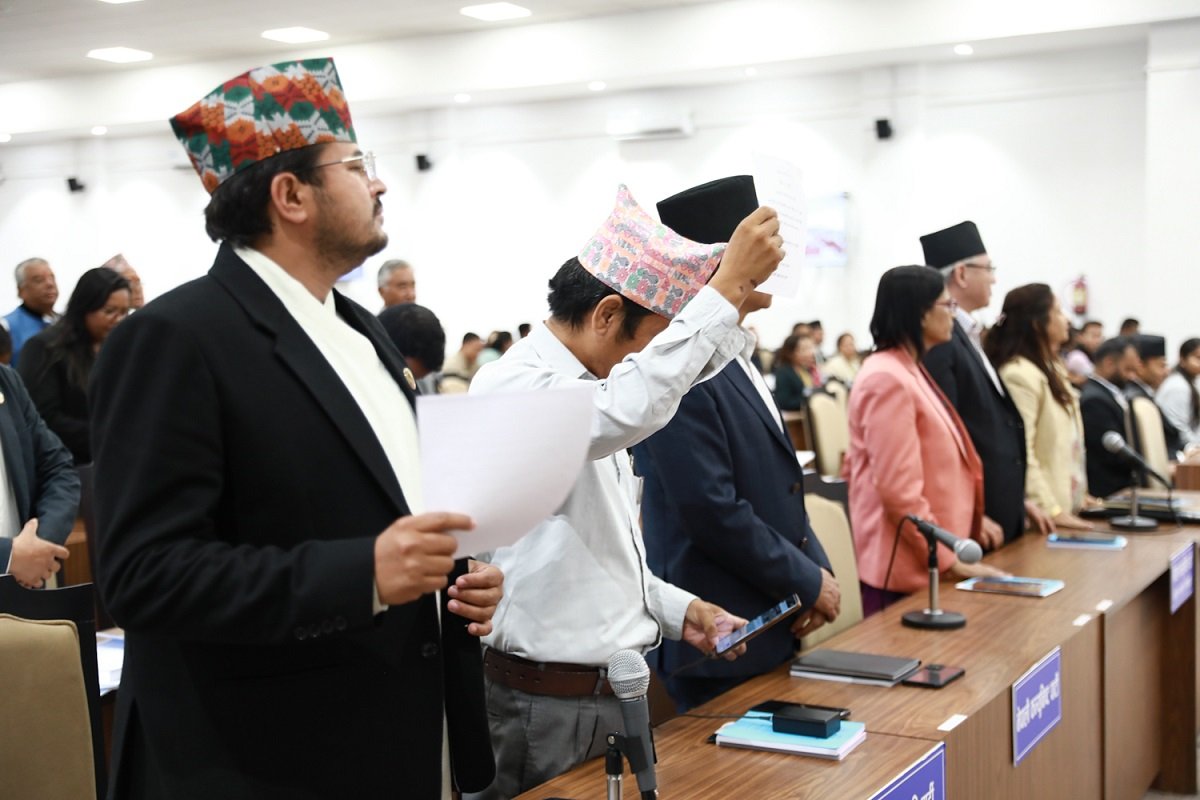
The Nepal Bar Association, the organization of legal practitioners, had protested by holding lanterns on Tuesday, demanding an end to the stalemate in the judiciary. After the parliamentary hearing committee expedited the approval of Chief Justice Sharma's name and recommended his appointment on Tuesday itself, the Bar has not announced any protest programs for the time being.
Nepal Bar's General Secretary Kedar Koirala says that although a protest was announced, they are now in a 'wait and see' mode for a few days. "We protested symbolically after seeing that writs were not being registered in the court and there was an obstruction in the judiciary," he said, "Now we hope that writ registration will be easier, we will see how the situation of the judiciary remains for a few days and then we will make a decision."
'Calm' for the Petitioner Against Chief Justice's Recommendation
Although the writ filed against the recommendation of the Chief Justice by the Constitutional Council was rejected, the mutual conflict among the judges that was visible in the Supreme Court has subsided as the petition was not registered. There was uncertainty whether the petition would be registered or not. Senior advocate Dinesh Tripathi, the petitioner, states that the Supreme Court administration has not yet informed him whether the petition against the rejection will be registered or not. "The writ had meaning until the Chief Justice was appointed; now I am waiting to see what the Supreme Court administration does," said Senior Advocate Tripathi.
The conflict between Justice Pradhan's order to register the petition and Dr. Manoj Kumar Sharma's instruction not to register it had escalated, causing stress to the Supreme Court administration staff throughout Monday.
After the Constitutional Council recommended Dr. Manoj Kumar Sharma, proposed for the Supreme Court, three writ petitions, including one from Senior Advocate Dinesh Tripathi, were filed against the decision. For four days, it remained uncertain whether the writ would be registered or rejected.
After the Supreme Court administration rejected it on April 25, Senior Advocate Dinesh Tripathi, Advocate Dr. Premraj Silwal, and Advocate Gita Thapa filed petitions against the rejection. Despite repeated requests from the petitioners to the Supreme Court administration for a week, the petitions against the rejection were not registered. Sapana Malla Pradhan, from her own chamber, ordered the Supreme Court administration to register them immediately.
That caused a stir in the judiciary. However, until the very end, the Supreme Court administration could not register the petitions filed against the rejection of the Constitutional Council's decision to recommend the Chief Justice.
This specific news has been automatically translated by AI. As a result, there may be some inaccuracies or language errors.