Dhaulagiri Circuit Tourism Declines Due to Helicopters and Roads

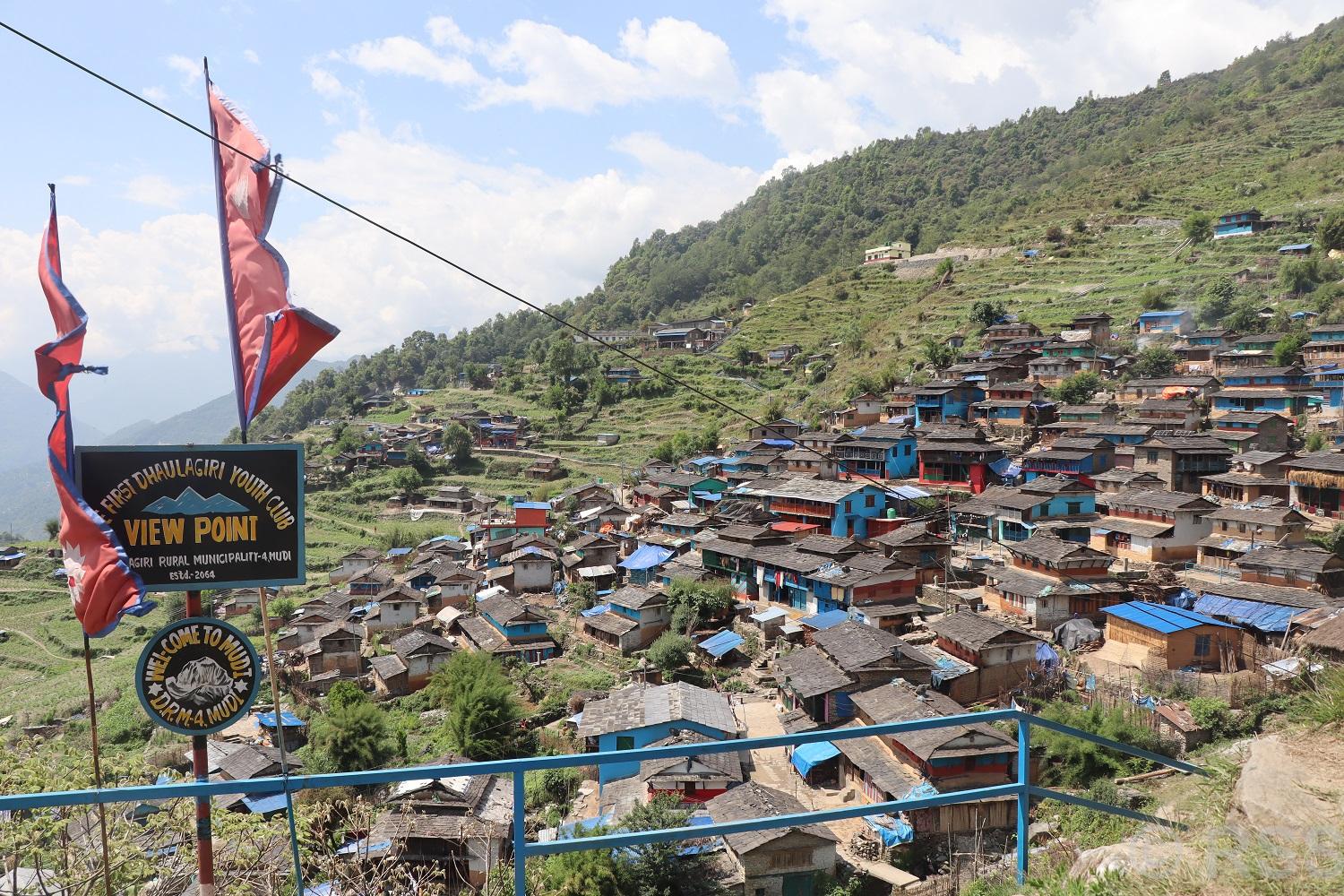
Myagdi. A decade ago, tourists struggled to find accommodation in Mudi, located in Dhaulagiri Rural Municipality-4, which is part of the Dhaulagiri Himal circuit trek.
Mudi, which used to be bustling with tourists, trekkers, and porters during the autumn and spring seasons for climbing the world's seventh highest peak (8,176 meters) Dhaulagiri Himal and for the Dhaulagiri circuit trek that passes through the foothills of Dhaulagiri and exits to Marpha in Mustang, is now deserted.
Ganesh Gharti, a businessman who established Dhaulagiri Community Homestay in Mudi, seeing the influx of tourists, guides, and porters, said he had to close his business and start goat farming. "Homestays were in operation to facilitate tourists, seeing the capacity exceeding number of tourists in the two camps here," he said, "Recently, as tourists have started going directly to the base camp by helicopter, I have closed the homestay and started raising goats." He complained that not only the operators of the five homestays in Mudi with a capacity of about 50 people, but also those who earned a livelihood by carrying loads for tourists during the season have lost their jobs.
Ward Chairman of Dhaulagiri-4, Yamprasad Gharti, said that tourists and mountaineers are going directly to the base camp by helicopter, and the access roads built by hydropower projects have encroached upon the trekking route, shortening the nine-day journey to two days, leaving Mudi, Naura, and Bagar deserted. "Mountaineers reach the base camp by helicopter, and transport their luggage by helicopter. The trekking route settlements have become empty as the road has reached Dovan from Beni, shortening the nine-day journey to Dhaulagiri Base Camp to two days," he said, "The residents of the settlements in the foothills of Dhaulagiri are deprived of the benefits of natural resources."
Gharti duo demanded a feasibility study of the Mudi-Ghurja trekking route and the establishment of a Dhaulagiri Conservation Area. According to Indrasingh Sherchan, local representative of 'Fourteen Peaks Expedition', tourists and mountaineers have stopped using the trekking route because it is cheaper to transport goods by helicopter as an alternative to porters carrying loads.
Climbing Day at the Foot of Dhaulagiri
On May 13, 1960, Austria's Kurt Diemberger first successfully climbed this peak. Along with him, Peter Dinnar, Ernst Forrer, Albin Schelbert, Nima Dorje, and Nawang Dorje reached the summit of Dhaulagiri for the first time. According to the Department of Tourism, 733 people have climbed Dhaulagiri in 66 years. In Mudi, at the foot of Dhaulagiri, on Wednesday, on the occasion of the 66th climbing day, discussions and deliberations were held among stakeholders on the shortened trekking route, the impact of climate change on the tourism sector, and the search for alternatives.
The event, organized by the Trekking Agencies Association of Nepal (TAAN) Gandaki in collaboration with the Ministry of Tourism and Industry, Gandaki Province, and the Nepal Tourism Board, Gandaki Province, was celebrated for the first time in the geography of the ward where the mountain is located. Speakers at the program expressed concern about the decrease in foreign tourists and trekking time due to the arrival of roads on the trekking route and the lack of infrastructure on the Dhaulagiri circuit.
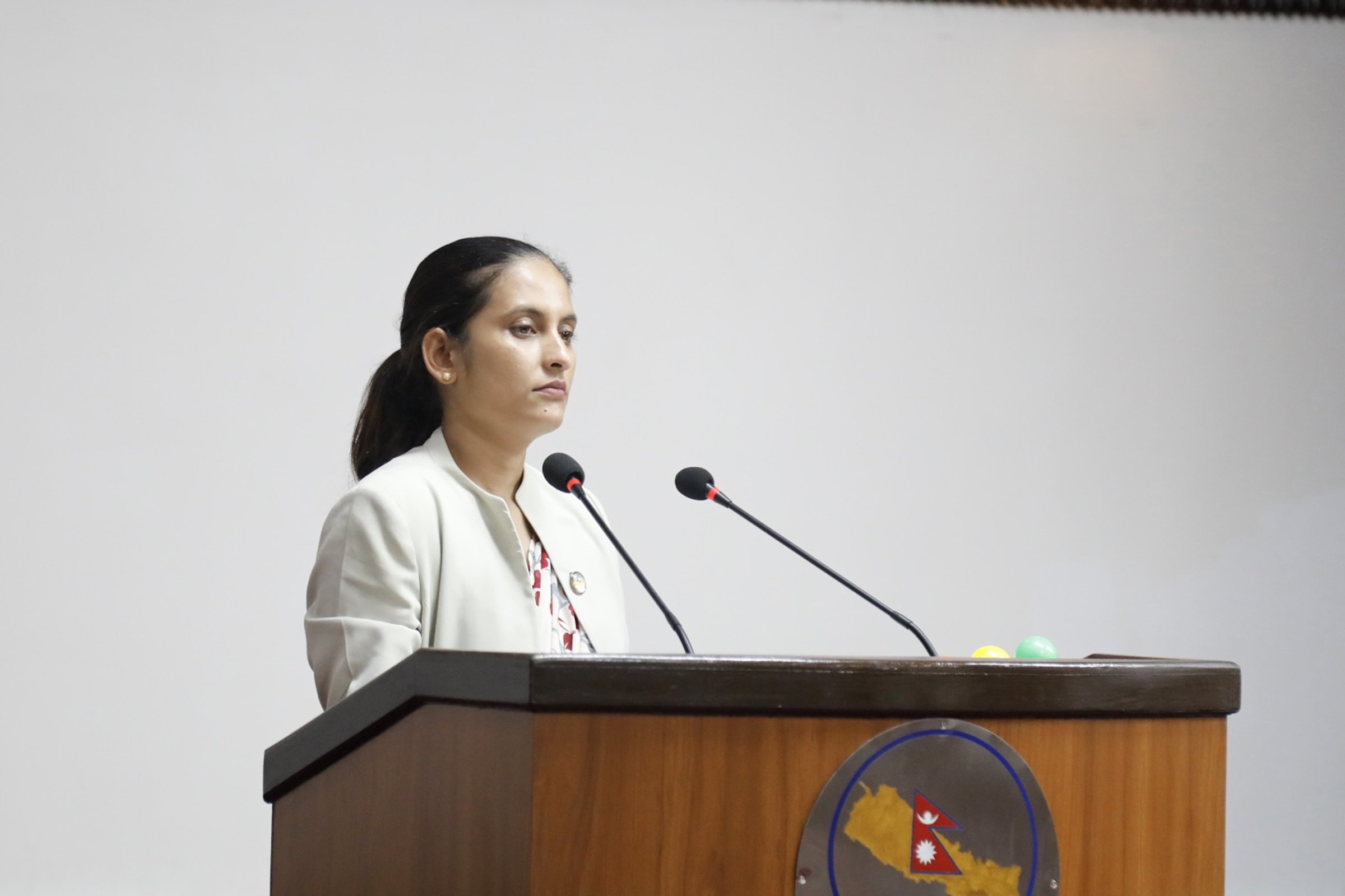
Yashoda Rimal, Minister of Industry and Tourism of Gandaki Province, said that if the Himalayas of Gandaki Province, including Dhaulagiri, are promoted internationally, tourist arrivals will increase, bringing about a change in the living standards of the local people. "Climate change is affecting our Himalayas," she said, "The existence of human civilization depends on the survival of the Himalayas."
Provincial Assembly member Resham Jugjali said that since people dream of having a motorable road in their village, there is a need for the development of alternative trekking routes and programs focused on domestic tourists. "The residents of Dhaulagiri should learn from the Annapurna region on how to develop tourism and benefit from it," he said, "Although there is a debate about the Dhaulagiri Conservation Area, the locals are apprehensive that they might be deprived of the use of natural resources."
MP Jugjali suggested to the people of Mudi to expand their business in the area from Dobhan to Sallaghari up to Italy Base Camp, as there is no possibility of road expansion and tourists face accommodation problems there.
Dhaulagiri Rural Municipality Chairman Premprasad Pun said that along with the Dhaulagiri circuit, the route from Gurja to Dolpa and the route connecting to the Dhorpatan Hunting Reserve should also be developed and promoted.
Mani Raj Lamichhane, head of the Tourism Board Pokhara office, emphasized the need to establish the importance of Dhaulagiri at the national and international level. Hari Bhujel, Vice President of the Pokhara Tourism Council, suggested that locals should take the initiative in mountaineering.
Rabin Kadariya, Chief of Annapurna Conservation Area Project (ACAP), said that there is immense potential here if the Dhaulagiri Conservation Area is developed on the model of ACAP. Krishna Acharya, Chairman of TAAN Gandaki, expressed the view that it would be appropriate to take Dhaulagiri to the ACAP model.
This specific news has been automatically translated by AI. As a result, there may be some inaccuracies or language errors.