
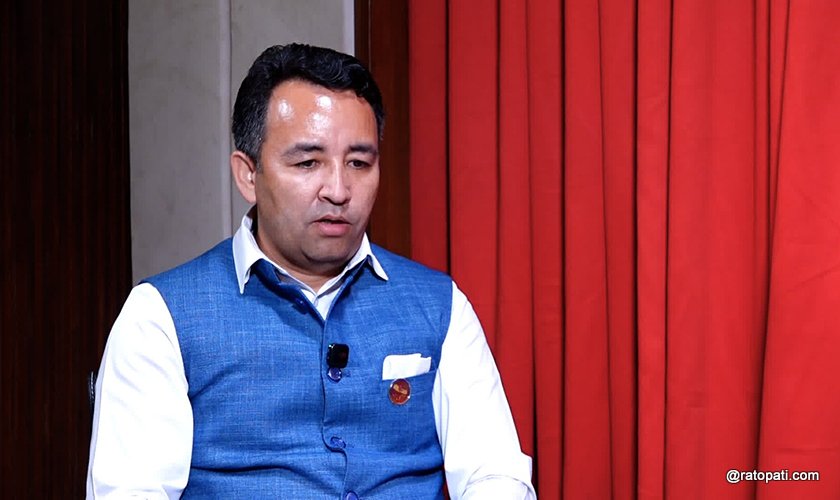
Economist Dr. Dilnath Dangal Discusses Government Policy and Economic Challenges


Kathmandu. The government has unveiled its policy and program for the upcoming fiscal year 2083/84. In the current context of a sluggish economy, unprecedented youth emigration, lack of capital expenditure, and a shrinking productive sector, the new government's policy and program are being closely watched by economic experts.
Although expectations were high for new programs following the political realignment on Falgun 24, a debate has begun on how realistic the presented document is.
How does the government's policy and program address the current challenges faced by ordinary citizens, small business owners, the agricultural sector, job creation, and the overall economy? This is the focus of our edited conversation with economist Dr. Dilnath Dangal (details in video):
The government unveiled its policy and program on Monday. At first glance, how did you view this policy and program, what did you find?
The policy and program presented by the government do not appear significantly different from previous ones. Given the recent political changes and the buzz since Falgun 24, there was an expectation of a somewhat new approach. However, it seems to be a continuation of the past. There isn't a situation where a lot of new things have been introduced to create magic.
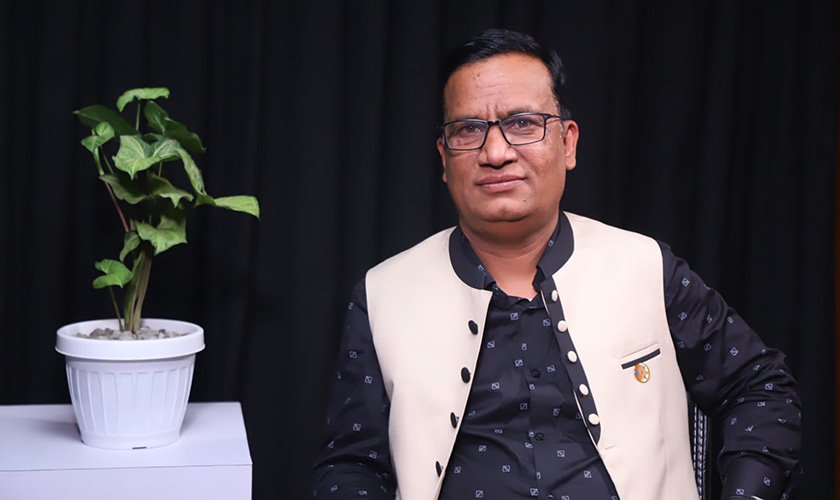
It does have its positive aspects. The government is a continuous institution, so continuing good work from the past is not inherently bad. In that sense, it is considered good. However, it would have been better if it had incorporated the recent expectations of the public.
For instance, the issue of emigration was mentioned in the manifesto and white paper, yet statistics show that 62,000 people left the country in March alone. Therefore, it doesn't seem to have come with a new approach directly related to people's livelihoods.
What kind of expectations did you have, and what has been presented?
The commitment to complete most of the old unfinished tasks is positive. I am positive about the Finance Minister because what he presented in the manifesto and the situation paper (white paper) now shows considerable alignment. He presented the economic situation honestly in the situation paper, although he has added a political twist.
However, the aspect of how to address the livelihoods of the general public and the poor at the grassroots level is lacking. For example, consider the issue of squatters. The way squatters were displaced is wrong in itself. They should have been managed before displacement. If one squatter family could have been provided with one job, it would have been easier. Because the government has promised to provide employment to 1.2 million people, and it is possible. When the court also decided to manage first, it became apparent that they acted forcefully and inhumanely.
Another point is that the expectations of today's youth and students for solutions were not met. Those who came in saying the old parties did nothing are now talking about gold nuggets and millions of rupees. My understanding is that this policy and program did not come with measures to create an environment for youth to stay in Nepal.
Regarding the 'One Family, One Job' in resolving the squatter problem and the issue of youth, what should have been included?
There are two main reasons why our youth go abroad: study and working visas. They go to Saudi Arabia, Qatar, and Malaysia on working visas, and to Europe and America on study visas. Those going to Europe and America do not go without a job guarantee and do not return to Nepal. They take a lot of wealth with them. The other group goes to work and send remittances for their livelihood.
The government has stated it will provide employment to 1.2 million people in five years. So, why wasn't there a start in the first phase like 'Within six months, X million Nepalis will be trained in these specific sectors'? People are not available for jobs like haircutting, plumbing, electrical work, painting, and jewelry making even after a week's notice. Most of the work here is done by foreigners. A plumber earns more than a professor at Tribhuvan University. If 6-month training is provided, those youths can easily find work.
Another significant potential lies in agriculture. Agriculture contributes 22-23% to the economy. But today, no Nepali youth dreams of a career in agriculture. We are not self-sufficient in food grains. Therefore, agriculture is a sector that can provide work quickly and is secure, but we have failed to show dreams to the youth in this field.
The government has programs to engage individuals returning from abroad in agriculture and digitalization. What specific aspects were missing?
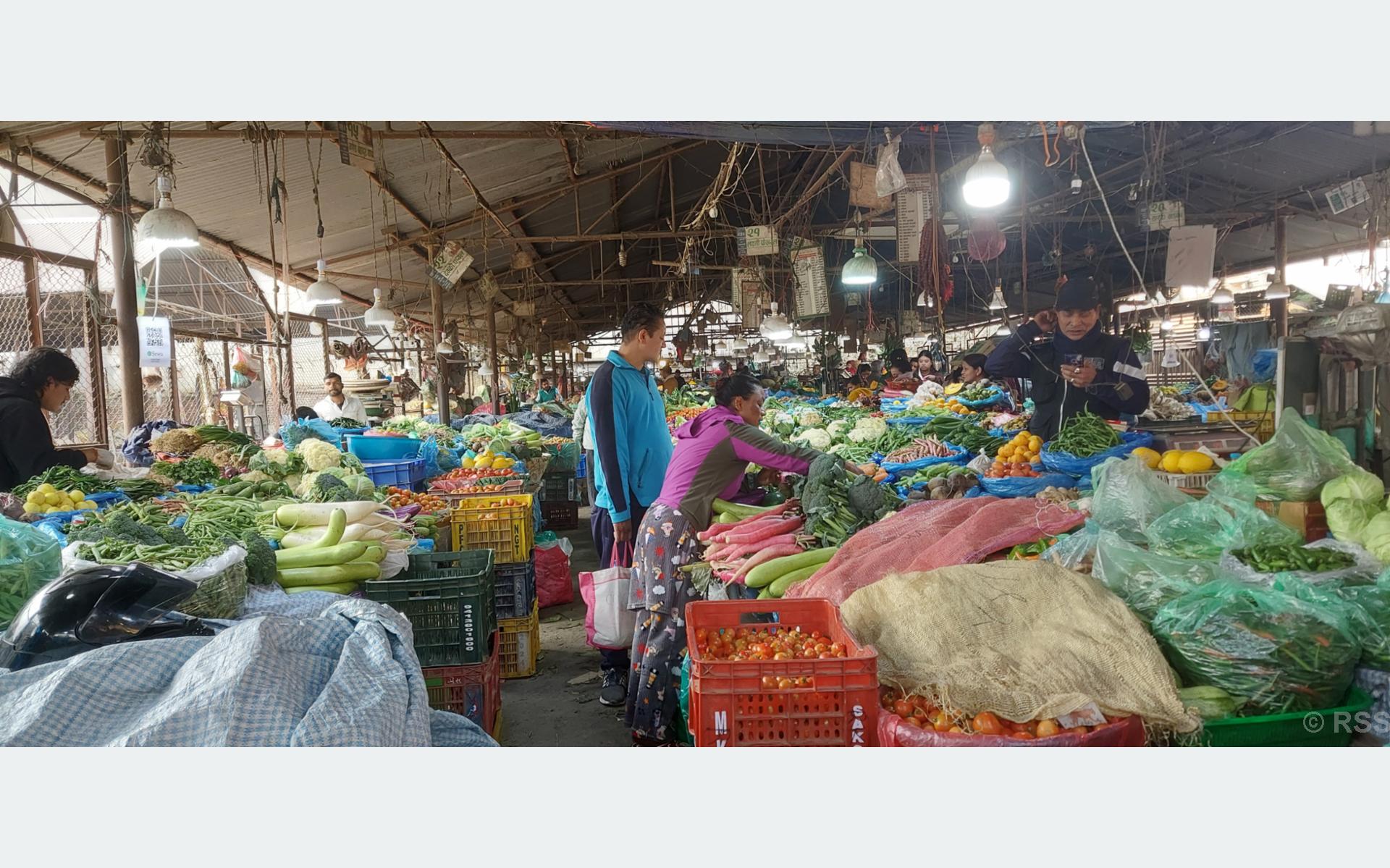
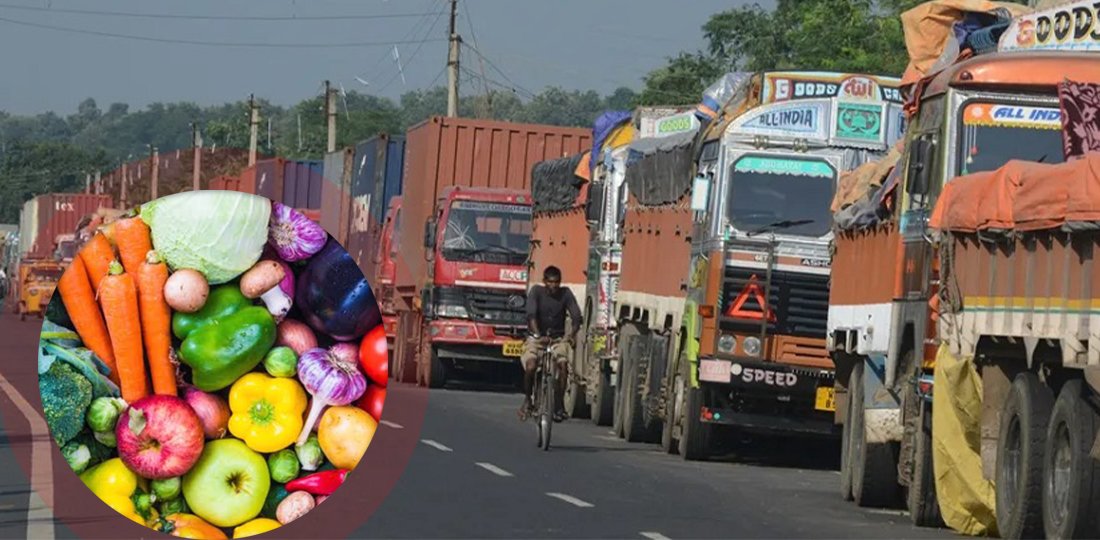
It's not just about that. What is the guarantee for fertilizer and seeds in agricultural production? What is the guarantee for the market after production? The reason for the lack of investment here is the absence of 'effective demand'. There is a lot of money in banks, but investors are hesitant. When investing, banks quote interest rates of 7-8%, and when there is a liquidity crunch in the market, they increase it to 12-14%. Then, when Nepali-produced goods reach the market, pesticide-laden vegetables arrive from neighboring countries at half the price. The technology for testing pesticides is still not reliable. Without guarantees for such issues, youth will not invest or seek employment.
Another dangerous thing is the arson at private sector organizations on Bhadra 24. Until those responsible are punished, neither foreign nor Nepali investment will come to Nepal. There is a fear that if one invests, it might be burned down tomorrow. My own family members are also not ready to stay in Nepal looking at the situation here. As long as security and policy are not guaranteed, youth will not stay in Nepal.
What you've said seems more like a political issue than an economic one, doesn't it?
It is also an economic issue. Should the produced goods find a market or not? Isn't that an economic issue? If you separate the economy and politics, the analysis will be incomplete because politics is the core policy. Failure to punish those who commit arson increases insecurity, which directly affects investment.
Regarding cross-border employment between India and Nepal, employers believe it is cheaper to bring in workers from abroad and not provide social security. The cost in agriculture is also cheaper from across the border. How can this be overcome?
While they (foreign workers) are said to be cheaper, Nepalis are also working cheaply in India. Let me give an example: during a research trip to Nagma in Karnali, more than 90% of the workers (tile, marble, plumbing) were not Nepali. Talking to a local there, I learned that Nepali youth are ashamed to work near their own homes. There is no dignity of labor here. They do not want to work under someone younger than them, but they will do any job abroad. If the environment is slightly adjusted, they will stay here. I don't think domestic workers are expensive.
Isn't this more of a social issue than an economic or policy one?
Yes, but it also affects economic matters. Employers have to provide food and accommodation along with salary to workers from neighboring countries in factories. But Nepali workers eat and live at their own homes and come to work. Therefore, I don't think Nepali workers are more expensive in terms of overall cost. Looking at the long term and comparatively, Nepali workers are cheaper.
Is the problem also arising because foreign workers are made to work 16-18 hours, while Nepalis cannot be made to work more than 8 hours according to labor laws?
Making even foreigners work 18 hours is exploitation from a humanitarian perspective. Nepalis also work 18 hours in Delhi. This happens because the informal sector is more prevalent here.
Once the government keeps a complete record of incoming foreign workers and brings them under the legal framework, this will be systematized. Due to the specific geography of Nepal and India, it may not be possible to stop it 100%, but the 1.2 million jobs the government has promised can be created here.
Are the government's job creation programs sufficient?
No. It is stated that 1.2 million jobs will be created in five years, but it is not clear where and in which sectors they will be employed. A line should have been added: 'Unemployed individuals will be provided training in specific sectors for six months and then sent to work.' Even if they go abroad after learning a skill, they could earn double the money.
The policy and program mention 'Borderless Economy' and 'Weightless Trade'. How practical is it for us to directly move to the service sector without even completing the industrialization phase?
This will face implementation problems. The Finance Minister has presented his expertise, but our current need is industrialization. Agriculture can be directly linked to industry. For example, at the South Asian Trade Fair held at Bhrikutimandap, agriculture was well-connected with industry.
Oranges from Syangja and other places go to waste, but we have not focused on juice-making industries. There is high demand in the market for finger millet biscuits, but we have limited finger millet to porridge and bread. We need to connect wheat, fruit jams, and pickles to industrialization.
Furthermore, we need to focus on producing electric vehicles and clothing for 700,000 government employees and students. We can be self-reliant in this. There is also significant potential in producing pet food and napkins. We cannot just be content with cement and rods. Talking directly about digitalization without preparing the infrastructure is not very feasible.
How easy is it to make Nepal an IT hub like India and Bangladesh?
It is not possible for us to surpass them immediately; we are late. However, Nepal, Bangladesh, and India are recognized as countries with high-level IT manpower. This will provide employment to many people and greatly help 'boost up' our economy.
What are your thoughts on the 'Zero Day Procurement Policy'? Is it new or an old program?
This existed before; only the name has been changed now. The intention is for preparations to be completed after the budget arrives on Jestha 15, and implementation to start from Shrawan 1. If this can be strictly enforced, it will be positive. It will end the 'Ashare Bikas' (development work done only in the last month of the fiscal year) where work and bill settlements are done only in Asar, with no work done in the first six months due to monsoons, Dashain, and Tihar.
Overall, what is your assessment of the government's approach towards the private sector, employees, and the diaspora?
It's not significantly different from last year. The government is a bit more loyal towards the diaspora because many have relatives there or have taken PR. Bringing in diaspora investment is good. Although the government is trying to woo the private sector, they are not convinced. Even at investment summits, the private sector was put forward, but they are hesitant to invest due to the lack of policy guarantees.
Regarding employees, the government has created some panic in the employee sector. Improving service delivery is good, but it is being run in a personality-driven manner. It won't work by intimidation or threats of 'losing your job'. Employees should be paid a living wage and put to work.
How do you view the provision of dismissing government employees involved in political activities in the future, making them ineligible for government service?
Taking party membership and chanting 'Long live, down with' with flags during office hours is wrong. However, employees are not devoid of consciousness; they have the right to form trade unions for their rights and interests. The role of employees and professors in the movements of 2046 BS or 2062/63 BS cannot be devalued.
Taking action like criminal law for having political beliefs, making them ineligible for the future, is extremism. Ministers can take government vehicles to party programs, but only employees are deemed ineligible? The middle ground is that they can organize for their professional rights, but they cannot engage in politics or carry flags during office hours.
With the new budget coming up, what are your suggestions for tax reforms and budget allocation?
The tax rate should not be increased; the base should be expanded. When I worked in Baganas Kali Rural Municipality in Palpa, I saw tax collection increase by more than 100%. The reason for our inability to spend capital is that a large part of the budget goes to repaying loans and interest.
Instead of the Finance Minister making baseless claims of reducing taxes by 300%, taxes on essential commercial vehicles (like small vehicles for selling donuts, meat, vegetables, tractors) should be reduced. There is no need to reduce taxes on luxury vehicles like Teslas, which cost millions. A commercial vehicle costing 1 million in India costs 4 million here, so how can transportation and production costs become cheaper?
My suggestion to the Finance Minister is not to bring a populist budget under pressure. How to increase domestic investment? How to stop youth emigration? How to control inflation and price hikes? How to channel remittances into productive sectors and prevent capital flight? If attention is paid to these four issues, it will be a golden opportunity for the government.
Video Interview
This specific news has been automatically translated by AI. As a result, there may be some inaccuracies or language errors.



-purbadhar-bikas_KNeZmLCOTc.jpg)