Finance Minister Swornim Wagle Faces Challenges in Fulfilling Election Pledges on Tax Reforms

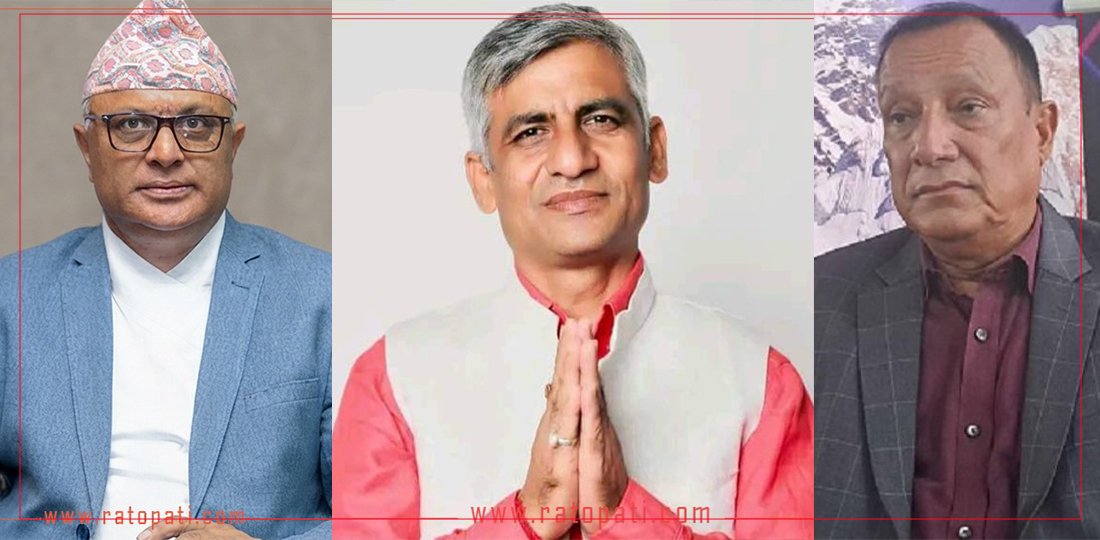
Kathmandu. During the election campaign, National Independent Party (NIP) Vice-Chairman Swarnim Wagle made two main commitments to voters from various sectors - first, to reduce the 300 percent tax on vehicles. Second, to raise the one percent slab on personal income to 10 lakh rupees.
It is Wagle who is currently managing the economy. As Finance Minister, he also has the main role of fulfilling the promises he made during the election. However, in the upcoming budget, the tax rates are not likely to decrease and the income tax limit is not likely to increase as announced. Officials from the Finance Ministry's Revenue Advisory Committee say that efforts to reduce rates by increasing the tax base have failed, leaving the Finance Ministry unable to adjust tax rates as promised to balance government treasury.
The government made two attempts to broaden the tax base in the last month. First, it tightened the movement of goods through land routes. Second, it made it mandatory to have the maximum retail price (MRP) on goods brought through customs checkpoints. Both of these practices were the main tools for expanding the tax base in the country. However, the government has now largely failed in both.
After becoming 'defensive' on customs valuation above one hundred rupees, the Finance Ministry clarified a few days ago that it was merely implementing the system established by the previous government, and also assured that this system would not be in the new budget. This means the government's efforts to tighten customs checkpoints have been almost a failure.
On the other hand, the government has also backed down on MRP implementation. From an insistence that goods without a maximum retail price would not pass customs, the government has agreed to pass goods on a self-declaration basis.

Although the government adopted this system as a middle ground due to serious revenue problems caused by the halt in customs clearance, ministry officials are not confident that this practice will be successful in the coming days. A joint secretary from the ministry involved in budget preparation says, 'There is no basis to estimate resources based on the expectation that this system will be implemented well, so the structure of budget resources has to be kept traditional.'
Finance Minister Swarnim Wagle himself has clearly communicated this situation to businessmen. According to Surendra Upreti, President of the Nepal Automobile Dealers Association (NADA), when NADA officials met him recently, he urged them not to have high expectations regarding tax reduction.
'We have acknowledged that the current situation in automobiles is very low, but his statement was that decisions must be made by considering the revenue sources while preparing the budget,' says NADA President Upreti, quoting the Finance Minister's statement during the meeting. 'We do not expect any major changes in the tax on vehicle imports this year.' According to him, Finance Minister Wagle has also claimed that he never made such announcements during the election campaign.
Recently, the Finance Ministry also reviewed the potential impact of reducing the difference in taxes between fossil fuel vehicles and electric vehicles. However, sources say that it was concluded that this could lead to significant revenue loss and it would be difficult to compensate for this source.
Especially in the case of passenger vehicles, which have a high share, it might be possible to adjust them, but since two-wheelers and large transport vehicles are still importing petroleum vehicles, and these also dominate parts imports, it appears that a significant price would have to be paid for adjustments. Therefore, there is no possibility of this rate decreasing this time.
On the other hand, there is also pressure to increase the limit for personal income. Currently, only one percent tax is levied on income up to 5 lakh rupees for individuals. This limit is 6 lakh rupees for married couples. Beyond that, 10 percent tax is levied on income up to 2 lakh, 20 percent on the next 3 lakh, and 30 percent on income up to 20 lakh. Income above 20 lakh is taxed at 39 percent.
Discussions have also been held regarding the possibility of reviewing this limit. Committee members say that since increasing this limit is not expected to significantly impact revenue collection, they are suggesting that it can be increased. Currently, personal income tax accounts for about 25 percent of the total revenue collected. Of this, personal income tax accounts for slightly more than one-third.
Currently, a total of 22-23 kharba rupees are paid as salaries and allowances across the country. At a one percent rate, 22-23 arba rupees are collected from the initial slab. Out of the total 85-90 arba rupees collected from personal income tax, the rest comes from other incomes.
Previously, the High-Level Tax Reform Commission had suggested increasing the rate of the initial slab to three percent. It appears that changing the slab by increasing the rate as suggested will not affect revenue. However, committee members say that this will affect low-income workers, so it depends on political decisions.
On February 15, then Finance Minister Rameswor Khanal formed the Revenue Advisory Committee. The committee is currently in the final stages of its work. The committee is preparing to submit its report within a few days.
This specific news has been automatically translated by AI. As a result, there may be some inaccuracies or language errors.