
CPN Leader Saral Sahayatri Discusses Party's Decline and Future


The current government is moving forward with one decision after another. Some decisions are being opposed as undemocratic and some as not being touched by the law. It is as if there are no other parties in the country besides the ruling party.
Opposition parties are unable to give the impression that 'we are also here'. Their voice is so faint and muted that no one listens to them. The parties that withered after the election have not yet woken up, and they are also caught in internal strife. They are busy chanting old slogans like leadership change, law, policy, collectivism, democracy within the party, which have not been implemented for years.
One of those parties is the Communist Party of Nepal. The CPN, which went to the polls after uniting more than two dozen parties before the election, won only a few seats in the direct elections.
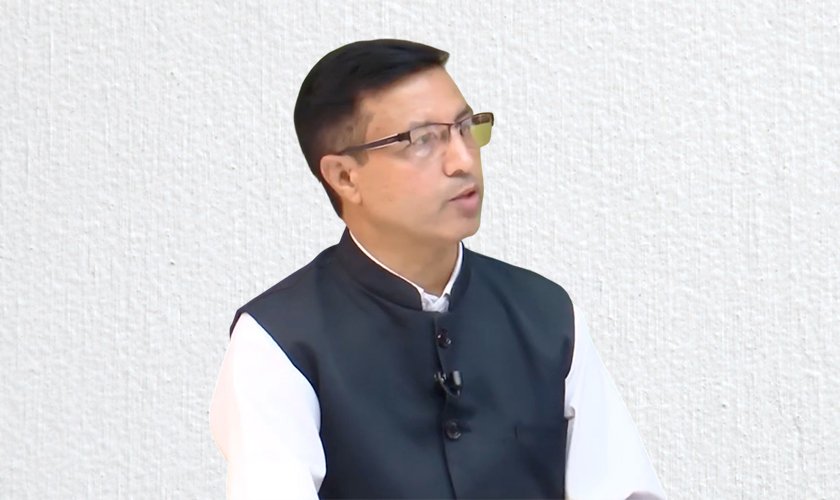
This party has been on a continuous decline in the elections since 70 BS. But the main leadership is the same, and why are the youth still defending the leader? What is the use of such helpless youth? Will this party survive until the next election? Or are some efforts being made to save the party? Will the scheduled general convention happen? What difference will it make if it happens? CPN leader Saral Sahayatri had a long conversation with Ratopati on these and other issues. Edited excerpt of the conversation with Sahayatri (detailed conversation can be watched in the video).
The party that could shake the roots of feudalism and bring about change, why has it reached a situation where it has to be asked, 'Where is it?' We are deeply investigating that.
People are looking for the Communist Party of Nepal, asking where it is. Where is the CPN?
After the election results, we have turned inwards, as the results were not as expected.
- What does that mean?
Where have we, our party, organization, leadership, ideology, working style, and broken links, fallen short? Why has a party that could shake the structure and roots of feudalism, ideology, structure, and institutions in this country reached a situation where it has to be asked, 'Where is it?' We are deeply investigating this.
- Where are you looking?
For that, we have seriously announced a general convention.
If 21st-century democracy had been implemented, the main leadership would not have gone into government. But here, all leaders wanted to be ministers and prime ministers themselves, and the system was ruined.
- Has the party meticulously reviewed the reasons for the electoral defeat?
We have reviewed it, but now we are focused on working in a way that delivers results.
_FjwvWHR0W0.jpg)
- Were you defeated by the people or by someone else in the election?
We are trying not to go into accusations and counter-accusations right now. Because in democracy, it is continuous that people sometimes teach lessons positively and sometimes negatively when every change occurs.
- Are you saying that the algorithm, geopolitics, or the army defeated you, as others claim?
One thing is that this is also a matter of class perspective and viewpoint. What is the study of society? What is merit? All these things can be defined in their own ways. The main issue is that old parties have faltered in organizational management, democratic change, and continuously renewing political, ideological, and organizational matters within the party.
- Would it be more complete if 'leader's morality' was added to that?
Democratic morality must exist. But what is morality? It means leaving immediately. But what happens if you leave? If it's the same old model, then it's meaningless. Therefore, what we have failed to develop is in our methods and systems.
I support the government's enthusiasm in daily work, but I have serious reservations about the signals the government is giving regarding human rights and democracy.
- To change that model and method, shouldn't people like Saral Sahayatri reach the leadership? But isn't there no place to reach?
We are going to the general convention precisely to bring the leadership team and everyone there.
- You are among those expected, but you become a spokesperson for the same failed leadership. Then what will that general convention do?
We do not consider leadership as God. That's all. The leadership must be prepared to change its role by developing the system. We are looking leaders in the eye and talking about it, and we will talk. That's all, we will not work in a way that pushes down, makes fall, or lifts up.
_EV6FBvoARN.jpg)
- It has been a long time since the Unified Socialist and CPN (Maoist Centre) merged or cooperated. But the organizational disorder within it is immense!
We are trying to improve it one more time. Correcting mistakes is the character of a communist.
No one else defeated us; we stumbled because we could not renew our own organizational management and methods.
- How can we trust?
We are not in favor of accepting this as ad-hoc for a long time. We will make the party very streamlined by the upcoming general convention.
- How will you make it? Can you remove the current main leadership?
We have opened up the debate about organizational models. We passed the policy of 21st-century democracy, but we could not implement it.
_9AxymlSSpD.jpg)
- What would have happened if it had been implemented?
The main leadership of the party would have stayed in a parental role and would not have gone into government. The party would have had the right to change those who went into government if they made mistakes, and the party would have been connected to the people and the streets. The party would have addressed the dissatisfactions there, and the leaders would have played the role of managing any dissatisfaction with the government with authority.
- Then why couldn't it be implemented?
All leaders wanted to be ministers themselves, and prime ministers themselves. After that, it was thought that it would be better to remain silent as much as possible.
- What is your comment on the current government's work?
I support the intensity and enthusiasm with which the government is working on the daily tasks it needs to perform. However, there are certain issues related to democracy and public welfare, issues related to human rights; regarding those, the signals coming from the government are a matter of serious comment for me.
This specific news has been automatically translated by AI. As a result, there may be some inaccuracies or language errors.
_Eqo5W0NMVM.jpg)