New Regulations for Foreign Educational Programs in Nepal

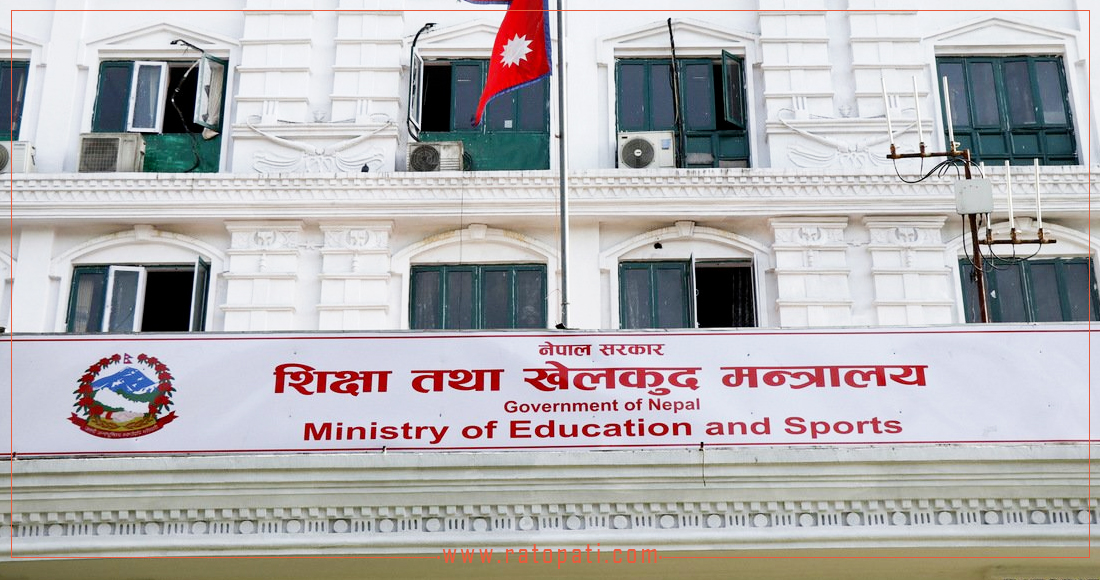
Kathmandu. Prior consent from the Ministry of Education and Sports must be obtained before establishing or registering an educational institution that operates foreign educational programs.
Documents confirming the establishment of the foreign university seeking affiliation in accordance with the national laws of the respective country, and an application containing the basis for the foreign university to operate educational institutions in other countries must be submitted to the Ministry of Education and Sports.
According to the Foreign Educational Programs (Operation and Regulation) Regulations 2083, institutions that have obtained prior consent must have at least three ropanis of land in the Kathmandu Valley, at least six ropanis in the Himalayan or hilly districts, and at least 15 katthas in the Terai districts.
Under the new legal provision, any institution wishing to operate higher education programs in Nepal under the affiliation of a foreign university must obtain prior consent (Letter of Intent) from the ministry. The gazette mentions various conditions that must be met for such prior consent, which must be obtained before establishing or registering an educational institution. These include official documents confirming that the foreign university the applicant wishes to affiliate with is established in accordance with the national law of the respective country, and that its world ranking is within the top one thousand in international indicators such as Times Higher Education or QS.
Educationists believe that this arrangement will completely stop the entry of nominal and substandard foreign colleges in Nepal and ensure that Nepali students receive world-class quality education within the country. The regulations have set standards for physical infrastructure and land ownership, including geographical classification.
According to the new arrangement, institutions that have obtained prior consent must register at least three ropanis of land in the Kathmandu Valley, at least six ropanis in the Himalayan or hilly districts, and at least 15 katthas in the Terai districts in the name of the educational institution. It is mandatory to construct buildings on land owned by the institution and commence educational programs within five years of obtaining permission.
For colleges already in operation, within five years from the date of commencement of this regulation, the specified land must be brought under the name of the educational institution, and within 10 years, arrangements must be made to shift to their own buildings. As per Rule 25 of the Regulations, educational institutions will now have to deposit Rs 1.5 million as a deposit for programs operated by the board, Rs 2.5 million per academic program at the undergraduate level, and Rs 1.5 million per academic program at the postgraduate (Masters) level in the government's deposit account. This deposit amount cannot be withdrawn without the prior approval of the ministry.
New criteria have also been set for student admission fees and scholarship distribution. A welfare rule has been introduced mandating that colleges with Nepali investors must provide scholarships to 10% of the total seats and colleges with foreign investors to 20% of the seats for meritorious, disadvantaged, women, Dalit, disabled, and students from backward regions.
According to the regulations, a high-level committee chaired by the Secretary of the Ministry of Education has been formed for the regular monitoring, evaluation, and recommendation of foreign educational programs. The committee will include the Secretary of the University Grants Commission, and joint secretaries from the Ministries of Law, Foreign Affairs, and Education, while the joint secretary of the Higher Education Division will serve as the member-secretary. This committee will conduct on-site inspections and academic audits of colleges through an expert team at least once a year.
The gazette has issued a strict warning that if colleges fail to meet infrastructure requirements, do not update the specified deposit, or do not comply with scholarship criteria, the ministry can revoke or cancel the college's operating permit. In the event of a college closure, the regulations stipulate that no college can discontinue classes midway after the commencement of an academic session to secure the educational future of the students. If an educational institution has to be closed or its affiliation is canceled under special circumstances, the concerned college must complete the remaining studies of the enrolled students at its own expense.
For this purpose, if the movable and immovable assets of the institution are insufficient, a strict legal provision has been implemented for the first time, requiring the completion of students' studies by recovering from the personal assets and property of the operators.
Provisions have been made requiring at least three public notices in national daily newspapers for matters such as name changes, relocation of operating sites, and affiliation changes of colleges.
This specific news has been automatically translated by AI. As a result, there may be some inaccuracies or language errors.



-(2)_QJLjKxR87n.jpg)