
Former Mayor Bhim Parajuli Discusses Biratnagar's Squatter Problem and Land Encroachment
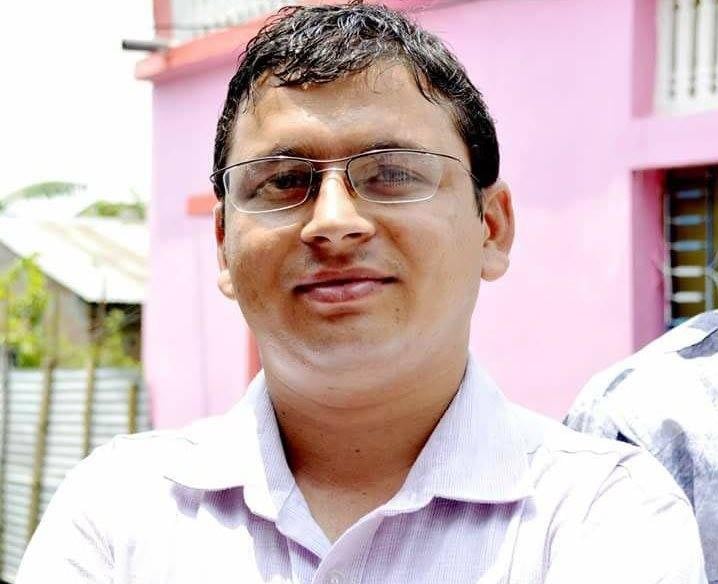

Biratnagar. The story of the squatter problem and public land encroachment in Biratnagar Metropolitan City is quite old and complex. Thousands of families who have lived for generations on the banks of the Singhiya and Kesaliya rivers, industrial area laborers, and illegally occupied lands due to increasing urbanization are challenging the management of Biratnagar Metropolitan City.
When the Metropolitan City started demolishing structures with bulldozers in Kathmandu, its repercussions have spread across the country. In Biratnagar too, there is a conflict between the pressure to remove encroachments and the voice to manage settlements.
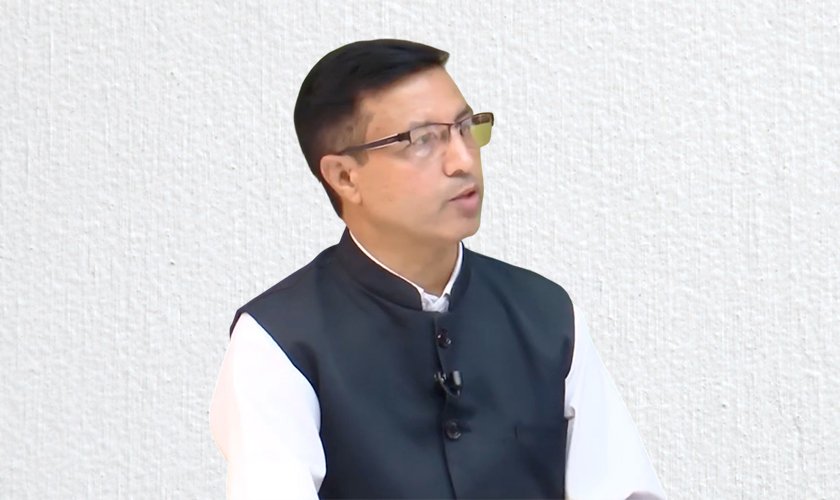
Focusing on this very issue, former Metropolitan Mayor of Biratnagar and current Koshi Province Minister Bhim Parajuli spoke with Ratopati correspondent Arjun Acharya. Here is the edited excerpt of that conversation.
- You mentioned public land encroachment as one of Biratnagar's main problems. What is the actual situation of public and illegally occupied land in Biratnagar?
Biratnagar is a historic city. The nature of its land is a bit different compared to other cities. As soon as I became the mayor, the first thing we realized was that there was no accurate data on how much land the metropolis owned and how much was encroached upon. Therefore, we formed a high-level committee and started the process of inventorying public, illegally occupied, and municipally owned lands.
According to our report, there is a large amount of fallow and illegally occupied land in Biratnagar. Especially the lands on the riverbanks and the lands in the areas of former Village Development Committees that merged into the metropolis were unclear. We created a database that showed how much land was in which ward, who was occupying it, and which land was vacant. That data should still be safe in the Metropolitan City. The main challenge of land in Biratnagar is the encroachment of riverine land and road boundaries.
- You talked about the inventory, but the squatter problem seems to be worsening. Who are the real squatters in Biratnagar? There is also a lot of talk about 'Hukum basis' (powerful encroachers) here, isn't there?
Yes, the squatter problem cannot be viewed superficially. To understand it deeply, we need to divide it into three categories. The first category includes those who have been living on the banks of the Singhiya and Kesaliya rivers for a long time, that is, since the time of their fathers and grandfathers. They shed sweat on that soil, struggled with the streams and ditches there, and grew up. Their children may have earned a little money by going abroad and bought 5-10 dhurs of land somewhere. Now, should we call them squatters or not? Because they have land elsewhere, but their emotional connection and place of residence are in the old place.
The second category is those who have come and settled through relatives or in-laws. This is a form of migration. The third category includes those who are somewhat influential, whom we call 'Hukum basis' or 'Dhukum basis'. As soon as they see any vacant land, they occupy it with political or other power. Real squatters are always in fear, but these 'Hukum basis' challenge the state itself. Therefore, to solve the problem, the first step is the ruthless identification of real squatters.
- During your tenure, some work was done to provide housing to squatters. How effective was it? Is it possible to manage all the squatters in Biratnagar by giving them houses like that?
It is possible, but it requires willpower and cooperation. During our time, we presented a model in Wards 19 and 5. Especially for the Musahar community, who are at the very bottom of society and have no alternative, we worked. We collaborated with non-governmental organizations like Habitat for Humanity, Sahara Nepal, and Jeevan Bikas to construct 33 houses on the metropolis's own land. This is municipal land, but we guaranteed organized housing for the squatters there. There are facilities for toilets, drinking water, and electricity for them.
If we can bring the scattered squatters into integrated settlements like this, on one hand, they will get a dignified life, and on the other hand, the riverbanks and public lands will be cleared. This work is a bit expensive and time-consuming, but not impossible.
- The issue of Balen Shah demolishing structures with bulldozers in Kathmandu is currently much discussed. In Biratnagar too, there is a group that says squatter settlements should be bulldozed. In your opinion, is the bulldozer the only option?
The situation there and here cannot be weighed on the same scale. The aspect of managing squatter settlements in Kathmandu is a bit different. In Biratnagar's case, the solution lies in management, not bulldozers. The right to housing for every citizen is guaranteed as a fundamental right by our constitution. We are in a democratic and welfare state system. The problem cannot be solved by leaving anyone without an alternative, pushing children and the elderly onto the streets.
First, the state must prepare an alternative for them. Those who are real squatters are ready to go happily if the state offers to build them houses in a safe place. They do not wish to live in fear of floods in the monsoon or in squalor.
However, the state must be strict with those who are 'Hukum basis', those who have land elsewhere. They should be given notice, time, and if they do not comply, their structures should be removed legally. But work should not be done by trampling on human sensitivity and human rights. The state is a guardian, not just a ruler.
- There are allegations that a large amount of public land was distributed to various organizations and individuals during your tenure? There is also talk of 67-68 bighas of land. What is the real story?
You have asked a very important question. Some of the things said are misleading and driven by political prejudice. Firstly, no one can distribute municipal land. We have not transferred the land title deeds to anyone's name. Whatever we did was for the greater good of Biratnagar. For example, let's talk about Pokharia Secondary School. Thousands of students are studying in that school now, which is one of the best community schools in Nepal. Due to lack of land, the students there could not study in a good environment. We gave the metropolis's land for them to use. Similarly, land was provided to various religious, social, and cultural organizations.
Our decision clearly states - to be taken back by the Metropolitan City at any time if needed.
This means the land was not donated, only leased or given for use for public service. If the state can acquire private land by providing compensation, why can't the metropolis take back its own land? If the current leadership feels that the metropolis itself should build something on those lands, they can take them back. The law gives them that right. Therefore, saying the land is gone is just a political stunt.
- According to the survey of 2020/2022 BS, a lot of land appears to have gone to individuals or been encroached upon. How challenging is it to reclaim that land?
Yes, this is a problem. Public lands that appeared public in the 2020 BS survey have later gone to individuals through various squatter commissions or other means. Some have even obtained land titles. Now, it is legally complex to call land with a title deed public all at once, but if someone has encroached on government land and built a wall, a house, or used it for commercial purposes, no one can stop its removal. We also removed structures within the road boundaries in many places, but for this, strong coordination is needed between the survey office, land revenue office, and the metropolis. Reclaiming public land that has fallen into private hands is also a long legal battle.
- You are now a provincial minister. How can the provincial government assist the metropolis in the squatter problem and land conservation?
The provincial government has its own jurisdiction, but we are always ready to assist the local government in the squatter problem and land management. Especially from the Ministry of Tourism and Environment, we can conserve the lands on the riverbanks and develop them into green belts or riverfront parks. If the metropolis brings a plan to relocate squatters elsewhere, the provincial government can allocate budget for infrastructure development there. The land-related commission is also working to solve the squatter problem. We need to coordinate with those commissions to provide permanent alternatives to the real squatters. The provincial government can provide assistance both policy-wise and financially, but the leadership must be taken by the local government.
This specific news has been automatically translated by AI. As a result, there may be some inaccuracies or language errors.

_Eqo5W0NMVM.jpg)