Government Dissolves 1594 Political Appointments via Ordinance


Kathmandu. The political atmosphere has heated up again with the wholesale dismissal of about 1600 appointments made by the previous government.
Before the issue of demolishing slum settlements could subside, the government led by Balen Shah removed 1594 political appointees from 108 organizations at once. On Sunday, at the recommendation of the government, President Ram Chandra Paudel issued the 'Special Arrangement Ordinance for the Dismissal of Public Office Bearers, 2083'. As soon as this ordinance is published in the Nepal Gazette, the positions of all office bearers appointed on or before Chaitra 12, 2082, will automatically become vacant. The government's move to dismiss such a large number of political appointments through a single ordinance has sparked concern and interest about its potential impact. This has become a subject of debate from political, legal, and administrative perspectives.
- Legal Problems Solved, Political Questions Remain
There have been previous attempts to remove individuals appointed by the previous government under various pretexts, but there was no practice of removing them all at once through an ordinance or bill. When an individual had to be removed, the decision of dismissal was made according to the regular law. However, when individuals were removed in this manner, those facing dismissal would approach the courts. There are numerous examples where the court reinstated them by issuing an interim order on the government's decision. However, the practice adopted by the current government of bringing an ordinance to remove political appointees has also closed the door to the courts. With the law itself in place, the scope for the court to intervene through regular procedures has narrowed. In this sense, the government has ended the legal hassle. However, the debate about the political questions and long-term effects it has created has begun.
- Opportunity for Dynamism, but Risk of Leadership Vacuum
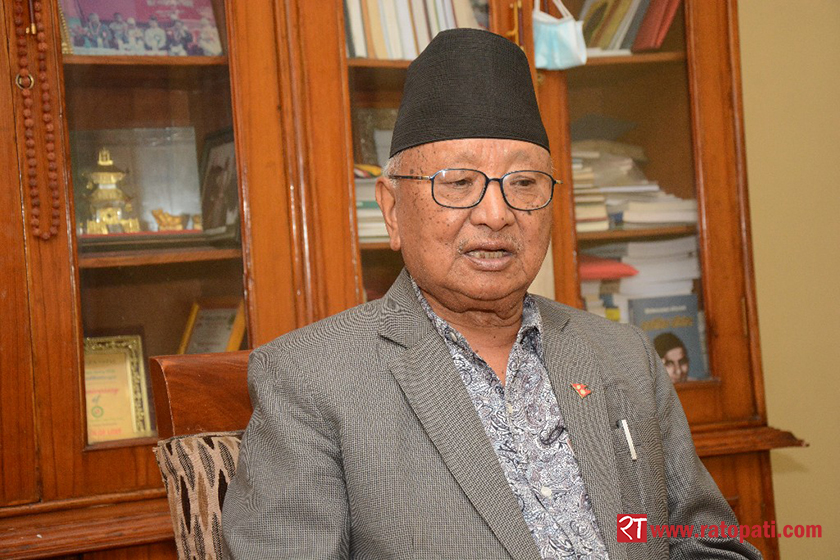
Former Governor of Nepal Rastra Bank, Chiranjibi Nepal, argues that the government's move should not be viewed entirely negatively, but acknowledges that the challenges are equally significant. Connecting this to the fact that the public gave the current government a near two-thirds majority, he says, 'It is not wrong for the government to form a team according to its own spirit to implement its policies and programs. In the past, even though the government changed, the government's policies were not communicated to the lower levels, and old office bearers were uncooperative, a situation that this ordinance has addressed. Now the government will have the opportunity to work by bringing in people who can implement its policies in all bodies.' However, Nepal states that the negative aspect cannot be ignored. The removal of about 1600 office bearers at once has created an immediate 'vacuum' in those organizations, and if this persists for a long time, it will affect the performance of the concerned bodies, he expresses concern. 'If the government can provide capable and good leadership immediately after removing office bearers wholesale as it did, only then will this step be meaningful. If the government cannot appoint people to more than 1600 positions immediately, the daily operations of hundreds of organizations may come to a standstill,' he says, 'Selecting and appointing qualified individuals in such large numbers in a short time is a challenging task for the government.'
- Concern Over Wrong Precedent in Parliamentary System
However, former Secretary Keshav Bahadur Adhikari sees more negative aspects than positive ones in this ordinance. He is concerned that this move by the government will set a very wrong and dangerous precedent for the future. He sees this precedent as risky in a parliamentary system like Nepal's. According to him, since the Rastriya Swatantra Party (RSP) has a single majority in the current government, there is a possibility that the appointed office bearers will be able to work for the full term (about five years) when making new appointments, but it will cause significant instability in a coalition government that may be formed later. 'Looking at the political history of the past, governments have changed within 9 months, and governments have always changed within one and a half to two years,' Adhikari says, 'If governments change so frequently and all office bearers are replaced immediately, it can make the concerned bodies unstable and weak.' He states that this practice is suitable only in countries with a directly elected executive. 'In a country with a directly elected executive system, the government generally runs for its full term. Therefore, even if all positions become vacant at once, it does not make much difference,' he adds, 'but since we are in a parliamentary system, this precedent is not suitable.'
- Where and How Many Positions Lost, What Will Be the Impact?
The ordinance brought by the government has created the biggest vacancy in the education and health sectors. Out of the total 1594 political positions dismissed, 544 are from the education sector. Political appointments in various universities, the University Grants Commission, the Teachers Service Commission, and the National Examination Board have been revoked. Similarly, 337 positions have been lost from the health sector. Dozens of office bearers from various health institutes, medical education commissions, hospitals, and councils have been dismissed at once. Besides these, a large vacancy has been created in communication, infrastructure, financial, and other sectors, from public enterprises to the financial sector. Former Governor Dr. Nepal states that the longer this vacancy persists, the more problems will arise. The vacancy in universities can cause problems in curriculum development, annual calendar, and publication of results. Furthermore, it can also obstruct infrastructure construction, procurement, and other processes. The National Examination Board has to publish the SEE results immediately, which is not possible without office bearers. Dr. Nepal says that the impact will vary according to the nature of the institution in other sectors as well. Therefore, he advises the government to expedite the appointment process immediately along with filling the vacancies.
- These Bodies Spared from Government's Target
The government, which has brought about upheaval in hundreds of public bodies by dismissing office bearers, has kept some extremely sensitive and strategically important bodies outside the purview of this ordinance. Nepal Rastra Bank, which leads the country's overall financial system, has not been affected by this ordinance. Similarly, the ordinance does not include provisions for dismissing the office bearers of major financial institutions with government investment, namely Nepal Bank Limited, Rastriya Banijya Bank, and Agriculture Development Bank. In addition, office bearers appointed to the Nepal Tourism Board have also not been touched.
This specific news has been automatically translated by AI. As a result, there may be some inaccuracies or language errors.