Nepal's Urban Renewal Drive Displaces Thousands, Leaving Them in Limbo


Kathmandu. Under the Kathmandu sky, along the banks of the Bagmati and Manohara rivers, a separate world had been living for years. That world, far from the glitter of the city's grand palaces, was woven with sweat and small dreams. But in an instant, that world has turned into ruins. Balen's government's 'city improvement' campaign has uprooted settlements that had taken root for years. Along with these, the dreams and the hope of shelter for thousands have also been shattered, but they have not lost hope in the government.
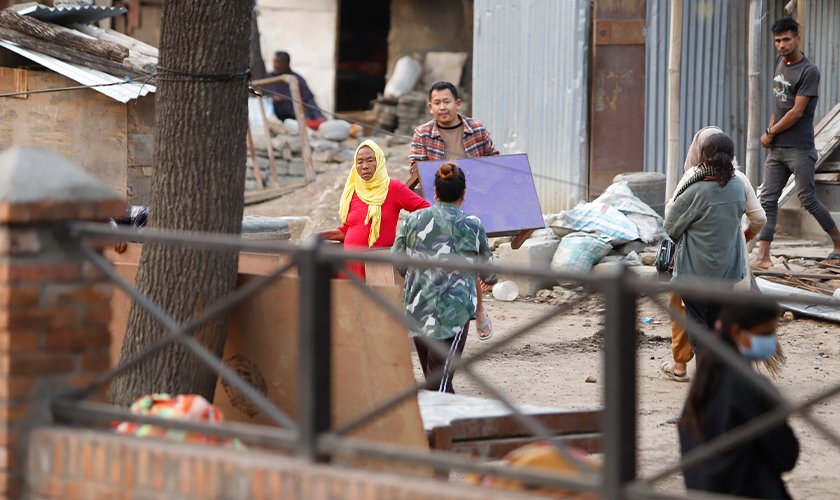
Sarita Sharma, a homeless woman from Gainrhigaun, has not stopped crying since yesterday. She sits amidst the rubble of her demolished hut, lost in thought. In her hands, she holds a torn blanket and a few old utensils. Her voice is choked, but her tears speak volumes. 'My world was in this stone and mud,' she said, sobbing, 'Are we not human, government? We didn't ask for anyone's palace, we didn't snatch anyone's share. I built this small house by washing dishes and carrying loads in others' homes all day. Today, the bulldozer has not only destroyed my house but also mixed my very basis of survival into dust.'
Sarita questions - after evicting us, did they ever think where those children would sleep, what they would eat tomorrow?
She feels like being homeless is like being a criminal.
She expressed concern about her daughters' upcoming Class 12 exams, stating they couldn't study. 'My youngest daughter has an exam, but how will she take it now? They say they will take us to an apartment. From there, where will they go to study? Where will we go to work? But let's see, the government has promised to do something.'
Sixty-year-old Rambahadur Damai shares a similar plight. Having lived here for the past 20 years and worked as a tailor, he showed his old sewing machine and said, 'My customers were here, my livelihood was here. I hear the government will take us to Ichangunarayan, but whom will I sew clothes for there? Who knows me there? Moving us without a guarantee of employment is like killing us alive.'
For the homeless, being in the heart of the city was not just about shelter; it was also the market where their labor was sold.
Concern for Children's Future
Children have been the most affected by the bulldozers in the homeless settlements of Thapathali, Gainrhigaun, Shantinagar, and Sinamangal. Their school bags, uniforms, and books were either buried in the rubble or scattered around. Maya Tamang from Sinamangal's son is in Class 8, but today Maya doesn't know where his books are. The thought of what will happen to her son's education if they are moved from here and sent far away keeps her awake at night. The question of how to educate children enrolled in nearby schools in a new and unfamiliar place troubles all parents.
With the removal of the settlements, many have also lost their small businesses and means of sustenance.
Ganesh Tharu from Sinamangal used to earn 500-700 per day selling 'chatpate' in the evenings, which supported his family. Now, he is worried about whether people will come to the new place the government is relocating them to and whether he will be allowed to operate his cart. Business used to happen in the crowded city, but he is concerned about how to sustain life in a deserted place. Similarly, Savitri Khadka, holding her small children, complained that the government treated them like animals and left them in distress.
There is Hope Too
Even in this state of ruined settlements and shattered hearts, a faint hope still remains in the hearts of the homeless. They believe that the government is, after all, the guardian of its citizens.
Sarita Sharma says, 'Even though we are made to cry today, we hope that tomorrow the government will provide shelter for our children. Wherever they take us, let them create an environment for us to work and earn. Let them not turn our hope into despair.' Their demand is not just for a roof over their heads, but also for employment to earn a living and a guarantee of education for their children.
Metropolis to Build Parks, Not Structures
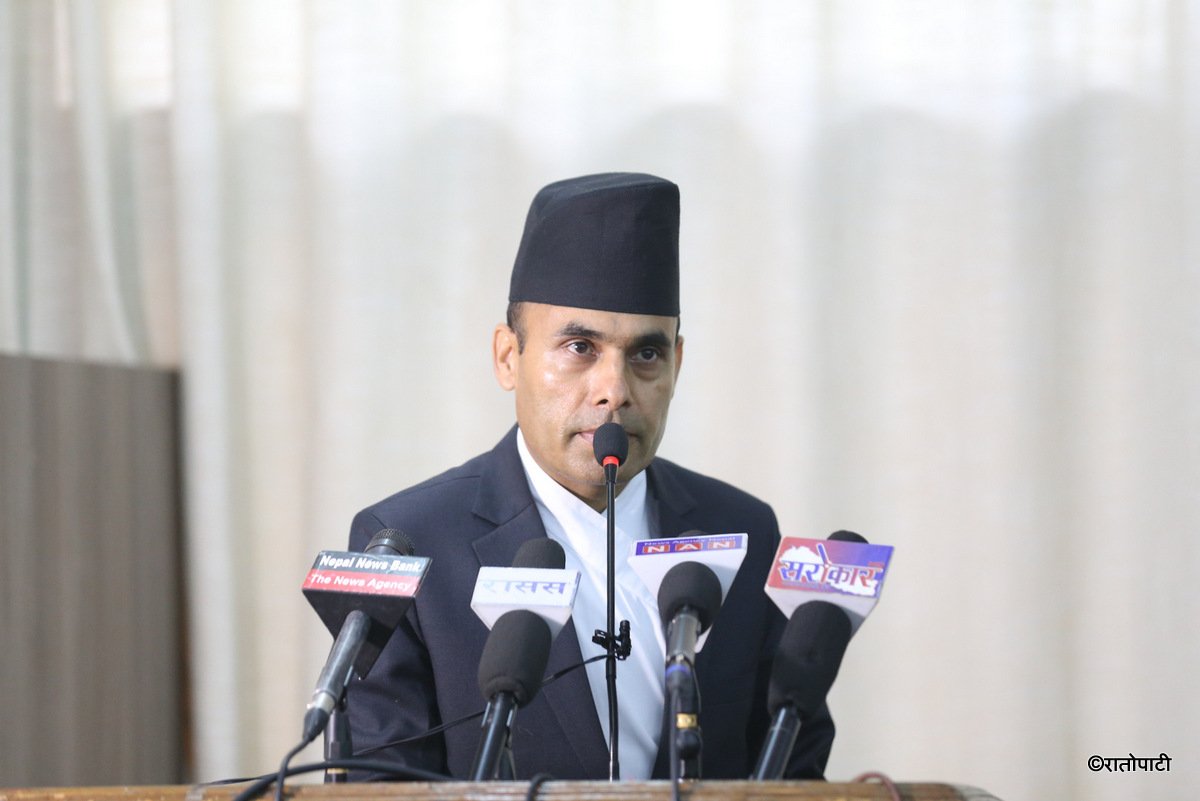
The Kathmandu Metropolitan City has proposed plans to build green parks and recreational areas in the areas where homeless settlements have been removed. According to the Metropolis's spokesperson, Nabin Manandhar, organized parks will be built in Thapathali, Gainrhigaun, and Shantinagar. As per the riverbank regulations, no physical structures can be built within 20 meters of the river, hence these areas are being developed as green spaces. Places for senior citizens to rest, play areas for children, and exercise tracks will be constructed there. The Metropolis has clarified that only parks for public use will be built, without any permanent structures.
'Land Commission Must Work'
Regarding the management of the homeless, spokesperson Manandhar stated that the primary responsibility of identifying and certifying genuine homeless individuals lies with the Land Commission. He clarified that while the Metropolis may assist in temporary food and shelter arrangements, it does not have the authority to make decisions on permanent resettlement. 'Discussions are also underway regarding the relocation of certified genuine homeless individuals to the buildings constructed by the Ministry of Urban Development in Ichangunarayan, Nagarjun. This campaign will gradually be extended to the Balaju, Gongabu, and Baneshwor areas along the banks of the Bagmati and Bishnumati rivers,' Manandhar told RatoPati.
According to data until 6:15 PM, Engineer Dorakaji Shrestha of the Kathmandu Valley Development Authority reported that 529 homeless families have come into contact. Among them, 63 families have been housed in Kirtipur and 62 families in guest houses.
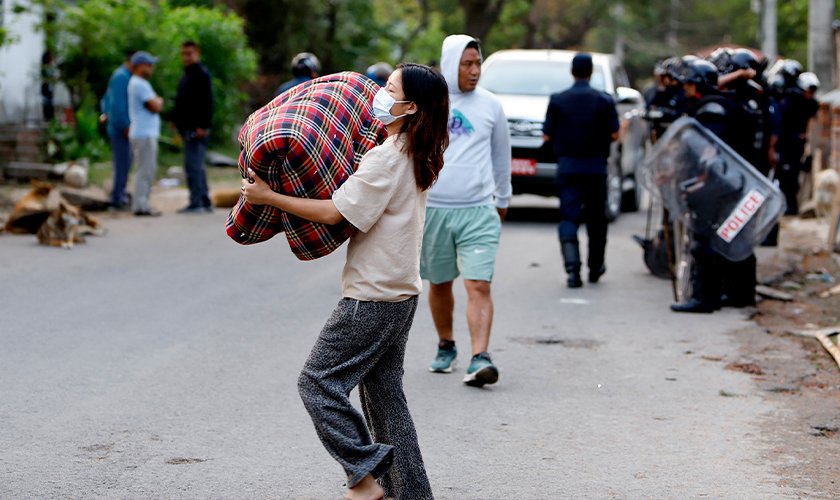
According to Kathmandu Metropolitan City's Metropolitan Police Inspector Shivaprasad Dahal, the process of collecting names and details of the homeless at the Dashrath Stadium is underway, which will help in identifying the genuine homeless. The Metropolis has arranged temporary accommodation for the registered individuals in Radha Swami in Samakhushi and guest houses in Balaju.
Before being moved to temporary shelters, essential items like clothing brought from the settlements have been allowed to be taken with them, while larger belongings have been safely kept at the Dashrath Stadium. 'This is just a transit point for now, as permanent arrangements will only be made after the state identifies the genuine individuals,' Dahal said.
This specific news has been automatically translated by AI. As a result, there may be some inaccuracies or language errors.