Pokhara Metropolitan City issues 35-day ultimatum to remove encroachments on public land

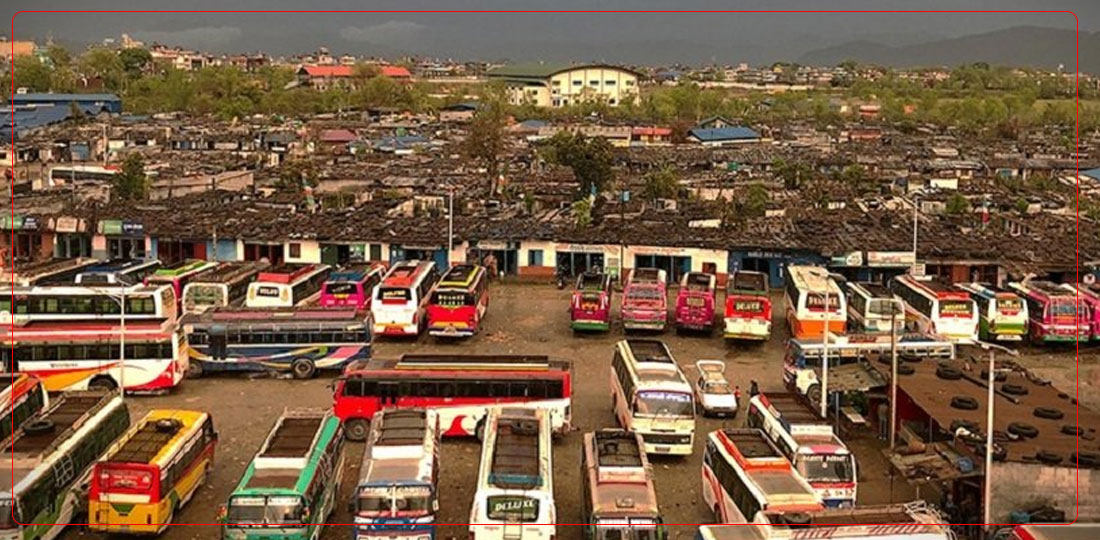
Pokhara. Pokhara Metropolitan City has issued a 35-day ultimatum to remove illegal structures built by encroaching on public, government, and unused land within the city limits.
The notice, issued on April 4, will expire on May 7. Mayor Dhanraj Acharya has warned that the Metropolitan City will take action if the owners do not demolish the structures within the stipulated period.
“We believe that those who have encroached on public land will remove them themselves within 35 days,” he said. “This is our request. After 35 days, we will not make requests, nor will there be any directives. Action will be initiated directly. The cost of demolition will also be recovered from the concerned individuals.”
However, landless squatters are in fear of being removed by the Metropolitan City. They have warned of protests if they are removed without alternatives. A 35-member struggle committee has been formed under the coordination of Prem Gurung, chairman of the Land Rights Forum Kaski, at a meeting held in Pokhara on Saturday.
They stated that the committee will submit their demands to the relevant bodies and are prepared to fight to the fullest extent if their demands are not met. An estimated 25,000 landless squatters are believed to be in Pokhara, with about 20,000 having already come for registration. The government has also distributed them with 'nissa' (proof of application).
The Land Commission Kaski has stated that land ownership certificates will be distributed to those who have received the 'nissa' after completing the legal process.
Meanwhile, Mayor Acharya has warned that structures must be removed from encroached land within the period specified by the Metropolitan City. Pokhara has also conducted separate studies of all squatter settlements within the city. The Metropolitan City has stated that it has embarked on the campaign to remove structures only after conducting surveys for a year and a half. Following Pokhara's notice, squatter settlements in Kathmandu were also removed under government directives.
Mayor Acharya stated that the Metropolitan City's 35-day notice covers not only squatter settlements but also riverbanks and lake shores.
“We have not issued the notice targeting only squatter settlements. This notice requires all encroached land to be vacated,” he added. “If not removed, the state will initiate legal action.” He also mentioned that genuine squatters will be managed by providing them with land. However, those encroaching on public land include not only the poor and landless but also political parties, various organizations, and government offices. Various individuals and organizations are also occupying land owned by the Urban Development Committee.
“Some government buildings are even built on the land of the Urban Development Committee. An irrigation office is built on our land,” said Acharya, who is also the chairman of the committee. “Organizations affiliated with various political parties have also occupied land. Oversight agencies, including the Commission for Investigation of Abuse of Authority and the Vigilance Centre, have been continuously pressuring us to clear these lands for the past 3 years. We will not back down now.”
The Commission for Investigation of Abuse of Authority has repeatedly summoned organizations encroaching on government land for questioning. The Metropolitan City has collected data on public land, school land, and open spaces in all 33 wards.
He stated that even genuine landless squatters and the poor will not be allowed to reside in non-conforming areas and sensitive zones. “No one will receive land ownership certificates if they are located along riverbanks, bus parks, Phewa Lake, and Phirke Khola, which fall within non-conforming areas. There are 40 houses in Phirke alone, and we cannot accommodate them there,” he said. “After screening them, if they are truly landless, suitable land will be found and provided.”
Pokhara Metropolitan City has previously stated that it has distributed 'nissa' to 19,856 people to resolve the squatter problem. Of these, only 9,000 are genuine landless Dalits and squatters, while the remaining 11,000 are irregularly settled residents.
However, squatters themselves complain that the sale of white land ownership certificates has already begun based on this. Nepali law does not grant the right to sell 'nissa'.
“Although they entered as squatters initially, their children are now doctors. Many have improved their financial status,” says a squatter leader. “They still call themselves squatters. Some are renting out 8-10 rooms built within squatter settlements. The state should investigate this.”
Some government offices have also constructed structures by encroaching on public land. The Metropolitan City has stated that it will identify all such encroachments and remove the structures.
This specific news has been automatically translated by AI. As a result, there may be some inaccuracies or language errors.