Nepal Faces Diplomatic Vacuum as 17 Ambassadorial Posts Remain Vacant


Kathmandu. Ambassadorial posts for Nepal remain vacant in 17 different countries. Following the Sushila Karki-led government formed after the Janji movement, 11 ambassadors were recalled in the last week of October. Before new appointments could be made to these positions, the Balendra Shah-led government recalled an additional 6 ambassadors in the last week of Chaitra.
According to the Ambassador Appointment Directive 2075, the appointment process should generally begin three months before a post becomes vacant. However, even after six months, ambassadorial posts in various embassies are empty, and there is no sign of new ambassador appointments.
The then Sushila Karki-led government, through a cabinet meeting on October 30, had recalled Nepali ambassadors appointed to China, Germany, Malaysia, Israel, Qatar, Russia, Saudi Arabia, Spain, the United States, and Japan.
Subsequently, the government led by Balendra Shah, in a cabinet meeting on Chaitra 23, recalled the Nepali ambassador to India, Dr. Shankar Prasad Sharma, the ambassador to South Korea, Dr. Shivamaya Tumbahamphe, the ambassador to Australia, Chitralekha Yadav, the ambassador to Sri Lanka, Dr. Purnabahadur Nepali, the ambassador to Denmark, Sumina Tuladhar, and the ambassador to South Africa, Kapil Shrestha. The Ministry of Foreign Affairs has already sent them letters to return to Nepal within a month.
According to the Ministry of Foreign Affairs, no ambassador has returned to Nepal so far, although they are preparing to do so.
By Bhadra, the tenure of seven more Nepali ambassadors will end. The tenure of ambassadors appointed by the Ministry of Foreign Affairs to Bangladesh, Bahrain, Egypt, Myanmar, France, and Brazil is also ending. Thus, in the next three to four months, ambassadorial posts in a total of 24 countries will become vacant.
Appointment Process Yet to Begin
Lok Bahadur Chhetri, spokesperson for the Ministry of Foreign Affairs, stated that no process has been initiated at the ministry for ambassadorial appointments. He said, 'The government might be doing internal groundwork, but no formal process has begun at the Ministry of Foreign Affairs.' The ambassador appointment process originates from the ministry.
The ministry prepares a list of potential candidates for ambassadorial positions. As per the directive, for appointments to vacant ambassadorial posts, recommendations are made from among distinguished or gazetted first-class officials of the Nepal Foreign Service, as well as individuals with significant expertise or contributions in foreign policy, international relations, and diplomacy.
There is a provision for 50-50 appointments between foreign service employees and external experts (political appointees).
The directive states, 'When appointing ambassadors, the Council of Ministers will decide, considering the recommendation of the ministry, from among the serving officials of the Nepal Foreign Service of distinguished or first class gazetted rank, ensuring that it does not fall below 50 percent of the total ambassadorial posts.'
All ambassadors appointed based on political party recommendations have been recalled so far.
According to an official from the Ministry of Foreign Affairs, the embassies are being run by acting ambassadors, which should be considered equivalent to being without an ambassador.
The absence of ambassadors is not viewed favorably by the respective countries. Officials stated, 'They feel that Nepal does not value us, and this causes problems in the execution of duties.'
He mentioned that embassies should never be vacant and recommendations for appointments should be made three months before they become vacant. However, he added, 'With ambassadorial posts remaining vacant for six months, this does not send a good message in the diplomatic arena.' 'Necessary work is being done by acting ambassadors, but the work is not as effective as expected.'
He believes that the perception of acting ambassadors is different. Therefore, he stated that it is best to appoint ambassadors soon.
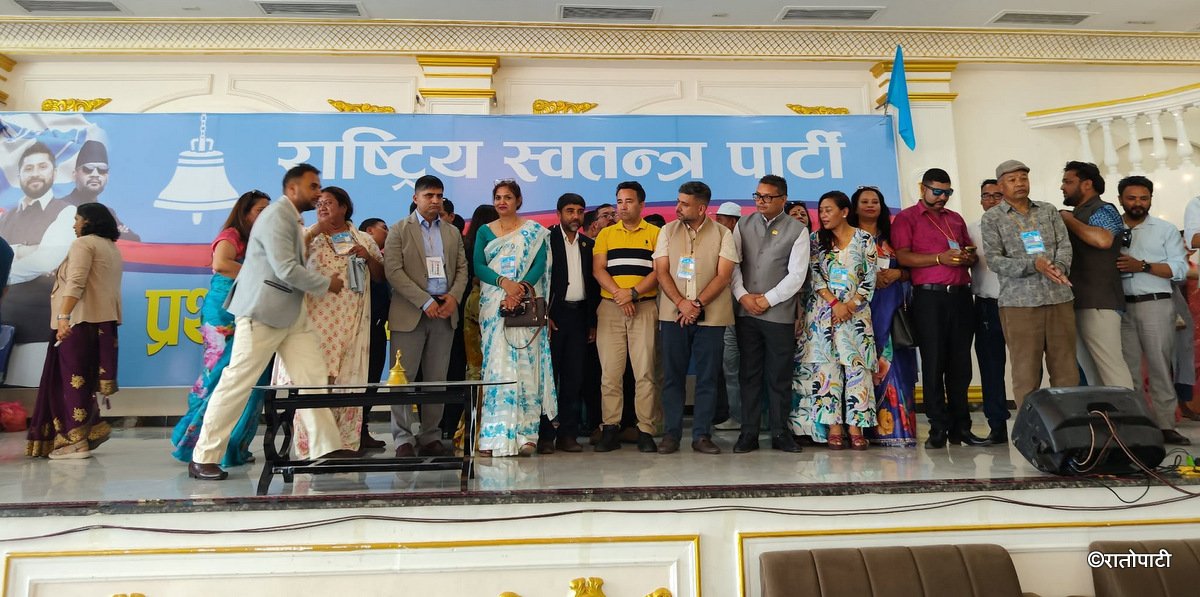
There is a rush within the ruling parties and the largest party in parliament, the Rastriya Swatantra Party (RSP), regarding the ambassador appointment process. RSP leaders have stated that internal discussions are ongoing regarding ambassador appointments.
This specific news has been automatically translated by AI. As a result, there may be some inaccuracies or language errors.