Court Decisions: A Double-Edged Sword for Governance and Development

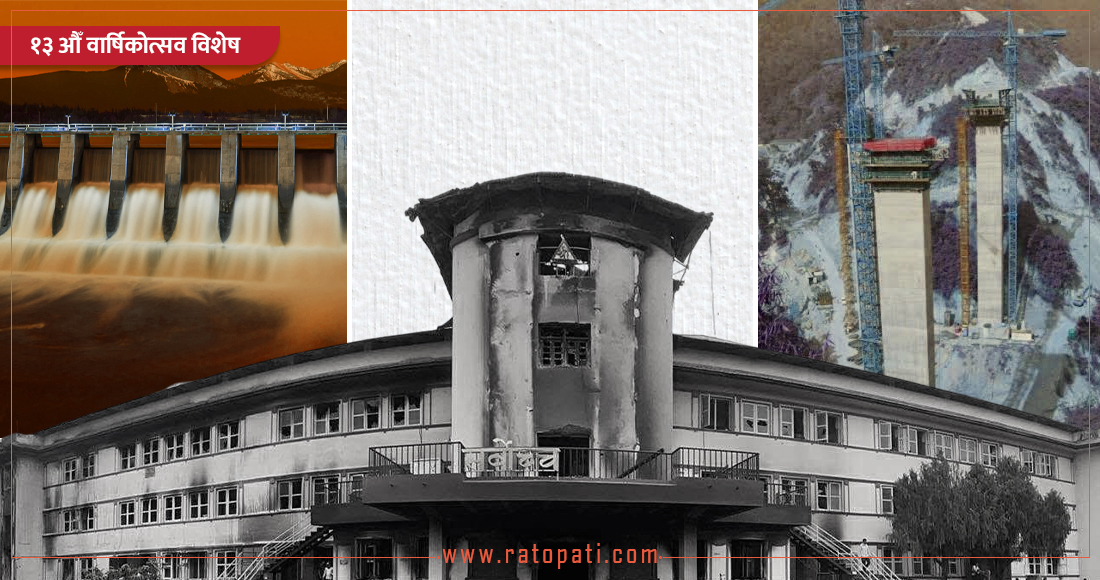
Kathmandu. Nepal's constitution, embracing the principle of separation of powers, has established the judiciary as an independent, impartial, and capable body. To uphold the rule of law, hold other state organs accountable, and accelerate development, the judiciary must play a 'facilitator' role. Examining some key judicial decisions reveals that these rulings have been both facilitators and hindrances to various sectors.
Particularly in controlling corruption, political purification, and protecting public property, judicial decisions have proven to be milestones. However, on the other hand, the debate is equally intense that interim orders and delayed judgments in areas like development and national pride projects sometimes appear to be 'hindrances' to development.
The judiciary appears to be a facilitator for good governance, given its activism in major corruption cases and decisions like the Lalita Niwas land case to reclaim government land. Compensation, damages, and environmental impact issues are frequently brought before the court in cases of road expansion, hydropower projects, etc. On the other hand, when 'interim orders' are issued immediately after a writ is filed, project work gets halted. Development work is affected due to reasons such as procedural delays in the court and lack of prioritization.
Especially during political crises, some decisions by the Supreme Court have saved the life of democracy. The Supreme Court's decision in the cases of the dissolution of parliament twice by then-Prime Minister KP Sharma Oli in 2077 and 2078 BS can be considered a significant aspect. By deeming the dissolution of the House of Representatives unconstitutional, the Supreme Court's decision prevented the arbitrariness of the executive. It established the principle that 'no one is above the constitution' and maintained 'power balance,' a fundamental condition for good governance. Although the appointment of 52 officials to constitutional bodies after the dissolution of parliament became a subject of dispute, the Supreme Court's decision in that matter turned out to be unexpected. Questions were raised towards the judiciary itself as to how a decision linked to the dissolution of parliament could be constitutional when the dissolution was overturned.
The court has intervened to stop some policy-level corruption decisions made by the government. The Supreme Court issued a mandamus to stop the decision made during the tenure of the then KP Sharma Oli government to exchange land of the Giribandhu Tea Estate. The cabinet had decided on April 13, 2078 BS, to allow the exchange of 343 bighas of land belonging to Giribandhu Tea Estate within Province No. 1. Lawyers Om Prakash Aryal, Om Prakash Mishra, and Bhaktaraj Bharti, among others, filed a case in the Supreme Court seeking the cancellation of that decision.
_lIMLW7ml3A.jpg)
The Constitutional Bench of the Supreme Court ruled that the controversial decision to approve the exchange of land was not in accordance with legal provisions such as Section 12 'Ga' of the Land Act, 2021 BS, and appeared immature, thus the decision and all actions taken pursuant to it were quashed by a writ of certiorari. 'The controversial decision of the Council of Ministers of Nepal Government dated April 13, 2078 BS, approving the exchange of 343-19-12 bighas of land to Giribandhu Tea Estate Pvt. Ltd. was found to be not in accordance with legal provisions such as Section 12 'Ga' of the Land Act, 2021 BS, and appeared immature, hence the decision and all actions taken pursuant to it are hereby quashed by a writ of certiorari,' the order stated.
The court has made significant decisions not only on policy-level corruption but also on environmental governance.
Regarding this matter, former Prime Minister Pushpa Kamal Dahal Prachanda stated that an investigation should be conducted, while then-Prime Minister KP Sharma Oli argued against it. Although the Supreme Court delivered a verdict on the land issue, the decision has not yet been implemented, leading lawyer Om Prakash Aryal to file a contempt of court case against the government. However, the government has not implemented the decision. Lawyer Aryal states that the hearing for this case is being delayed. Former Home Minister and lawyer Aryal expressed hope that the court would bring this matter to a swift conclusion. However, he notes that the hearing for this case has been delayed for a long time recently.
The court has made significant decisions not only on policy-level corruption but also on environmental governance. It quashed the law that allowed the construction of commercial structures such as hydropower, hotels, or cable cars within national parks and reserves. This has protected environmental justice and the right of future generations to natural resources. On January 17, 2081 BS, the Constitutional Bench of the Supreme Court quashed the legal provisions that facilitated the construction of development infrastructure within national parks, wildlife reserves, and conservation areas. The amendment made to the National Parks and Wildlife Conservation Act-2029 BS to facilitate the operation of development projects was quashed by the Constitutional Bench.
The decision to quash the added legal provisions was made by the majority of the Constitutional Bench comprising then-Chief Justice Prakashman Singh Raut and Justices Sapana Malla Pradhan, Kumar Regmi, Hari Phuyal, and Manoj Kumar Sharma. While four justices decided to quash the added legal provisions, Justice Hari Phuyal opined that the law should not be quashed in a way that halts development projects. In his dissenting opinion, Phuyal stated that environment and development should be viewed as complementary to each other. On June 30, 2081 BS, the Federal Parliament added two provisions related to the 'National Parks Act' in the Investment Facilitation Bill.
_cvUCBlwFTZ.jpg)
The first added provision (Section 5(a)) allows the government to designate any area within a national park, reserve, or conservation area as a highly sensitive zone by publishing a notice in the gazette. Based on that provision, the government could grant approval for the operation of national pride projects, projects approved by the Investment Board, and nationally prioritized projects in areas other than those designated as highly sensitive. For this, Section 6 (1a) was added. The Supreme Court quashed this provision, which was passed by the parliament with the strong backing of the government in the name of facilitating the investment environment. Senior Advocate Prakashmani Sharma and Advocate Dilraj Khanal, among others, filed writ petitions in the Supreme Court seeking the cancellation of these provisions, arguing that they conflicted with the constitutional right to a clean environment. The writ argued that the right to a clean environment, enshrined as a fundamental right under Article 30 of the Constitution, was violated.
Similarly, the court has ruled that bank directors or chief executive officers who have faced action from the Nepal Rastra Bank are ineligible for reappointment or to remain in their positions. This helps maintain ethics and good governance in the financial sector. The Supreme Court has ruled that chief executive officers (CEOs) and directors of banks and financial institutions that have received 'caution,' 'admonition,' or other regulatory actions from the Nepal Rastra Bank are ineligible to hold their positions.
The Supreme Court has made decisions to remove encroachments on the Bagmati and its tributaries and to protect public land along the riverbanks.
In response to a writ filed by lawyer and Member of Parliament Madhukumar Chaulagain, a joint bench of Justices Dr. Nahkul Subedi and Nripadhwaj Niroula, interpreting the Nepal Rastra Bank Act, 2058 BS, and the Bank and Financial Institutions Act (BAFIA), 2073 BS, issued such an order. The court issued a directive order to the Nepal Rastra Bank to test the eligibility of individuals who have faced regulatory actions, to remove them from their positions if found ineligible, and to effectively monitor the same.
The ruling has legally deemed 'caution' or 'admonition,' which the Nepal Rastra Bank has so far considered as minor departmental actions, as serious. Interpreting Sections 18(1)(d) and 29(5)(d) of BAFIA, the court has clarified that CEOs and directors who have faced action from the regulatory body are ineligible to become directors or chief executive officers of banks and financial institutions for five years.
_4jc3UQBEQa.jpg)
Similarly, the Supreme Court has made decisions to remove encroachments on the Bagmati and its tributaries and to protect public land along the riverbanks. Although there has been some review regarding the additional 20-meter standard added later, the principle of protecting the river's flow area and managing unauthorized settlements is important for good governance. On January 17, 2082 BS, a bench of Supreme Court Justices Sunil Kumar Pokharel, Balkrishna Dhakal, and Nripadhwaj Niroula overturned the decision that had imposed an additional 20-meter standard beyond the Supreme Court's previous ruling.
On December 18, 2080 BS, the Supreme Court issued a mandamus ordering the removal of increasing pollution and encroachment on rivers and streams like the Bagmati and Bishnumati, setting an additional 20-meter standard beyond the old one. Regarding the riverbanks in the Kathmandu Valley, the Council of Ministers had established a standard of up to 20 meters on November 16, 2065 BS.
In terms of good governance, the court has opened the way for the implementation of the long-delayed Citizenship Act, ensuring the right to identity for millions of Nepali citizens. Providing citizens access to state services and facilities is a major aspect of good governance. The Supreme Court's decision has brought relief to thousands of citizens who were unable to become citizens due to the lack of citizenship.
In the Lalita Niwas land case, the Supreme Court issued an order stating that those making policy decisions cannot be exempted from corruption investigations, thereby holding them accountable. In response to a habeas corpus petition filed by Yograj Poudel, who was implicated in the Lalita Niwas land irregularities, a bench of Justices Anil Kumar Sinha and Dr. Kumar Chudale ordered an investigation into policy makers on August 7, 2080 BS.

The order stated, 'The Council of Ministers of the Government of Nepal's decisions dated March 12, 2066 BS, May 14, 2067 BS, August 11, 2067 BS, and October 4, 2069 BS, and those directly involved in certifying and implementing those decisions, higher-level officials or officers who submitted or were involved in the proposal for such decisions at the ministry level (at the upper level of the 'pyramid' as per the investigator's claim) should also be investigated immediately. This order is issued to the respondents to complete the further investigation.' This order has opened the way for investigating former prime ministers who made policy decisions.
Lawyer Bhadraprasad (Swagat) Nepal states that in the current situation, the judiciary appears to be more of a hindrance than a facilitator. He claims that after frequent changes in government, the judiciary has consistently issued orders and rulings in favor of the government. 'There are examples where the court has delayed many cases related to the Government of Nepal for a long time,' said lawyer Nepal. 'For instance, initially, there are obstacles in registering cases from the Supreme Court administration itself. Even if a writ is registered, such cases are kept pending for a long time. In this sense, delivering justice late should also be understood as the judiciary failing in good governance.'
'Regarding policy-level corruption, it is not the judiciary but the current constitution that prevents any leader from being found guilty. In this regard, due to constitutional flaws, those in government are getting away with policy-level corruption,' lawyer Nepal explains. 'For example, in China, if a person in government makes a wrong decision, there is a provision for punishment up to the death penalty. However, in our country, due to the constitution not allowing conviction for policy-level corruption, it appears to be a hindrance to good governance,' says lawyer Nepal.
On the other hand, the executive has been questioning the judiciary, citing delays and interim orders from the judiciary in development and large infrastructure projects as 'hindrances' on the path to prosperity. The issue of whether the judiciary should be a facilitator for the government or proceed according to the law has been a contentious one since the past. Interim orders from the court halt development work and impede revenue collection.
It is observed that once the court issues an interim order, the hearing is delayed for a long time, and the prolonged pendency of cases leads to delays in development work. In most cases where road construction work begins and then reaches the court, interim orders are issued, and the construction work remains stalled for years due to the lack of swift judgments. National pride projects such as the Nijgadh Airport, hydropower transmission lines, and road expansions are stuck in judicial processes for years, causing billions in losses to the state. The private sector complains that interim orders, in the name of balancing development and environment, obstruct the pace of development. There are numerous examples where interim orders benefit one party until the case is decided, only for the writ to be dismissed later.
_bJy3pmI7V6.jpg)
It took 14 months for a public interest environmental case to conclude due to delays in resolving cases with interim orders from the Supreme Court. After the Ministry of Transport Management decided to phase out vehicles older than 20 years, including tempos and microbuses, a writ was filed against this decision in the Supreme Court. On November 29, 2074 BS, a joint bench of then-Supreme Court Justices Tej Bahadur KC and Purushottam Bhandari issued an interim order. With the strength of the interim order, tempos and microbuses continued to cause environmental pollution. After 1 year and 2 months, a bench of Supreme Court Justices Deepak Kumar Karki and Sapana Pradhan Malla dismissed the writ.
Generally, courts issue interim orders in writ petitions when, at first glance, something appears wrong and irreparable damage is likely to occur. Interim orders are issued until the final hearing.
The court has interpreted the right to live with dignity to include the right to be healthy socially and physically, to work in a healthy environment, and to breathe clean air. However, due to the interim order of the Supreme Court, citizens were deprived of their right to live in a clean environment.
In the dispute over casino royalties, casinos operated for 10 years based on an interim order from the Supreme Court, directly impacting billions in revenue that the state should have collected. A case related to casino revenue disputes was filed in the Supreme Court on October 10, 2070 BS. Eleven years later, on February 6, 2081 BS, a constitutional bench comprising Chief Justice Prakashman Singh Raut and Justices Sapana Pradhan Malla, Hari Prasad Phuyal, Manoj Kumar Sharma, and Nahkul Subedi delivered the verdict. However, even one year after the verdict, the full text of the decision has not yet been released. Casinos have been evading tax payments and compliance with regulations by citing 'interim orders' from the court.
Disputes regarding various amounts to be collected from casinos, operations without renewal, and operations in four locations despite registration in one place were pending in the Supreme Court for a long time. Due to the non-release of the full text of the verdict, the state has not been able to collect billions in revenue from the casino sector.
Generally, courts issue interim orders in writ petitions when, at first glance, something appears wrong and irreparable damage is likely to occur. Interim orders are issued until the final hearing.
Former Inspector General of Nepal Police Om Bikram Rana, convicted in the Sudan mission corruption case, filed a writ in the Supreme Court on August 4, 2081 BS, stating that his pension had been stopped. Hearing this writ, on November 30, 2081 BS, a joint bench of Justices Kumar Chudale and Abdul Aziz Musalman issued an interim order not to implement the letter from the Commission for the Investigation of Abuse of Authority (CIAA) to stop Rana's pension. With the issuance of the interim order, Rana is currently receiving his pension. Although a year has passed since the interim order was issued, the final hearing of Rana's case has not yet taken place.
After it was determined that there was a scam in the procurement agreement for the police contingent going to the Sudan peacekeeping mission, the CIAA had written to the Pension Management Office directing them not to provide pension to Rana. Following this, his pension was stopped. The hearing for this case in the Supreme Court is scheduled for August 10, 2082 BS.
The backlog of cases in the court and the long time taken for judgments pose a challenge to both good governance and prosperity. The risk of capital flight for industrialists and businessmen remains due to the unresolved commercial disputes in a timely manner.
Good governance also means quick and transparent service delivery, but the hassle of judicial processes makes ordinary citizens disillusioned with the state itself.
As the work of connecting electricity generated from hydropower plants to the national transmission line progressed, eight writs were filed against it in the Supreme Court. The interim orders issued in these writs led to prolonged uncertainty in the transmission line work. The 'Burtibang-Paundi Amrai-Tamghas-Syangja-Gorusinghe 123 KV Transmission Line Project' was initiated in 2076 BS. Eight cases, including in various district courts and the Supreme Court, were filed against it. When locals filed a writ petition in the Supreme Court in 2081 BS demanding that transmission lines not be built over their houses, an interim order was issued. It took the court nearly a year and a half to decide on this writ. By then, all project work had come to a standstill.
Judicial decisions are supposed to be 'facilitators' of good governance, but procedural delays and lack of prioritization have made many decisions 'hindrances' to prosperity. A mechanism to expedite the resolution of cases involving national pride projects and billions in investment has become essential.
The aforementioned decisions are just a few examples. There are many such decisions that have served as both facilitators and hindrances to good governance and prosperity.
The judiciary must consider not only the letter of the law but also the country's economic needs and the dream of prosperity. Good governance is not just about punishing criminals; it is also about removing obstacles to development. As long as the judiciary cannot strike a golden balance between the rule of law and the pace of development, this debate between 'facilitator' and 'hindrance' will not end.
This specific news has been automatically translated by AI. As a result, there may be some inaccuracies or language errors.