US Launches Military Strikes on Iran After Helicopter Incident
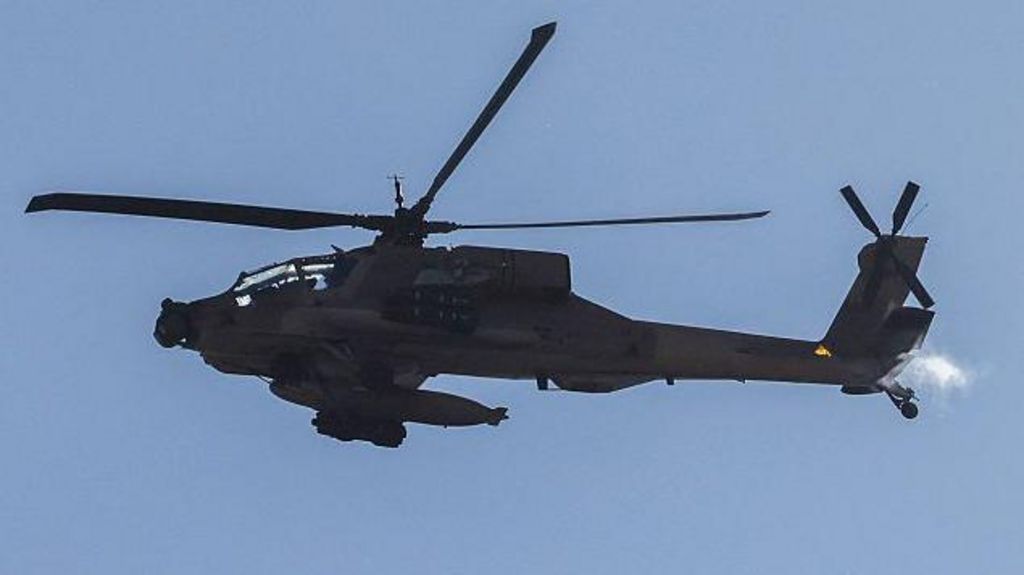
Washington. US President Donald Trump has announced military strikes on Iran, accusing it of shooting down one of its helicopters in the Strait of Hormuz. According to the US Central Command (CENTCOM), the US military began attacks on various Iranian targets on Tuesday at 5 PM EST.
CENTCOM issued a statement saying this military action was a proportionate step against Iran's unprovoked aggressive behavior. Following the attacks, large explosions were heard in the coastal areas of the Persian Gulf and the Strait of Hormuz.
The two crew members aboard the US Apache helicopter, which was targeted by Iran's drone attack, have been safely rescued. It has been publicly confirmed that advanced maritime drones were used for the first time in this type of rescue operation in US military history.
President Trump wrote on social media platform Truth Social that both pilots are safe and sound. He added, 'Nevertheless, the United States had to respond appropriately to this attack.'
According to US officials, although Iran attacked the helicopter with a drone, it is not yet clear whether it was intentional or not. On the other hand, while Iranian media confirmed the incident, the semi-official Mehr news agency claimed that Iran did not take responsibility for shooting down the helicopter.
According to the US news website Axios, the new US attack is specifically focused on Iran's defense and radar systems. Iranian state-controlled media reported hearing large explosions in coastal areas of the Persian Gulf, including Bandar Abbas, Qeshm, and Sirik.
In a phone interview with ABC News, Trump blamed Iran entirely for the attack. He said, 'This is a response to what they did to our helicopter last night, and I think the response had to be very strong and powerful, which it is now.'
In Washington, US House Speaker Mike Johnson revealed that he was present in the room when Trump decided to attack Iran. Speaking on behalf of the Republican Party, he said the move was regrettable but necessary.
Immediately after the attack, Iran's Foreign Minister Abbas Araghchi issued a strong warning to the US. He made it clear that Iran would not refrain from responding to any attack or threat. Writing on social media X, he said, 'Even after being defeated on the battlefield, the US tried to test our resolve. If you want to stay safe, leave our region.'
Earlier, Araghchi had mentioned that foreign forces near Iran's borders are always at risk due to their own human errors, accidents, or crossfire, and the best way to reduce the risk is for them to leave. Just minutes before Trump's statement on Tuesday, Iran's chief negotiator Mohammad Bagher Ghalibaf, in peace talks with Washington, also reacted via social media. He wrote, 'We prefer the language of diplomacy, but we can also speak other languages more fluently. If you break your commitment, we will descend into the language we speak best. You will ride the horse you have saddled.'
This military tension began at a time when the Israeli army was carrying out widespread attacks in southern Lebanon on Tuesday. Tehran had already warned that if Israel attacked southern Lebanon, it would launch another round of retaliatory attacks in response. After direct shelling between Israel and Iran for the first time since the April ceasefire last weekend, both countries had stopped their attacks.
Trump had publicly urged both countries to immediately stop 'shooting' to avoid affecting the ongoing talks between Washington and Tehran to end the conflict in the region. He said that although both Israel and Iran were in favor of an immediate ceasefire, ignorance or foolishness could be an obstacle to peace. He claimed while talking to reporters that they were in the final stages of a very good deal, which would be completed within two or three days and the Strait of Hormuz would open immediately.
Meanwhile, CENTCOM released details on Monday evening about the rescue of the two members of the Apache helicopter. The rescue operation was led by the US Navy Central Command and the 82nd Airborne Division, with support from units of the US Air Force and Navy, and the US Fifth Fleet's Task Force 59. A police spokesperson informed that an unmanned maritime drone from Task Force 59, based in Bahrain, rescued the soldiers from the water and took them to another safe location, from where they were taken to a safe destination by helicopter.
This specific news has been automatically translated by AI. As a result, there may be some inaccuracies or language errors.