Nepal Faces Deep-Rooted Challenges Hindering Governance and Prosperity

Nepal's political history presents a peculiar paradox. We ended autocratic Rana rule, fought against Panchayat, sacrificed for democracy, bid farewell to monarchy, dreamt of federalism, and finally created a progressive constitution through a constituent assembly. After every transition, a new wave of hope emerges, and each time, that wave dissipates before reaching the shore.
The question arises: why does our quest for good governance repeatedly remain incomplete? Why does every new government become a prisoner of the old mold? Why is our dream of prosperity always reserved for tomorrow, never becoming today's reality?
Due to the lack of desired good governance and prosperity even after repeated changes, Gen Z youth emerged as rebels, and the country turned over a new leaf once again. Not just Gen Z, but the general public also appeared in favor of change, and the elections of February 21, 2082, sidelined all parties with long political histories, entrusting the reins of governance to new parties and new faces.
After the formation of the current government, the preface to the 'Nepal's Current Economic Situation Paper' issued in Baishakh 2083 begins as follows: 'Although Nepal is rich in resources, potential, and goodwill, it has not been able to achieve prosperity due to a crisis of thought, resolve, and governance integrity. Nepal has passed through many phases of political revolution, but the path of meaningful transformation of the overall politico-economic structure has remained incomplete.'
'Lack of thought, resolve, and governance integrity' is an obstacle to achieving good governance. This is why the hope generated by every change has been dashed.
A character strongly described in the preface to the situation paper highlights the weakness of our governance style:
'The root of Nepal's politico-economic crisis lies in a distorted incentive structure. Expensive elections, opaque fundraising, and a burdensome party structure had transformed politics from a service into a profession and an investment medium. Consequently, policy corruption, deal-making, and crony capitalism flourished. Instead of economic growth through entrepreneurship, competition, and innovation, rent-seeking through licenses, contracts, and regulation became a characteristic of state-market relations. This discouraged capable entrepreneurs and new entrants, orienting the economy towards an access-based structure rather than value creation.'
Despite the weaknesses, there has been progress in the last decade. While the installed capacity of electricity was only 829 megawatts a decade ago, it has now increased to 4,340 megawatts. As of 2072, there were 11,798 km of blacktopped roads, and by 2082, the federal government alone had built 20,202 km. Provinces and local levels have increased investment in physical infrastructure. Visible improvements have been made in urban infrastructure across the country in the last ten years.
The Human Development Index has shown continuous improvement. In the last decade, the literacy rate has increased from 58 percent to 76.3 percent. Poverty has decreased. Despite natural disasters or economic crises every three to four years, the country's overall macroeconomic situation has not deteriorated to an unmanageable extent. Economic growth is certainly slow, but considering the political instability, 'distorted incentive structures,' lack of strategic infrastructure, and politicization of public institutions, the achieved economic growth cannot be considered insignificant.
The list of positive changes and achievements could be longer. But the reality is that the general public was not satisfied with these achievements. Some argued that such progress would have happened with the passage of time even without a government. Others compared it to the progress made by countries that were at a similar level in the past and felt this progress was not something to be proud of. Some claimed that the country was failing every day by comparing current import data with that of rice, vegetables, etc., from seventy to eighty years ago.
Weak public service delivery, corruption at all levels from top to bottom, crony capitalism, unequal distribution of opportunities, politicization of public institutions, and overall unaccountable governance strengthened the arguments of dissatisfaction, resulting in the Gen Z rebellion, awakened by demands for good governance and corruption control, gaining widespread public support.
In this context, this article attempts to identify the fundamental obstacles that are preventing Nepal from moving forward on the path of good governance and prosperity. This is a purely technical analysis, with no political perspective.
One: Crisis of Political Culture, the Vicious Cycle of Individualism and Institutional Weakness
A dangerous trend has been deeply rooted in Nepal's established political parties for decades: the tendency to prioritize individuals over institutions. Political parties are defined by personalities, not ideologies. Internal democracy within parties is weak or non-existent.
Party general conventions are not forums for genuine policy debates; they are merely formalities for crowning leadership. Young leadership cannot emerge because the culture of seniority suppresses new thinking. As a result, the public sees the same faces, the same promises, the same failures.
The consequence of this trend is extremely fatal. When institutions start working for individuals, the autonomy and effectiveness of the institution are destroyed.
The individualistic character of political parties has also affected the autonomy, independence, and capacity of constitutional bodies. The politics of appointment has eroded the credibility of constitutional bodies in the eyes of the general public. When the position of the chief commissioner of a constitutional body is determined through negotiations for power-sharing, that institution's independence remains only on paper.
Not only constitutional bodies, but also important bodies regulating economic and social activities, public health, research, educational institutions, diplomatic missions, etc., have seen the culture of party quotas and deal-making flourish in leadership selection.
The operating expenses of political parties and the costs of election campaigning have increased with each election. The culture of wanting to retain leadership by accumulating power within political parties has led to the development of factions and sub-factions within each party. Power in such factions began to be nourished by 'finance' rather than ideology. For this, the transparent source of donations or the party's legal fund was never sufficient. Consequently, top leadership developed opaque sources under their control, for which collusion with ill-intentioned business houses became a common political trend. Not only that, public positions of importance became saleable commodities.
These misdeeds could not be hidden in an open society. However, top leadership stopped listening to public criticism and commentary. Instead, in some cases, counter-attack groups under various names and organized use of social media began to be employed to neutralize public criticism. Counter-attack groups and social media were used to personally defame effective public opinion makers.
In countries where democracy has delivered results, internal democracy within political parties is strong. Political leaders listen to public voices and correct wrong decisions or actions. Constitutional, regulatory, and important public bodies are appointed based on specific standards, not political quotas or deals, and such officials are not removed arbitrarily.
In this regard, it is necessary to set minimum standards for internal democracy in political parties through law in the coming days. It would be appropriate to establish institutional mechanisms for idea generation within parties. Similarly, current laws on transparency of operating expenses and election expenses for political parties are insufficient. Improvements are needed in this area. For good governance and prosperity, the right leadership must be selected for public institutions.
Laws themselves provide standards and testing methods for appointments to constitutional and regulatory bodies, universities, public institutions, and diplomatic missions. However, these are not used, or the method used is circumvented, and the leadership selects candidates who are willing to fulfill their desires or serve their interests. Therefore, this situation cannot be rectified by legal or procedural reforms alone. Its improvement can only be achieved through the improvement of leadership conduct.
Two: The Dual Crisis of Bureaucracy, Lack of Capacity, and Absence of Accountability
Nepal's civil service is simultaneously afflicted by two opposing problems: on one hand, the number of capable employees is insufficient, and on the other hand, the accountability structure is so weak that no action is taken even for non-performance.
This problem has become more complex after transitioning to a federal structure. The challenge of providing skilled administrative manpower to seven provinces and 753 local governments is still incomplete. Most local levels lack employees with the necessary expertise, neither engineers, nor auditors, nor urban planners. As a result, budgets cannot be spent, plans remain only on paper, and citizens do not receive services.
However, a deeper problem than capacity is accountability. When promotions, transfers, and appointments of civil servants are determined by political quota games, capable and honest employees become discouraged. Those with 'connections' occupy desirable positions in the capital, while those without 'connections' face punishment in remote districts. This system rewards political proximity, not competence.
If any employee in ministries, departments, or central offices in the federal capital needs to be punished, they are transferred to remote areas. Where responsive, citizen-oriented, and judicious administration is needed, a punished employee arrives, so how can there be good governance, and how can citizens feel that the government is for them?
While the Public Service Commission ensures entry criteria through competitive exams, the evaluation of performance throughout the service period is largely a formality. Annual performance evaluation reports are not taken seriously, and an unwritten rule of 'don't say anything inconvenient' prevails over fair evaluation.
Only the determination of measurable/objective indicators for the work done by employees, performance evaluation based on such measurable indicators, and a performance-based promotion system can place capable employees in the right positions. The provision for appointing external experts in special technical positions is appropriate, and a long-term investment strategy in human resource development is essential for the capacity building of local governments.
Three: Control is Not at the Structural Root of Corruption; the System Itself is Guilty
When discussing corruption in Nepal, it is often limited to the question of individual morality. But corruption is fundamentally a systemic problem. When rules are complex, processes are opaque, and privileges are unlimited, corruption becomes a natural consequence.
All three conditions exist in Nepal. How many offices does an average citizen have to visit, how many documents must be prepared to obtain a simple business permit? Forest office, district administration, municipality, industry department – waiting for signatures at every door, and the price of a signature. This system is an invitation to corruption, not an exception.
Public procurement processes are another major center of corruption. Government accounts themselves show that the annual capital expenditure of governments at all levels is unsatisfactory. A significant portion of the budget is spent only in the last week of Asar (mid-July). How does this tradition of 'Asare development' ensure the quality of work? The answer is clear: it doesn't. The goal becomes merely showing expenditure, not quality.
The most worrying aspect in the area of corruption control is impunity in high-level corruption. Small-time officials are punished, but big corrupt individuals escape under political protection. In such a situation, public trust in institutions erodes, and the social psychology that 'everyone does it' normalizes corruption.
Nepal's position in Transparency International's Corruption Perception Index has consistently been dismal. Only after being placed on the FATF's grey list were we forced to admit the weaknesses of our financial system. This is a reform driven by external pressure, not internal commitment, and this is a sign of our weakness.
Radical simplification of service delivery processes (one-stop service centers), reduction of discretion through digitalization, effective implementation of anti-money laundering laws, and transparency of asset declarations of high-ranking officials will certainly help reduce corruption.
Four: Dilemma of Economic Policy: Neither Socialism nor Market, a Stalled Economy
Nepal's constitution speaks of a 'socialist-oriented economy,' but in practice, neither the state plays an active role in production nor has it given full freedom to the market. This in-between state, neither here nor there, is the root of Nepal's economic stagnation.
Let's look at the condition of state-owned enterprises. Nepal Airlines Corporation, Udayapur Cement, Hetauda Cement – the history of these organizations is a history of losses. The state invests in them but cannot run them with commercial efficiency. Political appointments replace competent management. But abolishing or privatizing them also requires political courage, which has not been seen so far.
On the other hand, the private sector, due to the lack of a credible policy environment, has shown more interest in speculation and rent-seeking than in productive investment. Land prices are sky-high, but factories are not opening. This is a clear example of market distortion.
Nepal's trade deficit is increasing every year. Imports increase, exports shrink. Remittance-dependent consumption sustains the economy. This is not our strength; it is our weakness. When the country's youth go to the Gulf and Malaysia to sell their labor, who will run the factories and undertake enterprises within the country?
The deadline for graduating from the Least Developed Country (LDC) status is approaching. This should be a matter of pride for us. But what is the reality? Our export competitiveness has not increased, our Human Development Index has improved but not sufficiently, and our economic risk index is still high. After graduation, exports of some specific goods may be affected due to tariffs on exports to certain destinations.
Nepal's industrial policy has carried the slogan of an investment-friendly environment on paper for decades, but in reality, both the process of starting and closing businesses are cumbersome. Nepal's position in the index published by the World Bank has never been encouraging. The 'fast track' route of the Investment Board also remained limited to minutes for years.
A clear ideological decision is needed in economic policy, a policy that creates opportunities for all and provides a level playing field to utilize available economic opportunities. For this, a commitment to move towards an 'inclusive market economy' framework must be clear. For such an economy, government policies and investments must help all producers access markets and develop the capacity to be competitive. Strategic investment is needed in domestic production, export promotion, and agricultural modernization.
Five: Social Division and the Challenge of Inclusivity: Diversity Must Be a Strength, Not a Weakness
Nepal is an extremely diverse society in terms of ethnicity, language, culture, religion, and geographical settlement. This diversity is our asset. However, decades of unequal development and social discrimination have created a risk of this diversity turning into division.
Inequality in access to state resources and opportunities based on ethnicity and gender is still a reality. There is a mandatory provision for women's representation in the federal parliament and provincial assemblies, but it is difficult to say whether this representation is translating into real decision-making power. Women representatives added through the 'closed list' in the electoral system are often beholden to the wishes of party leadership.
The rights declared by the constitution for Dalits, especially the guarantee of ending untouchability and representation, have not yet been fully implemented. Questions of self-governance and cultural rights for indigenous communities are still controversial in political dialogue.
The Madhesh issue, which led to a blockade and protests immediately after the promulgation of the 2072 constitution, has not been fully resolved. Seven amendments have been made to the constitution, but it is still difficult to say that the Madhesi community has a sense of full ownership. This incomplete social contract continuously challenges the country's unity.
A further cause for concern is the widening gap of economic inequality. The unequal distribution of development between cities and villages, mountains and plains, and development regions remains a constant source of social tension. When young people from villages go to cities and young people from cities go abroad, the social fabric itself begins to unravel.
Policy commitment alone is not enough for inclusive development. Economic policy requires regional balance, equal access to education and health, and concrete programs for social justice that are guaranteed by long-term institutional mechanisms.
Six: Geopolitical Complexity: The Art of Nepali Balance Between India and China
Nepal's foreign policy is a complex puzzle. Balancing between two giant neighbors, who have a profound impact on Nepal's economic, security, and political dimensions, while safeguarding national interests is not an easy task.
India is Nepal's largest trading partner, its main source of energy and fuel, and also a land of employment for millions of Nepalis. This is an interdependent reality. However, examples of India's interference in Nepal's internal politics in the past have also secured their place in safe memory.
Nepal joined China's 'Belt and Road' initiative, but concrete implementation has not yet begun. The Kerung-Kathmandu railway project remains a dream. The trade balance with China is unfavorable for Nepal. Attracting Chinese investment and maintaining diplomatic balance must be achieved simultaneously.
The controversy surrounding the Millennium Challenge Corporation (MCC) compact aid must be analyzed in this context. The project, which was stalled in parliament for five years, and the geopolitical debate surrounding it, expose the clarity of Nepal's foreign policy. It is our misfortune that even when accepting development aid, we are plagued by internal politics.
The slogan of a 'balanced foreign policy' is not enough. Nepal must determine its foreign policy priorities based on specific national interests, leveraging its comparative advantages – geography, water resources, tourism, and human capital.
Seven: Crisis of Human Capital in Education and Health
The long-term prosperity of any nation depends on the quality of its human capital. And it is in this sector that Nepal needs the most investment.
The condition of public schools is worrying. The expansion of private profit-making schools and the neglect of public schools are creating a class division. Those with money send their children to private schools, while those without are forced to be content with substandard public education. This mocks the constitutional guarantee of equal opportunity and hinders the efficiency of an inclusive market economy.
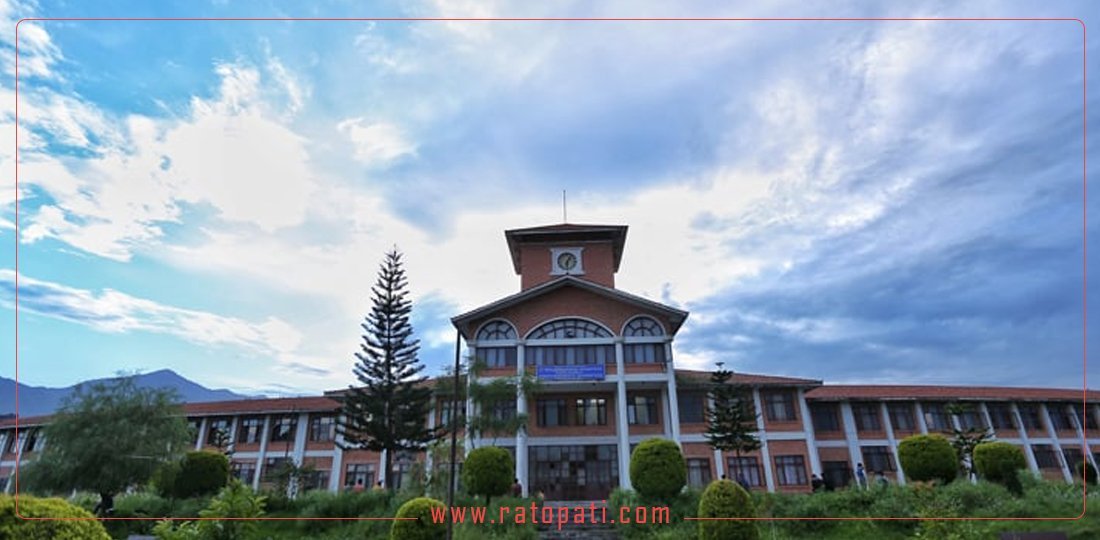
Higher education requires serious consideration. Universities in Nepal have not been centers of research and innovation. Even a large institution like Tribhuvan University is not ranked high among world universities. Nepal's best students go to study in foreign universities, and most do not return. This brain drain is a waste of our human capital.
There is a similar dual standard in the health sector. Government hospitals face overcrowding, staff shortages, and a lack of essential medicines. Private hospitals are beyond the reach of ordinary people. The gap between healthcare in Kathmandu and healthcare in remote areas is insulting.
The COVID-19 pandemic further exposed these weaknesses. The lesson it taught us, that the country cannot prosper without adequate investment in the health system, has not yet been fully internalized.
The solution is: a complete overhaul of public schools and hospitals, a constitutional guarantee of spending a minimum percentage of GDP on education and health, and the creation of an attractive environment for top technical professionals to work in the country to prevent brain drain.
Eight: Environment and Climate Change, a Neglected Crisis
Nepal is among the countries most at risk from climate change, yet its contribution to climate change is minimal. This is a glaring example of 'climate injustice.'
Glaciers are melting, weakening our hydropower production capacity and the long-term basis for irrigation. The risks of floods, landslides, and droughts are increasing. Our agricultural system, still dependent on the monsoon, is not in a condition to withstand the shocks of climate change.
However, climate change is always pushed to the back of our political agenda. Environmental protection is always at the bottom of the budget allocation priority list. Nepal has been weak in accessing climate funds, transitioning to a green economy, and implementing Sustainable Development Goals compared to its potential.
Hydropower is one of Nepal's greatest comparative advantages. A country with a hydropower potential of over 82,000 megawatts is still dependent on India for electricity. This is a symbol of our policy weakness. The dream of increasing domestic consumption, exporting electricity to India and Bangladesh, and becoming South Asia's 'clean energy hub' has not yet been fully realized.
Nine: The Incomplete Project of Federalism: Structure Built, Spirit Not Developed
With the constitution of 2072, Nepal moved to a federal structure. This was a historic change, moving from centralized governance to decentralized governance with multi-tiered authority. However, the success of federalism depends not only on the construction of structures but also on financial autonomy and administrative capacity.
Local levels received the authority to collect taxes, plan, and implement, but they did not get the necessary manpower and technology for it. Financial transfer formulas were implemented, but they have not been improved in a timely manner. Conflicts of authority between the federal, provincial, and local levels have not yet been resolved. If local and provincial governments need to acquire land to carry out their development work, they have to appeal to the federal government.
Some local governments have made significant innovations. Pokhara's parking management, Dharan's public health program, and the digital service systems of some rural municipalities. These are positive signs. But the institutional mechanisms to scale these up are still weak.
Ten: Media and Information Environment, Crisis of the Fourth Pillar of Democracy
Independent and accountable media is an indispensable foundation of good governance. Media freedom is constitutionally protected in Nepal, and the quantitative expansion of media is significant. However, the state of qualitative journalism is worrying.
Most media outlets are not financially self-sufficient; they depend on business houses or political powers for advertising. Such dependence curtails editorial independence. The culture of 'paid news,' where the line between news and advertising is blurred, infringes upon the reader's right to receive factual information.
The spread of social media has added a new challenge of 'fake news.' The planned dissemination of misleading information for political purposes is poisoning democratic discourse. Citizens' media literacy has not developed.
Conclusion: The Foundation of Hope
This analysis is not intended to generate despair. It seeks to dissect the reality of the problems because without the correct identification of the problem, the journey towards a solution cannot begin.
Nepal has the potential for good governance and prosperity. Our geography, our water resources, our tourism potential, and most importantly, the energy and talent of our youth provide grounds for hope.
However, for this potential to become a reality, certain fundamental conditions must be met. Political leadership must rise above personal and party interests and prioritize national interests. Civil society must play a more active role in monitoring. The media must remain dedicated to its duty of seeking truth and holding power accountable. And most importantly, Nepali citizens themselves must assume the role of active and conscious citizens.
History has repeatedly confirmed one truth: change does not come only from the top. It is not possible without grassroots awakening, organization, and demand. The countless ordinary citizens of Nepal – teachers, doctors, farmers, entrepreneurs, journalists, and youth who are honestly doing their jobs – are sustaining this country through their contributions.
Finally, a call to action: demanding good governance and prosperity is not just criticizing the government; it is the duty of a citizen. And fulfilling that duty, all of us, in this forum, in this discussion, and beyond in our daily lives, is the greatest national need of today.
Nepal will be built, but it will be built not by chance, but by resolve.
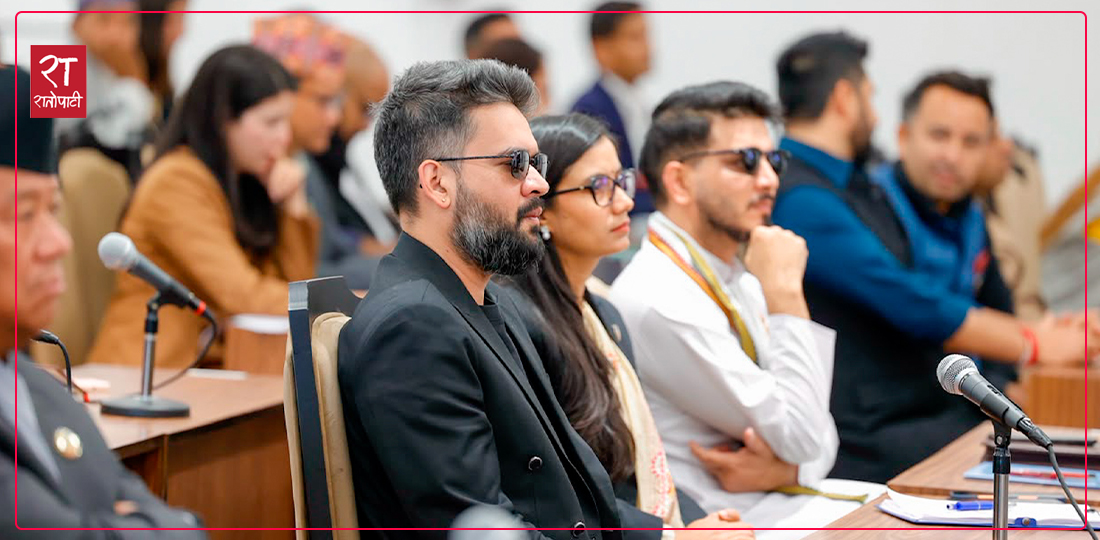
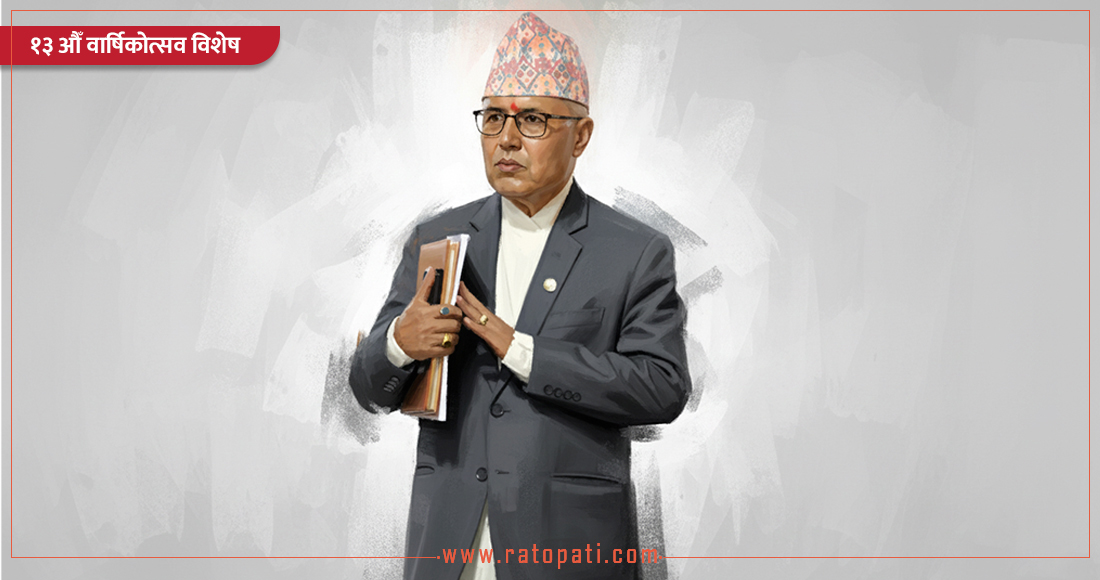
(Concept paper presented by former Finance Minister Khanal at the inter-dialogue program organized by Ratopati on the occasion of the 13th anniversary)
This specific news has been automatically translated by AI. As a result, there may be some inaccuracies or language errors.