Devotees Celebrate Sita Jayanti Across Nepal and India

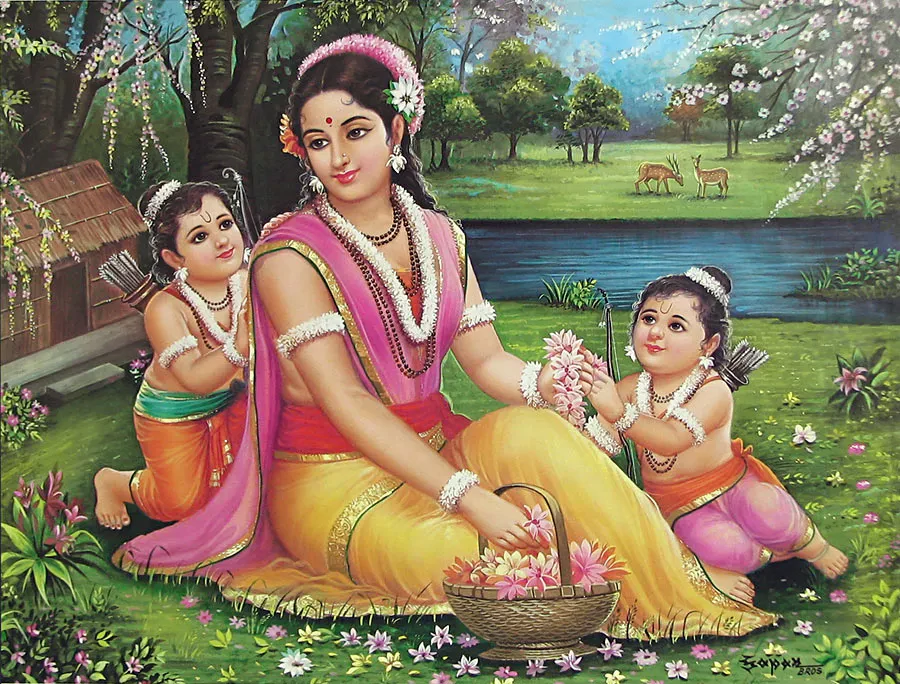
Sita Jayanti is celebrated every year on the ninth day of the bright fortnight of Baisakh. This day is also known as 'Pawan Navami'. Followers of the Vedic Sanatan Hindu religion celebrate Sita Jayanti, honoring her as the central figure of the Ramayana and a focal point of Hindu faith.
Born under the Pushya Nakshatra, Sita is a great female icon of Sanatan philosophy whose name is revered eternally. The story of Sita's origin is described in detail in the Padma Purana and Bhavishya Purana (Sita Navami Vrata Mahatmya).
In the Sanskrit dictionary, 'Sita' means a furrow made in the ground while plowing, or a line formed on the earth by a plowshare. Different stories regarding Sita's birth are found in various Puranas, including the Valmiki Ramayana, Ananda Ramayana, Adbhuta Ramayana, Adhyatma Ramayana, Kamba Ramayana (Tamil Ramayana), and Devi Bhagavata.
According to legends, the Ramayana, and the Devi Bhagavata Purana, when Ravana married Mandodari, the daughter of Vishwakarma (Maya), he heard that his first child would cause the destruction of his lineage. Consequently, he took the newborn girl to Janakpur and buried her.
According to the Adbhuta Ramayana, Ravana used to collect blood as taxes from sages. One sage would collect milk dripping from the tips of Kusha grass into a pot. Ravana stole that pot and filled his own vessel with the milk. Mandodari, intending to commit suicide, drank the milk mixed with blood and became pregnant. She buried the fetus underground. Later, King Janaka discovered Sita while plowing the field.
According to the Ananda Ramayana, a Brahmin in the land of Mithila found a girl in a box and gave her to King Janaka. Ravana himself had buried that box in Mithila. While being buried, Sita cursed Ravana, saying, 'I will return to Lanka and destroy you and your entire lineage.'
In the Treta Yuga, Rama, the eldest son of King Dasharatha of Ayodhya, broke the Shiva bow that King Janaka of Mithila had kept for his daughter Sita's Swayamvara. After breaking the bow, the marriage of Rama and Sita took place on the fifth day of the bright fortnight of Mangsir.
Raised in luxury, Sita endured exile with her husband, faced hardships, and even lived under Ravana's captivity in Lanka. Sita's life is marked by exemplary ups and downs; every decision she made taught humanity wisdom and endurance.
Today, joint worship of Sita and Rama is performed at the Janaki Temple. On this day, people observe fasts, listen to stories, recite religious texts, perform Aarti, and remember truth and dignity. Additionally, local delicacies are prepared and consumed as Prasad. Sita's life is considered a symbol of an ideal woman, devotion, patience, and sacrifice, inspiring faithful people toward a moral life.
On the occasion of Sita Jayanti, a large number of devotees travel to Janakpur. There is a significant presence of pilgrims from neighboring India and other countries. This contributes to the promotion of tourism and increases activity in the transportation and hotel sectors.
This specific news has been automatically translated by AI. As a result, there may be some inaccuracies or language errors.