Home Minister Sudan Gurung Faces Ethical and Legal Scrutiny Over Asset Disclosures


Kathmandu. Just two months into his political career, Home Minister Sudan Gurung is currently surrounded by serious ethical and legal questions. The focal point of national politics and social media is currently one issue: Minister Gurung's assets, share investments, and his relationship with businessmen currently under investigation for money laundering related to those shares.
Questions regarding his rapid rise to the Home Minister's chair, bypassing several senior leaders of the Rastriya Swatantra Party (RSP), existed from the beginning. However, these questions did not gain traction as they were not raised within his party. While these were political rather than ethical or legal, they remained persistent.
However, the asset details made public shortly after the government's formation added another legal question: holding land exceeding the legal ceiling. In his asset declaration, he only disclosed over 221 ropanis of land in his grandfather's name, whereas the land ceiling act, in effect since 2020 BS, prohibits an individual from owning more than 75 ropanis. Despite this legal question, he stood firm, claiming the land belonged to his grandfather and had not been partitioned among his father and uncles.
The latest incident, however, has proven costly for him, placing him in a difficult political position. Evidence emerged that Home Minister Gurung purchased 25,000 shares each in two companies that recently received licenses. These companies were established at the initiation of individuals accused of money laundering, such as Deepak Bhatta and the Jagadamba Group, and reports indicate that the group's companies hold the primary investment in these firms.
_Uf2IeRPraX.jpg)
Minister Gurung has admitted that these published details are true. In a lengthy explanation on Monday, he stated that he included these in the 'shares traded in the securities market' section of his asset declaration. He claimed, 'I have clearly mentioned an investment of over 20 million in shares traded in the securities market in my asset declaration, which anyone can view on the Cabinet's website. The investment in Star Micro Insurance and Liberty Micro is also included within this group. This is not a matter of hiding, but of classification.'
Ethical Questions Hidden Within Legal Jurisdiction
In his explanation, Gurung asserted that 'buying shares is not a crime, and buying shares does not make one a partner.' While this argument may hold up under a basic legal lens, political legitimacy requires more than just legal validity; the ethical foundation is equally important, and he appears to have failed here. Gurung has invested in Liberty Micro Life Insurance and Star Micro Insurance, companies with direct involvement from individuals like Deepak Bhatta, who face serious money laundering allegations.
While Gurung's lengthy explanation on social media was seen as a strong defense, from the perspective of political analysts, his response appears selective.
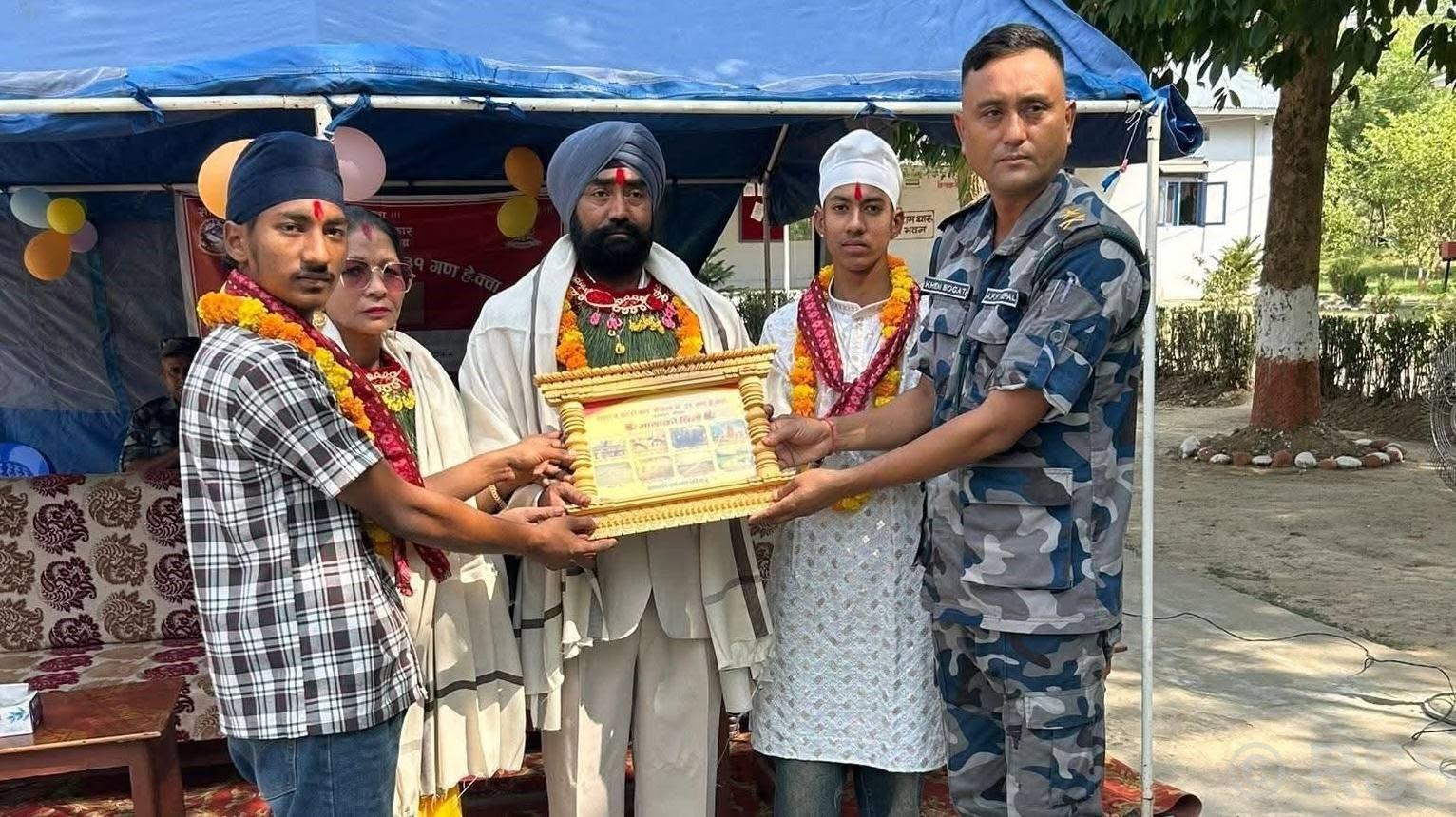
On one hand, a photo of the Barbara Foundation, with which Gurung is associated, honoring Deepak Bhatta has surfaced, while on the other, the organization 'Hami Nepal,' operated by Gurung, lists Jagadamba Group as a supporting organization. These two factors make it impossible to claim there was no connection between them in the past. Minister Gurung has not spoken on either of these issues.
Lies or Technical Errors in Asset Declaration?
Gurung has admitted to holding shares worth 5 million in two micro-insurance companies. He claims these are included in the 20 million worth of shares declared. However, there is a major technical falsehood in his claim. The reality is that neither of these companies is currently traded on the secondary market. Only after a company issues an Initial Public Offering (IPO) to the public does it become eligible for regular trading on the Nepal Stock Exchange (NEPSE).

There are two types of shares in any company: promoter shares and ordinary shares. Promoter shares are not traded daily like ordinary shares. If someone needs to sell promoter shares, they must do so through NEPSE's 'Over the Counter' (OTC) market. Therefore, the claim that these shares were publicly disclosed in a lump sum does not seem to hold up.
Discrepancies in the Promissory Note
To prove the source of his investment, Gurung released a promissory note for 5 million, which he claims was registered at Ward No. 5 of Kathmandu Metropolitan City. Ward Chairman Birendra Prajapati has confirmed the authenticity of the note. However, the note itself is under suspicion. Legal experts argue that it is unnatural for a personal transaction of such a large amount to lack the signature of any witnesses. The note only contains the signatures of the transacting parties and the Ward Chairman's stamp.
From Poverty Stories to Multi-Million Realities
In previous interviews, he and his father told emotional stories about their family's past struggle to afford food and shelter, yet his asset declaration mentions over 200 ropanis of land in Gorkha. How did an individual claiming to have risen from the poverty line acquire 200 ropanis of land?
There is a vast difference between the economic status Home Minister Gurung previously declared and the assets he currently holds. Furthermore, Gurung has not disclosed the clear source of the 19 ropanis of land in Dhankuta and several tolas of gold he claims to have bought with his 'own earnings.' Before entering politics, he was a social activist running a club that, according to insiders, was not particularly successful. How did he manage to acquire so much land and gold while running a small club? The Home Minister has not provided an answer to this question.
What Do Experts Say?
Political analyst and property law expert Baburam Dahal states that based on publicly available information, the Home Minister does not appear to be legally guilty. However, he notes that political matters are broader than legal ones and require full accountability. 'A person is considered good as long as their actions are not legally wrong. In the case of the Home Minister, the shares purchased and the source used are not legally wrong. But asking questions and seeking answers is a political matter,' says Dahal.
This specific news has been automatically translated by AI. As a result, there may be some inaccuracies or language errors.