Nepal's Armed Police Force: A Lifeline in Times of Disaster

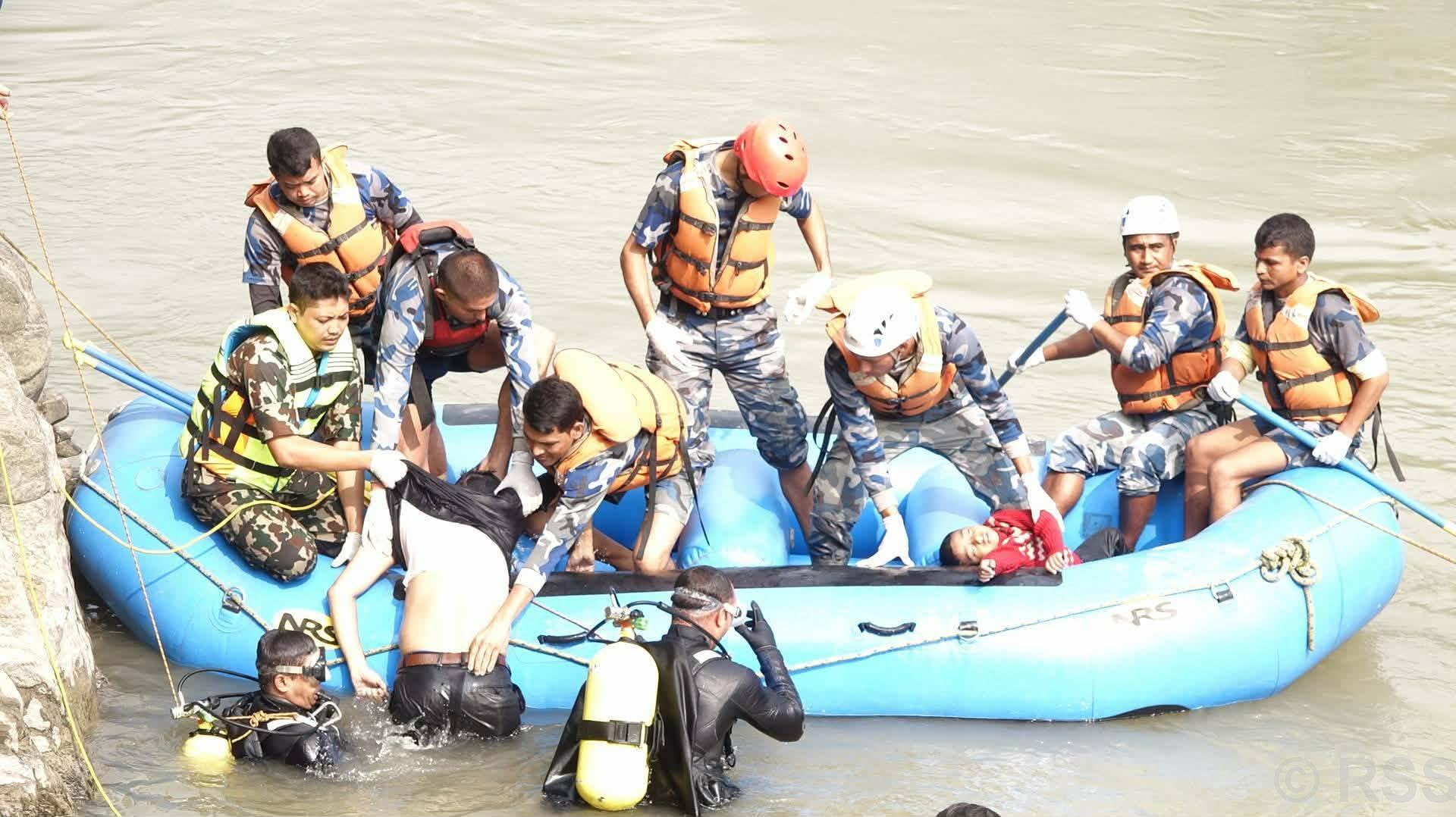
KATHMANDU. Ramesh Babu Thapa, Chairman of Sahid Lakhan Rural Municipality in Gorkha, instinctively turns to the Armed Police Force (APF) whenever disaster strikes. He stated, "In times of natural or man-made disasters, the only name that comes to mind for humanitarian rescue is the Armed Police Force. It is because of the work this organization has done in humanitarian rescue that I remember them."
It is not just Ramesh Babu; many now rely on the APF for rescue operations during disasters. The organization is consistently praised for being at the forefront of saving citizens during floods, landslides, earthquakes, accidents, and fires, alongside maintaining peace and security.
Continuous Capacity Building in Rescue
The praise for the APF is well-earned, as the organization has continuously enhanced its capacity in the field of rescue. Recently, the APF has been working to make disaster management robust, effective, and result-oriented. The nation relies on the APF for high-risk tasks involving divers, firefighters, and specialized rescuers.
The APF has already established nine disaster management centers across the country, with six more in the process of being set up. This monsoon season, 59 temporary disaster management centers are being operated.
Through 139 training programs in Kurintar, the force has trained 6,929 personnel, including 3,012 of its own staff. During this period, the academy has produced 134 specially trained divers.
Personnel trained at the academy located in Ichhakamana-4, Chitwan, have successfully rescued over 15,541 people, assisted 88,500 injured individuals, and recovered 25,778 bodies in 36,084 disaster incidents since 2063 BS.
APF Inspector General Raju Aryal notes that the organization's commitment and efficiency are evident, as they have raised community-level awareness by training 657,284 people on disaster risk reduction through various schools and organizations.
Kurintar Academy: A Center of Excellence
The Armed Police Force Disaster Management Training Academy in Kurintar has enhanced national capacity by producing skilled personnel in water rescue, Medical First Responder (MFR), Collapsed Structure Search and Rescue (CSSR), firefighting, and deep-water rescue.
Inspector General Aryal stated that the academy has gained national recognition, as the public now instinctively turns to the APF and its divers during river-related accidents. The APF was also successful in search and rescue operations during the 2072 BS earthquake.
Chitwan Chief District Officer Ganesh Aryal described the APF as the first and final vital option for natural disasters. He noted that the APF is exemplary in its management of rescue and relief operations.
Nepal is considered the 11th most earthquake-prone country, 30th in terms of natural disaster incidents, and 4th in terms of climate change-related risks. Despite limited resources and personnel, the Kurintar academy has delivered excellent results in its 22 years of existence.
Inspector General Aryal says, "Among the mandates received by the organization, the Kurintar academy has established itself as a leading and specialized institution for disaster management and rescue in a short period."
Established with the primary objective of producing skilled, disciplined, and committed personnel for rescue during natural disasters and emergencies, the academy celebrated its 22nd anniversary on Baisakh 2. The academy is frequently awarded not only for its training role but also as a unit directly deployed in practical rescue operations.
Personnel from this academy are deployed to remote and challenging areas, playing a crucial role in saving lives, particularly during road accidents along the Prithvi Highway, floods, and other emergencies.
Established as a base camp for the APF in 2058 BS, it began its first disaster management training on Baisakh 19, 2067 BS, and was formally established as a Disaster Management Training Center on Mangsir 22, 2068 BS. Over the last 20 years, the APF has rescued 1,007 people alive from road accidents, landslides, river incidents, and fires.
Eleven members of the organization have made the ultimate sacrifice while deployed in disaster incidents. The force emphasizes the need to spread awareness that one should not risk another person's life in a rush to recover bodies. Inspector General Aryal has directed personnel to work in a way that makes citizens feel they would not have survived without the APF, and to avoid any actions contrary to the national and public interest.
The organization has also proposed declaring those who die during high-risk rescue operations as "disaster martyrs." The APF is launching a new road safety consultation program on the route from Naubise in Dhading to Mugling in Chitwan. This program will also integrate local community hospitals and ambulance services to ensure immediate rescue and transport of accident victims.
Recognizing the risks faced by personnel, the organization arranged for a 1 million rupee accident insurance policy for divers and other rescue staff last year.
The organization has arranged for insurance coverage of 2.5 million rupees for approximately 500 personnel working in high-risk areas, with provisions for an additional 200,000 rupees from other sources. Academy Commandant Bharat Khaniya stated that to minimize loss of life and property, disaster management preparations are made by deploying personnel to potential risk areas as soon as monsoon forecasts are received from the Department of Hydrology and Meteorology.
Recently, the APF has collected data on 167,000 disaster-prone areas, identifying 25 individuals per ward, and has requested local levels to provide necessary support.
This specific news has been automatically translated by AI. As a result, there may be some inaccuracies or language errors.