Judicial Council Initiates Fast-Track Investigation into Complaints Against Judges

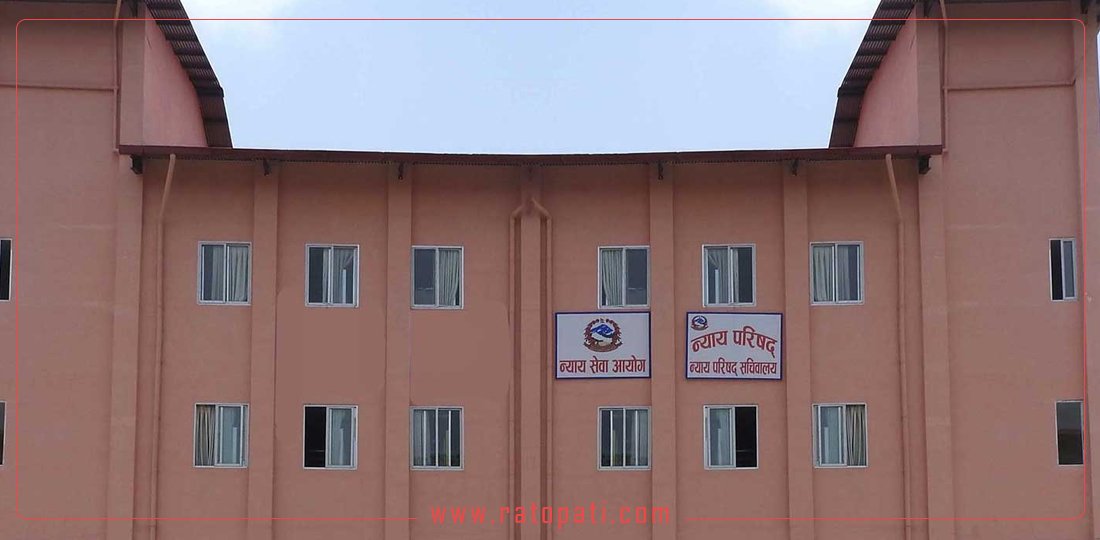
Kathmandu. The Judicial Council is set to investigate and resolve complaints filed against judges of High Courts and District Courts on a fast-track basis.
Following Sapana Pradhan Malla's assumption of the role of Acting Chief Justice, a meeting chaired by her decided to resolve the backlog of complaints that had been pending in the Judicial Council for years.
The Judicial Council will now meet weekly to investigate and settle complaints against judges. According to Council spokesperson Jitendra Babu Thapaliya, meetings will be held every week for this purpose.
Decisions have been made to form committees for detailed investigations into complaints where facts remain unclear, requiring further evidence. However, despite the plan for weekly meetings, the session could not be held last week due to the busy schedule of Law Minister Sobita Gautam.
There are 223 complaints against judges pending at the Judicial Council. The Council's inactivity has long been blamed for increasing irregularities in the justice sector. "The honorable Acting Chief Justice has emphasized the need to hold weekly Council meetings to resolve these complaints," spokesperson Thapaliya informed.
The Judicial Council has been removing judges found to have committed misconduct under Sections 10, 11, and 12 of the Judicial Council Act, 2073. Section 10 covers lack of competence, Section 11 covers serious misconduct or violation of the code of conduct, and Section 12 covers failure to perform duties honestly or acting with malicious intent.
According to Council records, most complaints have been archived.
Bara District Court Judge Bhola Dhakal has been summoned to the Supreme Court for allegedly releasing an Indian national on bail in a money laundering case. Following a complaint filed by the Nepal Bar Association, Bara branch, demanding an investigation into Judge Dhakal for allegedly colluding with intermediaries to grant bail, he was summoned to the Supreme Court for inquiry.
The Council has yet to reach a final decision regarding judges embroiled in various cases. Due to delays in decision-making, the judges' work has been limited to mere attendance. The Judicial Council is proceeding with detailed investigations into complaints against five judges. Previously, the Judicial Council meeting held on 20 Chaitra decided to dismiss 10 out of 15 complaints and proceed with detailed investigations into five.
In the next meeting, the Council will investigate these complaints and form inquiry committees if deemed necessary. The Judicial Council is chaired by the Chief Justice, with the Law Minister as a member. Currently, Acting Chief Justice Sapana Pradhan Malla serves as the chair. Senior Judge Kumar Regmi and Law Minister Sobita Gautam, elected from the RSP, are members. Additionally, Damodar Khadka and Mahesh Kumar Nepal serve as the two members. Complaints against District and High Court judges that appeared serious upon preliminary review have been sent for detailed investigation.
For a long time, former judges of the Janakpur High Court, Birgunj bench, Khusi Prasad Tharu and Arjun Maharjan, have been summoned by the Judicial Council, but no decision has been reached after investigation. The High Court had acquitted five defendants, including Aftab Alam, who were convicted by the Rautahat District Court for the murder of victims of a bomb blast during the 2064 Constituent Assembly elections by throwing them alive into a brick kiln. Judges Tharu and Maharjan were summoned for investigation after their bench acquitted Congress leader Alam. The main accused in the Rautahat bomb case, Congress leader Alam, has since passed away due to a brain stroke.
On 14 Jestha 2081, the bench of Tharu and Maharjan acquitted the defendants, stating that the collected evidence could not confirm that a bomb blast occurred at Alam's house on 27 Chaitra 2064, the date of the alleged incident.
Although the prosecution claimed that the victims, Trilok Pratap Singh (known as Pintu) and Osi Aftab, were thrown into a tractor and burned alive in a brick kiln, the court ruled that the prosecution failed to provide concrete evidence. The forensic report also failed to confirm the accusation that the deceased were burned in the kiln, leading to the acquittal of all defendants. Trilok Pratap Singh and Yubaraj Safal had filed complaints against this decision with the Council.
On 29 Jestha 2082, former Rasuwa District Court Judge Bhuwan Singh Thapa and on 6 Ashar 2082, Darchula Judge Pushpa Raj Pandey were summoned for investigation due to complaints of misconduct. Judge Thapa was summoned after it was found that he had sent a "sexual proposal" message to a female service seeker. A complaint was filed with the Council alleging that Thapa approached the woman, who was facing a polygamy case, through a government attorney to make the "sexual proposal."
Similarly, after 13 employees of the Darchula District Court sent a collective resignation letter along with a complaint against District Judge Pushpa Raj Pandey to the Supreme Court, Chief Justice Prakashman Singh Raut summoned him to the Judicial Council. Pandey, who was the Srestedar of Bajura District Court, was recommended as a District Judge by the Judicial Council meeting on 22 Chaitra 2080.
Likewise, Hari Krishna Shrestha was summoned from the Dhanusha District Court to report to the Supreme Court. He had served as a Srestedar in the same court and was summoned to the Council after practical issues arose following his appointment as a judge in the same court.
There are precedents where even Supreme Court judges have faced action for their verdicts and orders. Judges Krishna Kumar Verma and Baliram Kumar resigned on 5 Shrawan 2061 and 22 Mangsir 2061, respectively, following a controversy over the acquittal of Robinson in a drug case.
Phaneshwori Ghimire, who was recommended as a judge from the position of Supreme Court Section Officer on 22 Chaitra 2080, was summoned to the Judicial Council on 12 Falgun 2081 following a controversy. Judge Phaneshwori Ghimire was summoned to the Supreme Court less than a year after her posting to the Mahottari District Court. A complaint was filed against Judge Ghimire alleging that she met with parties involved in cases of kidnapping, hostage-taking, homicide, and disappearance, and attempted to discourage the plaintiff.
Bara District Court Judge Bhola Dhakal has been summoned to the Supreme Court for allegedly releasing an Indian national on bail in a money laundering case. Following a complaint filed by the Nepal Bar Association, Bara branch, demanding an investigation into Judge Dhakal for allegedly colluding with intermediaries to grant bail, he was summoned to the Supreme Court for inquiry.
Precedent for recommending action against Supreme Court judges
There are precedents where even Supreme Court judges have faced action for their verdicts and orders. Judges Krishna Kumar Verma and Baliram Kumar resigned on 5 Shrawan 2061 and 22 Mangsir 2061, respectively, following a controversy over the acquittal of Robinson in a drug case.
Regarding the acquittal in Robinson's drug case, the Nepal Bar Association formed a study committee led by Senior Advocate Ratan Lal Kanodia, which submitted a report. To study this controversial verdict and provide suggestions, the Judicial Council formed a high-level committee led by Supreme Court Judge Min Bahadur Rayamajhi, with judges Anup Raj Sharma and Khil Raj Regmi as members. Following the committee's report, judges Verma and Kumar resigned.
The verdict delivered by the two judges was overturned by a full bench of Supreme Court judges Dilip Kumar Poudel, Kedar Prasad Giri, and Chandra Prasad Parajuli, who termed it erroneous. The verdict of the joint bench on 11 Baisakh 2061 was overturned by the full bench on 26 Kartik 2061.
On 1 Bhadra 2058, at Tribhuvan International Airport, 2.315 kg of heroin was seized from British citizen Gordon William Robinson—850 grams from his shoes, 975 grams from his bag, and 490 grams from ladies' sandals in his bag while he was traveling from Kathmandu to Indonesia via Singapore. Robinson confessed to the authorized officer but denied the charges in court.
The Supreme Court joint bench acquitted Robinson on 11 Baisakh 2059, stating that the confession taken by the authorized officer without the help of an interpreter for a defendant ignorant of the Nepali language was invalid, the recovery witnesses' statements were inconsistent, and the prosecution's contradictory witness testimonies were insufficient for conviction. This decision included a long and reasoned discussion on various human rights and international conventions. Robinson was released from custody on the same day the verdict was delivered.
Recommendation for action against Judge Parmananda Jha in a charas case
A case was filed against Dil Bahadur Gurung and others for attempting to export 669 kg of charas to Canada. In the drug case, the District Court and Appellate Court had ordered the detention of accused Ashok Kumar Subedi and Mohan Krishna Rijal for trial.
The District Court had also ordered the detention of Dil Bahadur Gurung (known as DB) on 29 Poush 2061. The Patan Appellate Court upheld the order on 4 Chaitra 2061. The case became controversial after a single bench of temporary Supreme Court Judge Parmananda Jha ordered the release of Dil Bahadur Gurung on a bail of 900,000 rupees on 9 Shrawan 2062, overturning the detention orders of the District and Appellate courts.
Regarding that verdict, the Judicial Council formed a three-member inquiry committee led by Judge Anup Raj Sharma, with Ram Prasad Shrestha and Khil Raj Regmi as members. The committee recommended action against Judge Parmananda Jha for granting bail while ignoring law and evidence.
This specific news has been automatically translated by AI. As a result, there may be some inaccuracies or language errors.
_BSX4jxIBxx.jpg)
_CuZWldRsJU.jpg)