Mithila region celebrates Jud-Shital festival to mark the New Year 2083

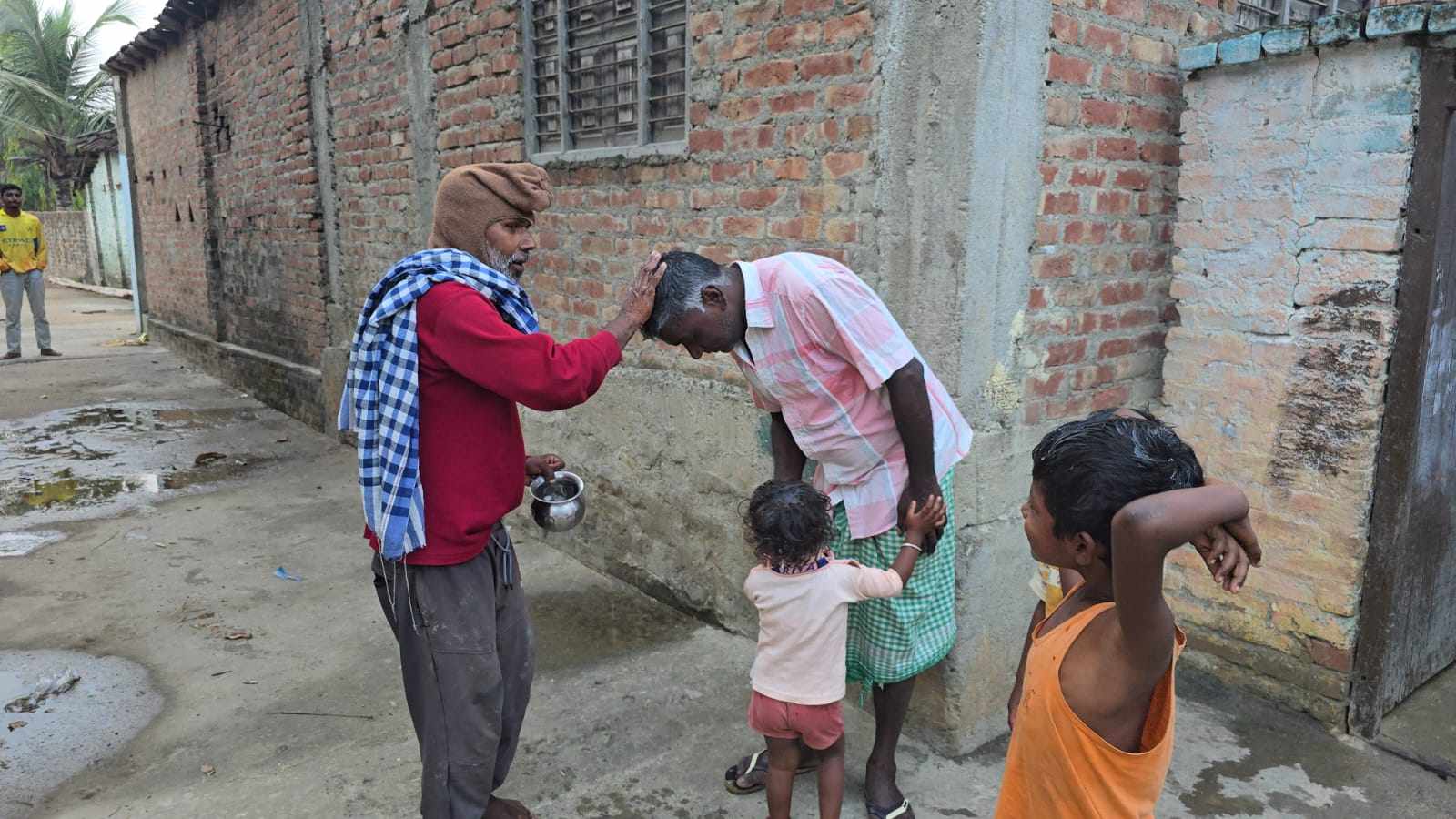
Mahottari. According to the Bikram Sambat tradition, the New Year 2083 has begun today. Along with this, the Jud-Shital festival is being celebrated with great enthusiasm in the Mithila region of Madhes. There is a tradition of worshipping family deities during the Jud-Shital festival, which is celebrated for two days starting from Baisakh 1, the first day of the New Year.
The first day of this festival, celebrated on Baisakh 1 and 2, is called 'Satuwain' and the second day is called 'Jud-Shital'. Principal Hemanarayan Karna of the Yagyavalkya Lakshminarayan Vidyapith (Sanskrit Campus) in Matihani, Mahottari, stated that the 'Jud-Shital' festival is celebrated with the wish for coolness in life as the heat increases with the start of the Bikram Sambat. According to him, the festival began today with the 'Satuwain' ritual.
In Mithila, 'Jud-Shital' is one of the few festivals celebrated based on the solar calendar. Principal Karna explained that the festival is named 'Jud-Shital' by combining the words 'Jud' and 'Shital' to signify adding coolness to life. "On the first day of the festival today, seven types of food grains including gram or peanuts, barley, corn, millet, wheat, rice, and mung beans are ground into flour (Satu), and jaggery syrup is prepared in earthen pots. After offering these to the family deities, they are donated to family priests, Brahmins, and sages," he said.
Dishes made from gram, mung beans, and barley, which provide coolness during the rising heat, are considered special during this festival. Principal Karna informed that the practice of donating Satu and syrup on the first day and consuming these items is called 'Satuwain' in Mithila. According to him, on the second day of the festival, the eldest members of the family sprinkle water on the heads of the younger ones, blessing them with health, coolness, and a long life.
Cultural expert Dhruv Ray stated that the main message of the festival is that the New Year should bring coolness to life. For this reason, there is a tradition of eating dishes like gram or peanut flour (Satu), lentils, drumstick (mung) curry, fritters made from peanut flour, and yogurt-based curry (kadhi).
According to cultural expert Ray, in this festival, which is considered a symbol of prosperity, the people of Mithila have a tradition of splashing dust, soil, and mud on each other, wishing for favorable rainfall throughout the year. He believes that the tradition of playing with dust and mud at the beginning of the New Year inspires people to remain engaged in agricultural work.
"There is a symbolic tradition of playing with mud to stay connected to the earth during this festival," said local senior citizen Bhuvneshwar Prasad Singh. "This practice carries the message that there should never be a shortage of agricultural work." According to him, during the festival, water is sprinkled on the trees and plants in the fields with the wish that there should never be a lack of moisture.
This festival is celebrated with joy in the districts of the Mithila region of Madhes and in the bordering Indian districts including Sitamarhi, Jhanjharpur, and Sheohar. Elderly Maithili members say that this festival conveys a message of mutual harmony, cooperation, and coordination. Kameshwar Jha, an expert on folk traditions and culture, stated that by linking the beginning of the New Year with agriculture, our ancestors conveyed the message that 'Agriculture is the root of life' through this festival.
This specific news has been automatically translated by AI. As a result, there may be some inaccuracies or language errors.