Far-Western Province Government Faces Crisis Amidst Budget Dispute

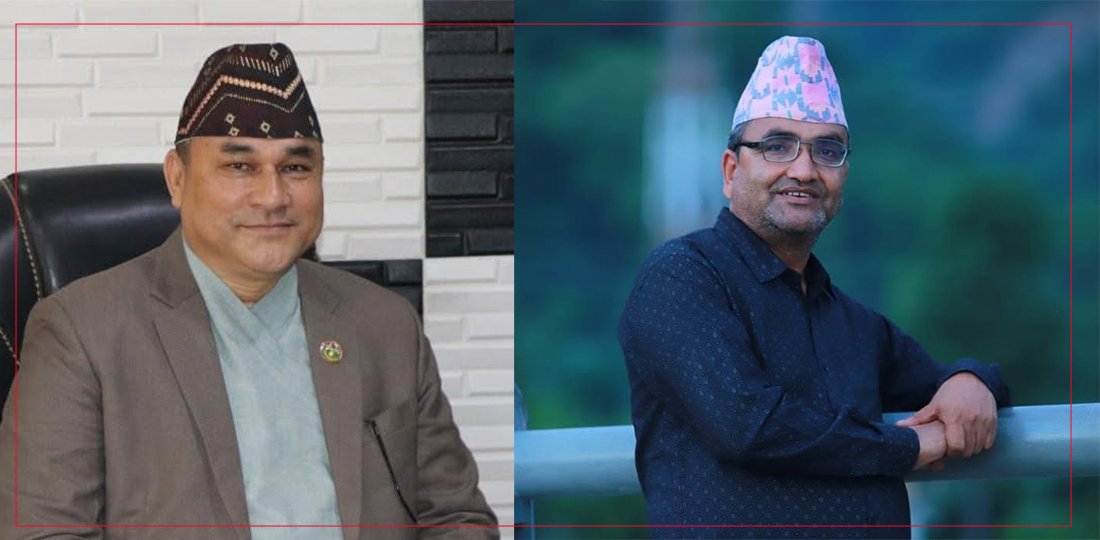
Dhangadhi. The Far-Western Province government has once again entered a phase of change. The government led by Chief Minister Kamal Bahadur Shah has fallen into a minority after the ruling coalition broke down due to a budget dispute.
With the CPN (UML) withdrawing its support to the government, the future of the provincial government now appears to depend on the decision of the Communist Party of Nepal (CPN).
On Wednesday, after Chief Minister Shah dismissed three ministers and one state minister from the UML, the UML immediately withdrew its support to the government. Following this, the government is on the verge of losing its majority in the provincial assembly. Chief Minister Shah now has only two options – either to gather a majority by forming a new political consensus or to step down from the government.
The possibility of renewed cooperation with the UML appears very weak. The UML has severed ties with the Congress in the province, accusing it of not adopting a spirit of consensus and partnership in the budget-making process. UML Parliamentary Party leader Rajendra Singh Rawal has accused the Chief Minister of making unilateral decisions on the budget.
Meanwhile, the CPN, which has gained the power to determine the future of the government, has already clarified its stance. It has a condition that it will not support the budget for the fiscal year 2083/84 as presented, in any way, and that the budget must be re-prepared. Not only that, the CPN has also claimed that its party should now lead the government.
CPN Parliamentary Party leader Khagraj Bhat has stated that his party's stance on budget revision and government leadership is clear. According to him, the CPN will cooperate with whichever party accepts these conditions. Therefore, the support of the CPN has become the biggest basis for the सत्ता यात्रा (power journey) for both the Congress and the UML at present.
Chief Minister Shah, however, has stated that he will seek a solution through dialogue with all political parties within the framework of the constitution and law. Although claims are being made within the Congress that discussions are underway with the CPN to save the government, no agreement has been reached so far.
Meanwhile, the UML is also exploring the possibility of forming a new power equation and forming a government. If the CPN supports it, the Congress-led government could be changed immediately. However, if the Congress can accept the CPN's conditions, the government might survive for some time. Therefore, the CPN currently holds the most bargaining power in the province's politics.
After the implementation of federalism, the Far-Western region was known as a relatively stable province for five years following the first provincial assembly elections held in 2074 BS. Then Maoist Center leader Trilochan Bhat led the government for a full term, despite frequent changes in the central government.
However, the situation has reversed since the second provincial assembly elections. The government has changed four times in the Far-West during this period. If the current crisis is not resolved, there is a strong possibility of a fifth government change.
Numerous rounds of talks were held within the ruling coalition to resolve the budget dispute that began on Asar 1. Discussions were held at the top level in Kathmandu. But ultimately, no agreement was reached, and the coalition itself broke down.
Now, Thursday is the last day to pass the budget, but the government has already fallen into a minority before that. It is said that the decision of the CPN will now provide the answer to whether the budget will be passed, whether Chief Minister Shah will gather a majority, or whether a new government will be formed.
This specific news has been automatically translated by AI. As a result, there may be some inaccuracies or language errors.